 How-to
Can You Keep Curb Appeal Up With Minimal Effort?
Last Updated: October 28, 2026
Quick Summary
You can keep curb appeal up with minimal effort by focusing on clean lines rather than perfection. Mulch beds once a year, edge the lawn, keep walkways clear, and trim shrubs before they overgrow. These simple tasks have the highest impact on how a front yard looks from the street.
- Refresh mulch once a year so beds look finished.
- Edge the lawn so it looks intentional, ideally once a month in the growing season.
- Keep walkways and the front entrance clear of overgrown plants.
- Trim shrubs back before they block windows or paths.
- Choose a few reliable plants and repeat them for a cohesive, low-upkeep look.
Table of Contents
- Why Curb Appeal Slips and What Actually Matters Most
- Low-Maintenance Landscaping Ideas That Hold Up Without Constant Work
- Choosing Low-Maintenance Front Yard Plants for Your Climate
- Low-Maintenance Lawn Care: Mowing, Edging and Watering Less
- A Front Yard Maintenance Checklist by Season
- Effort and Cost Comparison: Which Improvements Pay Off Most
- Booking Your Hands-Off Front Yard Plan With Lover's Lawn Services
- Frequently Asked Questions
Why Curb Appeal Slips and What Actually Matters Most
Curb appeal is the first impression a home makes from the street, and it slips faster than most owners expect. For a full month-by-month view, see seasonal lawn care guide.
Most curb appeal problems come from a few sources: overgrown plants crowding walkways, mulch thinning out until weeds take over, and lawn edges blurring into the beds.
The highest-impact tasks are usually the simplest:
- Keep walkways and the front entrance clear
- Refresh mulch once a year so beds look finished
- Trim shrubs back before they block windows or paths
Curb appeal is less about perfection and more about clean lines. A modest yard with clear edges looks better than a lush one that has gone wild.
Low-Maintenance Landscaping Ideas That Hold Up Without Constant Work
The best low-maintenance landscapes are designed to need less. Plan the layout once, and upkeep stays manageable for years.
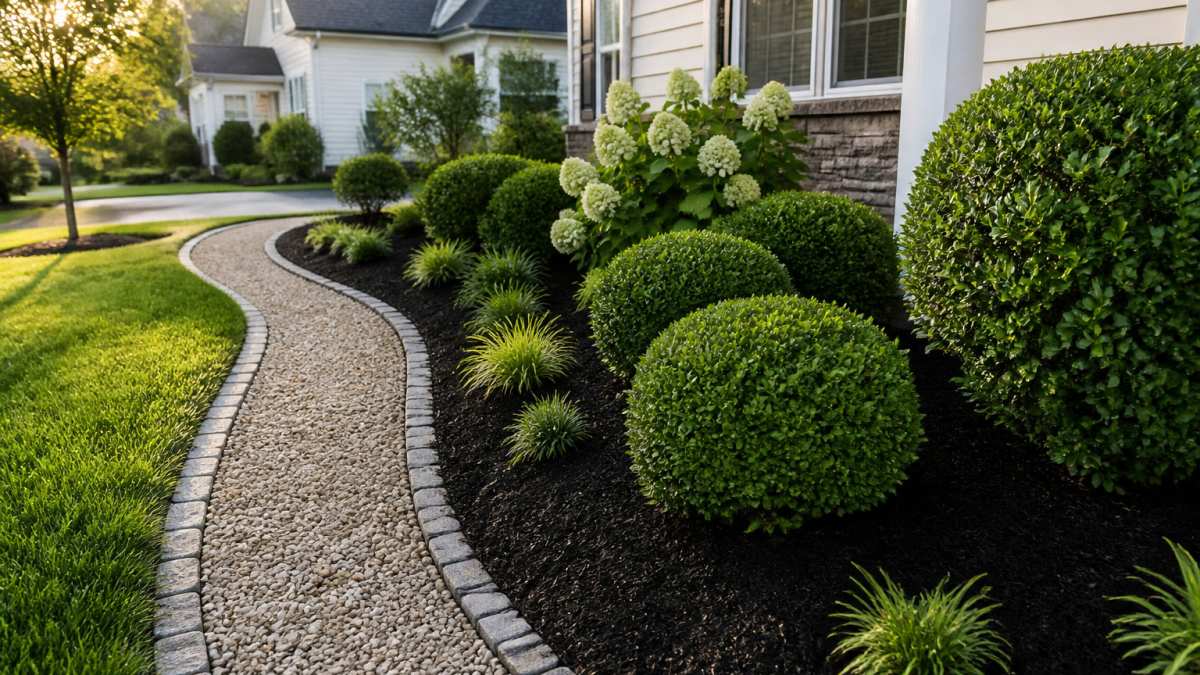
Start with the beds. Fewer, larger beds are easier to keep tidy than many small ones.
Next, add hardscape where it makes sense.
Some ideas that tend to hold up well:
- One mulched bed with a few evergreen or flowering shrubs
- A gravel or paver walkway with defined edges
- Tall planters at the entrance for seasonal color
A common mistake is adding too many plant types. Each new species has its own watering and pruning needs.
Choosing Low-Maintenance Front Yard Plants for Your Climate
The right plant list depends on your region, sun exposure and soil. Plants that thrive in one area can struggle in another, so choose based on local conditions rather than trends. The framework below turns that into a repeatable selection process, with named examples for the most common site conditions.
Step 1: Map your site before you shop
Spend one week observing the front yard and note four things per bed:
- Light: How many hours of direct sun does the bed get in June? Full sun is generally 6+ hours, part sun is 3-6, and shade is under 3. Check at mid-morning, midday and late afternoon.
- Soil: Dig a handful about 6 inches down. Does it crumble (loam), ribbon together (clay), or fall apart dry and gritty (sand)? Note standing water after rain.
- Water: Is the bed under an eave, on a slope, or near a downspout? These spots dry out or stay soggy predictably.
This audit prevents the most common and expensive mistake: planting a sun-lover in shade or a 6-foot shrub in a 3-foot bed.
Step 2: Match plants to the four common front-yard conditions
Full sun, dry soil (south- or west-facing beds, sandy or rocky soil)
- Coneflower (Echinacea): Perennial, returns each year, tolerates heat and drought once established.
- Black-eyed Susan (Rudbeckia): Long bloom season, self-sows modestly, low water needs.
- Sedum (e.g., 'Autumn Joy'): Succulent foliage holds up in heat; leave seed heads standing for winter interest.
- Lavender: Evergreen in mild zones, needs sharp drainage; avoid clay.
Full sun, moist or clay soil
- Daylily: Nearly indestructible; divide every few years to keep blooming.
- Bee balm (Monarda): Native, attracts pollinators, spreads, give it room.
- Switchgrass: Tolerates both wet and dry once established.
- Joe Pye weed: Tall native for the back of a bed; needs consistent moisture.
Part sun to shade (north- or east-facing beds, under eaves)
- Hosta: Reliable foliage plant; slug pressure is the main trade-off.
- Coral bells (Heuchera): Colorful foliage, tolerates part shade; needs drainage.
- Ferns (e.g., Christmas fern, lady fern): Native options for shade; keep watered the first season.
- Hydrangea (e.g., oakleaf, smooth): Shrubs for part shade; prune at the right time or you lose blooms.
Evergreen structure (any exposure)
- Boxwood: Slow-growing, shears well; watch for boxwood blight in humid regions.
- Japanese holly (Ilex crenata): Fine-textured alternative to boxwood.
- Inkberry holly: Native evergreen that tolerates wet soil.
- Dwarf yaupon holly: Tough, drought-tolerant evergreen for warmer zones.
Step 3: Follow the 'thriller, filler, spiller' formula for containers and beds
For entrance planters and small beds, repeat a three-part structure: one upright focal plant (thriller), two to three mid-height plants (filler), and one trailing plant (spiller). Three to five species per container gives a finished look while keeping watering and deadheading manageable.
Step 4: Choose for low upkeep, not just low price
When comparing two plants at the nursery, favor the one that:
- Is labeled as native or adapted to your region
- Has a mature size that fits the space without constant pruning
- Is described as drought-tolerant once established (if the bed is dry)
- Is not flagged as invasive in your state, check your state's invasive plant list or extension office
Low-maintenance yards share a pattern of repetition: pick three to five reliable species and repeat them across beds. It looks intentional, simplifies watering and pruning, and makes replacements easy.
Water-wise establishment
Even drought-tolerant plants need regular water for the first season or two while roots establish. Water deeply once or twice a week rather than lightly every day, and add 2-3 inches of mulch to hold moisture. Once established, most need water only during prolonged dry spells, the whole point of choosing them.
Find your local cooperative extension office
Low-Maintenance Lawn Care: Mowing, Edging and Watering Less
A lawn doesn't have to be a time sink. If you'd rather hand off the feeding schedule, you can book professional lawn fertilizing.
Mow at a higher setting. Taller grass shades the soil, which discourages weeds and reduces the need for frequent watering.
Edging is the quickest way to make a lawn look maintained.
Water less often but more deeply. Deep watering encourages roots to grow down, which makes the lawn more resilient in dry spells.
Practical habits to adopt:
- Mow when the grass is dry to avoid clumping
- Leave short clippings on the lawn to return nutrients
- Water deeply once or twice a week rather than lightly every day
- Edge the lawn once a month during the growing season
A Front Yard Maintenance Checklist by Season
Seasonal planning keeps the yard looking good without daily effort. Follow this simple schedule.
Spring
- Clear debris and leaves from beds and walkways
- Refresh mulch in bare spots
- Prune shrubs that bloomed last year
- Edge the lawn and beds
Summer
- Check irrigation or water beds deeply during dry spells
- Pull weeds before they flower
- Deadhead flowering plants to extend color
- Raise the mower height to protect the lawn
Fall
- Rake leaves off the lawn and out of beds
- Cut back perennials that have finished blooming
- Plant spring bulbs for early color
- Inspect hardscape for cracks or loose stones
Winter
- Keep walkways clear of debris for safe access
- Check trees for broken or overhanging branches
- Plan next year's bed changes while plants rest
Treat this checklist as a rhythm, not a rulebook. Skip tasks your yard doesn't need and add work only when a specific problem appears.
Effort and Cost Comparison: Which Improvements Pay Off Most
Not every curb appeal project earns its keep. The table below compares typical upfront cost, time, recurring effort and visual impact so you can pick projects that fit your budget and schedule.
| Improvement | Typical DIY Cost (USD) | Typical Pro Cost (USD) | Time (DIY) | Ongoing Upkeep | Visual Impact |
|---|---|---|---|---|---|
| Refresh mulch in beds | $30-$100 per cubic yard of bagged or bulk mulch; a typical front bed needs 2-4 cubic yards | $300-$800 installed | 2-4 hours | Yearly refresh | High |
| Lawn edging (manual or steel) | $20-$60 per 10-foot section of steel edging | $200-$600 | 2-4 hours | Monthly trims | High |
| Pressure washing walkway and steps | $0 if renting or owning; rental roughly $50-$100 per day | $150-$400 | 1-2 hours | Once or twice a year | Medium |
| Native shrub planting | $15-$50 per shrub, plus mulch | $75-$200 per shrub installed | 1-2 hours per shrub | Light pruning | Medium to high |
| Tall entrance planters | $40-$150 per planter, plus plants | $150-$400 per planter styled | 1 hour | Seasonal refresh | Medium |
| Gravel or paver walkway | $3-$10 per square foot for materials | $8-$25 per square foot installed | Weekend to multi-day | Low | High |
| Bed weeding and cleanup | $0 (tools only) | $100-$300 | 1-3 hours | Monthly during growing season | Medium |
The highest return for the least effort
If you only do three things, do these: mulch, edge, and clean. They address the three problems that make a yard look neglected, bare beds, blurred lines and grimy hardscape.
A prioritized quick-start plan
Use this sequence to match effort to the time you actually have. Each tier builds on the last.
In one hour (do these first)
- Pull weeds from the front bed and walkway cracks
- Sweep the walkway, steps and driveway
- Trim any shrub or branch blocking the path or windows
- Move or remove dead pots and clutter from the entrance
In one weekend
- Spread fresh mulch 2-3 inches deep in bare beds, keeping it a few inches back from the house and trunks
- Install or refresh lawn edging along the main bed
- Pressure-wash or scrub the walkway and steps
- Add two matching planters at the entrance with a simple thriller-filler-spiller combo
Over one month
- Replace struggling plants with region-appropriate species from the selection guide above
- Repair cracked pavers or loose stones on the walkway
- Add a timer or drip line to beds so watering is automatic
- Plan a fall or spring bulb planting for early color
The one-hour tasks deliver the biggest visible change, the weekend tasks lock in the look, and the month-long tasks reduce future work.
Booking Your Hands-Off Front Yard Plan With Lover's Lawn Services
If you want the look without the weekly work, a professional plan can handle the routine tasks. You can begin your landscape transformation and see what a hands-off plan involves.
A customer described the team as professional and said the lawn looked "perfect" afterward.
Ready to stop chasing weeds? Begin your landscape transformation and book your hands-off plan today. Visit our pricing page for current rates.
Frequently Asked Questions
How can I improve curb appeal with minimal effort?
Start with the tasks that show most from the street: edge the walkway and beds, refresh mulch, clear debris, power wash the front steps and walkway, and replace a tired house number or mailbox. These take a single weekend and need little upkeep afterward. Pick plants that bloom reliably and need only occasional pruning, and group them in a few beds rather than many small ones. Once the base is clean, a simple seasonal routine keeps the look steady without daily attention.
What are the easiest low-maintenance landscaping ideas?
Simple layouts work best: a few large mulch beds instead of many small ones, a single clean border line along the lawn, and a limited palette of shrubs and perennials. Use gravel or stone in high-traffic paths to reduce weeding, and add a couple of containers near the entrance for seasonal color with little care. Avoid high-maintenance features like large annual beds or elaborate hedges that need frequent trimming.
How often should I maintain my front yard?
Most front yards need light attention weekly during the growing season, mainly mowing, edging and removing debris. Mulch refreshes and pruning usually happen once or twice a year, and a seasonal cleanup in spring and fall covers leaves, overgrown foliage and power washing of hard surfaces. Exact frequency depends on tree cover, lawn size and climate, so adjust the schedule to what your yard actually needs.
How do I keep weeds under control in a low-maintenance garden?
Mulch is the most effective tool: a layer of mulch in each bed blocks light and slows weed germination. Lay edging to keep lawn grass from creeping into beds, and pull weeds when the soil is moist so roots come out cleanly. Dense planting also crowds out weeds over time. Check beds every few weeks in spring and early summer, when most weeds establish.