 How-to
7 Benefits of Organic Lawn Treatments That Last
Last Updated: November 19, 2026
Quick Summary
Organic lawn treatments feed the soil rather than the grass directly, using compost, natural fertilizers, and soil biology to build stronger roots, thicker turf, and better drought tolerance. They also create safer yards for kids, pets, and pollinators by reducing reliance on synthetic herbicides and pesticides. Results build slowly, with real soil change generally taking a full season or more.
- Visible greening can appear within a few weeks, but real soil change takes a full season or more.
- Applying too much compost at once can smother turf and trap moisture, which invites disease.
- Organic weed control works by raising mowing height, returning clippings, overseeding, and correcting soil pH.
- Fall is the time to aerate, top-dress with compost, and overseed for root growth.
- The company backs its work with a 100% satisfaction guarantee and a 3-day refund policy.
Table of Contents
- What Organic Lawn Treatments Actually Do to Your Soil
- The Core Benefits of Organic Lawn Treatments
- Organic Lawn Fertilizer Benefits Beyond Greener Grass
- How Long Organic Fertilizer Takes to Work
- The Downsides of Organic Fertilizer You Should Know
- Organic Lawn Care Weed Control That Holds Up
- A Season-by-Season Organic Treatment Schedule
- Book a Walkthrough and Get Your First Organic Application
- Frequently Asked Questions
What Organic Lawn Treatments Actually Do to Your Soil
Organic lawn treatments are products and practices that feed the soil rather than the grass directly. They rely on compost, natural fertilizers, and soil biology to build a lawn that holds up over time. The idea is simple: you are not feeding the grass, you are feeding the soil that feeds the grass.
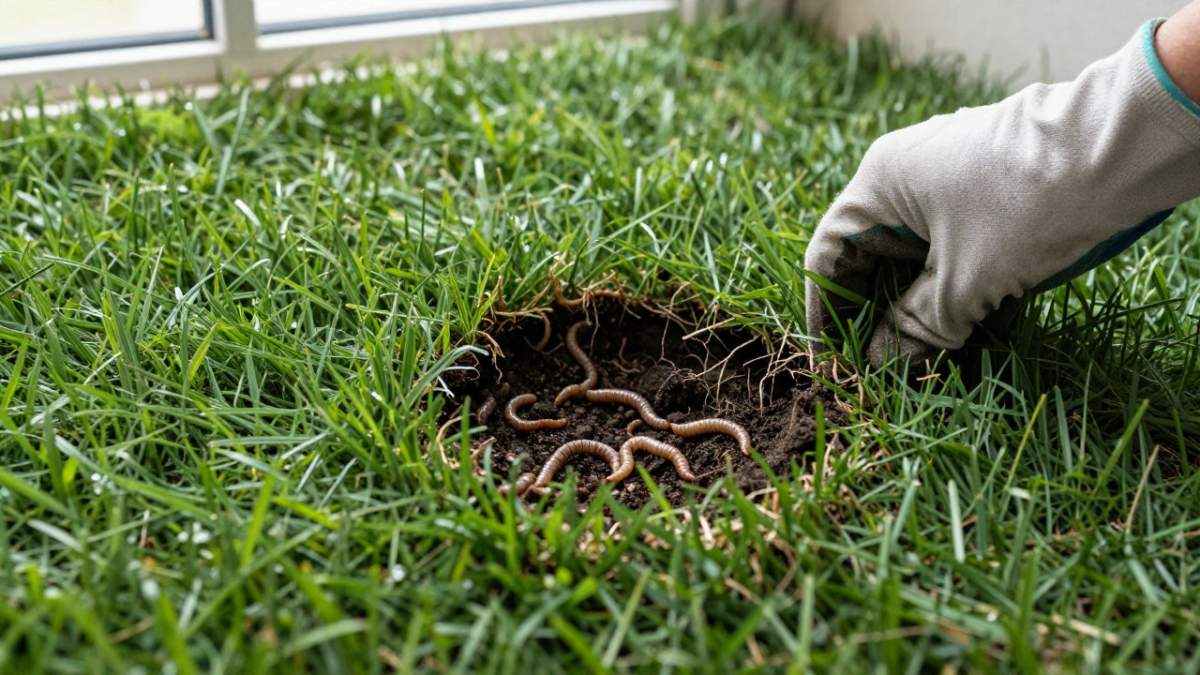
Healthy soil is full of microbes, earthworms, and organic matter. These break down nutrients and make them available to your turfgrass roots. Synthetic fertilizers skip that step. They deliver a quick dose of nitrogen, and much of it washes away.
That difference shapes everything that follows.
The Core Benefits of Organic Lawn Treatments
The main benefits of organic lawn treatments come down to stronger roots, thicker turf, and a safer yard. These are not cosmetic wins. They change how your lawn handles heat, drought, and foot traffic.
Deeper Roots, Thicker Turf, and Better Drought Tolerance
Organic matter improves soil structure. It holds moisture and air, which encourages deep root growth. Deep roots reach water that shallow roots cannot, so the lawn stays greener through dry spells. Thicker turf also crowds out weeds before they get a foothold.
Safer Yards for Kids, Pets, and Pollinators
Natural fertilizers and compost reduce your reliance on synthetic herbicides and pesticides. That matters for pet safety, human health, and the beneficial insects that keep pest management in balance. Pollinators and wildlife benefit when chemical inputs drop. If you want a yard where kids and dogs can play without a waiting period, this is the practical reason.
Organic Lawn Fertilizer Benefits Beyond Greener Grass
The organic lawn fertilizer benefits go past color. They show up in soil structure, nutrient cycling, water quality, and how the lawn performs under stress. The difference is mechanical, not marketing: organic inputs feed the microbes that mineralize nutrients, build aggregates, and hold water, so each application does more than deliver a single dose of nitrogen.
Nutrient cycling and soil structure. Compost and natural fertilizers add organic matter that binds soil particles into aggregates. Those aggregates create pore space for air and water, which roots need to grow deep. As microbes break down the material, nitrogen, phosphorus, and potassium become available gradually instead of in one soluble flush. The practical result is steadier growth and less leaching after heavy rain.
Water conservation and runoff reduction. Organic matter acts like a sponge. Soils with higher organic matter hold more plant-available water, so irrigation runs can be spaced further apart. On slopes and bare patches, better structure also reduces erosion and keeps sediment and nutrients out of storm drains and waterways.
Reduced chemical inputs over time. Because nutrient cycling improves, many homeowners find they can cut back on supplemental feeding after the first full season. The lawn becomes less dependent on frequent soluble nitrogen, and growth flushes are less pronounced.
Climate resilience. Deeper roots and better soil structure help turf handle heat and dry spells. The effect builds over seasons, not weeks.
What the evidence actually supports. University extension guidance generally supports organic matter and compost for soil health and water-holding capacity. The evidence for faster green-up or weed suppression is more variable and depends on soil, climate, grass type, and application rate.
Realistic timelines. Results vary widely by starting soil condition and grass type.
- Less soil erosion on slopes and bare patches
- Better water conservation because soil holds moisture longer
- Reduced chemical inputs year after year
- Steadier growth instead of quick flushes
The tradeoff is patience. Results build slowly. For details on fertilizing services, see our fertilizing lawn service.
How Long Organic Fertilizer Takes to Work
How long organic fertilizer takes to work depends on the product and the season. Visible greening can appear within a few weeks, but real soil change generally takes a full season or more. Organic methods generally take longer to produce visible results than synthetic programs.
Here is a realistic timeline:
| Timeframe | What You Should Expect |
|---|---|
| First 2-4 weeks | Slight greening, little visible change |
| 1-3 months | Better color, softer turf, more earthworms |
| 6-12 months | Thicker turf, fewer weeds, improved soil structure |
| 1-2 years | Noticeable drought tolerance and root depth |
Plan for a slow build. Skipping steps does not speed it up.
The Downsides of Organic Fertilizer You Should Know
Organic fertilizer has tradeoffs. Organic products generally work more slowly, and some release nutrients only when soil temperatures rise.
Watch out: applying too much compost at once can smother turf and trap moisture, which invites disease. A common mistake is piling it on thick to speed results.
Weigh the tradeoffs before you commit. Our eco-friendly vs chemical lawn care comparison lays out both sides.
Organic Lawn Care Weed Control That Holds Up
Organic lawn care weed control works by making the lawn too thick for weeds to compete. Raising mowing height, returning grass clippings, overseeding bare spots, and correcting soil pH all help turf density do the work. Weed seed germination drops when sunlight cannot reach the soil.
The cultural controls that do most of the work.
- Mowing height. Raise the deck so turfgrass can shade the soil surface. Taller grass intercepts light that weed seedlings need.
- Clipping return. Returning clippings recycles nutrients and adds organic matter without extra fertilizer.
- Overseeding. Thicken thin areas in early fall so desirable grass occupies the space before weeds do.
- Soil pH and fertility. Correct pH so turfgrass outcompetes weeds that prefer compacted or acidic conditions.
- Watering deeply and infrequently. Deep watering encourages deep roots and discourages shallow weed germination.
Application rates and product verification. When buying organic or natural weed-control products, check the label for ingredient lists and third-party certification marks rather than vague terms like "eco-friendly." A product labeled organic should list its inputs clearly; if the label does not, treat the claim with caution.
Watch out: applying too much compost at once to smother weeds can damage turf and invite disease. For a deeper how-to, read our organic weed control guide.
A Season-by-Season Organic Treatment Schedule
A season-by-season plan can help keep organic treatments on track.
- Spring: Soil test, then apply compost and a slow-release natural fertilizer.
- Late spring: Overseed thin areas and raise mowing height.
- Summer: Water deeply and less often; spot-treat weeds by hand.
- Fall: Aerate, top-dress with compost, and overseed for root growth.
- Late fall: Final feeding to support winter root storage.
Adjust for your grass type and soil test results. Our seasonal guides walk through each window in detail.
Book a Walkthrough and Get Your First Organic Application
We use eco-friendly practices and state-of-the-art equipment, and we back our work with a 100% satisfaction guarantee and a 3-day refund policy, so you have real peace of mind.
Ready to begin? Follow our 5 steps to get an instant lawn care quote and schedule your first organic application.
Your lawn will not fix itself in one visit, and any company that promises that is guessing. We would rather build the soil the right way and show you the difference over a full season. Get started with Lover's Lawn Services LLC and give your yard the foundation it needs to thrive year-round.
Frequently Asked Questions
Do organic lawn treatments actually work?
They work, but on a different clock than synthetic programs. Organic lawn treatments feed soil microbes that break down organic matter and release nutrients to the grass gradually. Organic methods generally take longer to produce visible results than synthetic programs, and improvements in color and density often build over a full growing season or more.
How long does it take for organic fertilizer to work?
Some greening can appear within a few weeks of a spring application, but deeper structural improvements, like better root growth and thicker turf, generally take a full season or more. Soil microbes have to colonize and break down the material first. If you are switching from a synthetic program, budget one transition year before judging results, and keep mowing high and watering deeply in the meantime.
What are the downsides of organic fertilizer?
The main downsides are slower visible results and less predictable nutrient release, since organic products depend on soil temperature and microbial activity. None of these make organic fertilizer a bad choice, but they do mean you should set realistic expectations and apply at the right time of year rather than expecting a fast fix.
Can organic lawn care weed control really keep weeds out?
It works best as prevention rather than rescue. Thick, dense turf shaded by proper mowing height and steady organic feeding crowds out weed seed germination before it starts. For existing weeds, hand-pulling and spot treatment generally still matter. Organic lawn care weed control is a season-long strategy, not a single application, and results compound as turf density improves.