 How-to
How to Stop a Lawn From Browning Before It Spreads
Quick Summary
Lawn browning is a symptom with several possible causes, so first check whether the grass is dormant or dead by examining the crown at the soil line. Then match the fix to the cause: water deeply once or twice a week, mow no shorter than about three inches, and avoid overwatering or heavy fertilizer.
- Scratch the stem near the soil; green or white tissue at the base means the grass is alive.
- Water about one inch per week, including rain, in one or two deep sessions.
- Run a catch-can test to measure how much water your sprinklers actually deliver.
- Water between about 4 a.m. and 10 a.m. so blades dry during the day.
- Watering cannot revive truly dead grass; remove dead turf, loosen soil, and reseed.
Table of Contents
- Diagnose the Cause Before You Water or Treat
- Why Is My Grass Turning Brown in Spots?
- Fixing Watering When Grass Turns Brown Despite Watering
- Step-by-Step: How to Revive Brown Grass
- Will Watering Dead Grass Bring It Back?
- Booking a Lawn Health Check With Lover's Lawn Services
- Frequently Asked Questions
Diagnose the Cause Before You Water or Treat
Last Updated: November 16, 2026
Brown grass is alarming, but the fix depends on the cause. Homeowners often water heavily for weeks while the real problem goes untouched. Start with a diagnosis, then act.
Lawn browning is a symptom, not a disease. Dormancy, drought stress, pests, pet urine, fungus, and chemical burn can all cause lawn browning, and each one calls for a different response.
Dormant grass or dead grass: the base test
Dormant grass is alive but has paused growth to save water. Dead grass has stopped living. Telling them apart takes about two minutes.
- Pull a few blades gently from the brown area.
- Scratch the stem near the soil with your fingernail.
- Look for green or white tissue at the base. Green means alive. Brown and brittle means dead.
- Check the crown, the small node at the soil line. A firm, pale crown usually means the grass can recover.
A lawn that is dormant will often green up within a few weeks after steady rain. Extension guidance recommends checking the grass base before deciding anything, and University of Wisconsin Extension advises that a dormant lawn generally should not be watered heavily just to force green color. Utah State University Extension guidance on checking for green at the grass base University of Wisconsin-Madison Division of Extension summer lawn care guidance
Watch out: Do not drench a dormant lawn in hopes of instant green. Heavy watering during drought can waste water without changing the underlying conditions.
Patterns that point to pets, pests, or chemical damage
The shape of the brown area is a clue.
- Round, yellow or brown spots with dark green rings often mean pet urine, especially on the lawn where a dog goes often.
- Irregular brown patches that pull up easily can mean grubs. Peel back the turf and count the white, C-shaped larvae in the top few inches of soil. To see whether grub control fits your lawn, look at what the service covers.
- Straight-edged brown stripes often follow a fertilizer spreader pattern or a spill. They point to chemical damage.
- Brown rings or patches that spread outward may be a lawn fungus, which is discussed below.
Why Is My Grass Turning Brown in Spots?
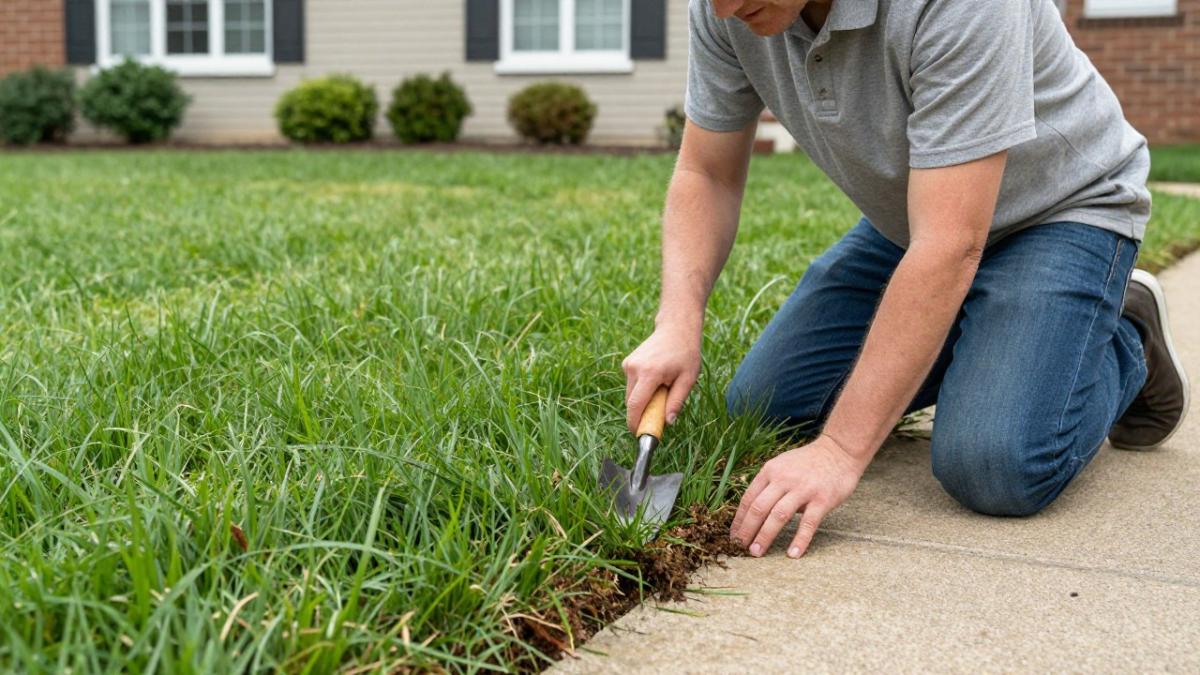
Brown spots usually come from localized stress rather than a whole-lawn problem. Look for dry sidewalk edges, driveway edges, and spots under trees, where roots compete for water.
Spots near pavement often dry out first because heat reflects off the concrete. Shaded spots can stay damp and invite fungus instead. Note where the spots sit, because location narrows the cause quickly.
Soil compaction is another common culprit. Compacted soil sheds water instead of absorbing it, so the grass above it dries out even after you water. A simple screwdriver test helps: if it will not push into the soil easily, the lawn likely needs aeration.
Fixing Watering When Grass Turns Brown Despite Watering
Watering every day and still seeing brown grass usually means the water is going to the wrong place, shallow, frequent sips that wet only the top inch of soil. The fix is to measure what your system actually delivers, then water deeply and less often.
Measure your sprinkler output with a catch-can test
- Scatter five to seven straight-sided cans, tuna cans work, across one zone, from the sprinkler head out to the edge of coverage.
- Run the zone for 15 minutes.
- Measure the depth in each can with a ruler and record the average.
- Multiply the average depth by four to get the output per hour.
- Divide 1 inch by that hourly rate to get the run time needed for one inch.
If the cans read unevenly, say, 0.1 inch near the head and 0.02 inch at the edge, the zone has coverage gaps. Adjust or replace heads, or run the zone in two shorter cycles with a pause so water soaks in instead of running off.
Water by soil depth, not by calendar
Aim for about one inch of water per week, including rain, delivered in one or two deep sessions. Then verify depth: push a screwdriver into the soil a few hours after watering. It should slide in 4 to 6 inches easily. If it stops at 1 or 2 inches, the water never reached the root zone and you need a longer, slower cycle.
- Sandy soil drains fast and holds little water. Split the weekly inch into two or three smaller cycles so it does not run past the roots.
- Clay soil absorbs slowly and puddles. Run shorter cycles with a 30- to 60-minute pause between them.
- Cool-season grasses such as tall fescue and Kentucky bluegrass typically need the full inch in summer heat.
- Warm-season grasses such as bermudagrass and zoysia often stay green on less and can go dormant without dying.
Read the signs of overwatering
Too much water starves roots of oxygen and produces brown patches that look like drought but are not. Check for:
- Soil that squishes or puddles underfoot hours after watering.
- A spongy feel when you walk the lawn.
- Brown areas in low spots or near downspouts, where water collects.
- Mushrooms or a musty smell, which point to saturated soil and fungus pressure.
If you see these, cut back frequency before adding more water.
Time it to the clock and the weather
Water between about 4 a.m. and 10 a.m. so blades dry during the day. Avoid evening watering, which keeps grass wet overnight and raises disease risk. Skip a cycle after meaningful rain, and during moderate drought let cool-season grass go semi-dormant rather than forcing growth with heavy irrigation.
Watch out: Do not trust the runtime on your controller as a measure of depth. Controllers count minutes, not inches, and output changes with pressure, head wear, and zone size, the catch-can test is the only reliable check.
University extension guidance on lawn watering and catch-can measurement
Step-by-Step: How to Revive Brown Grass
Once you know the cause, follow these steps to bring the lawn back.
- Confirm the grass is alive. Use the base test above. Skip reseeding if the crown is green.
- Correct the water schedule. Water deeply, once or twice a week, early in the morning.
- Raise your mowing height. Set the mower to cut no shorter than about three inches for most cool-season lawns, and keep blades sharp. Dull blades tear grass and leave brown tips.
- Stop heavy fertilizer. Excess nitrogen can burn grass. If you see fertilizer streaks, rinse the area with water right away.
- Aerate compacted soil. Hollow-core aeration in the fall or spring opens the soil so water can reach the roots.
- Top-dress and overseed bare areas. Spread a thin layer of compost, then sow seed matched to your grass type and keep the surface moist until it germinates.
- Watch for fungus. Brown patch disease shows up as circular brown areas, often in hot, humid weather with wet nights. Improve airflow, water in the morning, and ask a local extension office about treatment if it spreads.
Expected recovery: Dormant grass often greens within two to four weeks after rain returns. Reseeded patches usually take two to four weeks to germinate and several more weeks to blend in. Track progress with photos every week so you can see small gains.
Once you know the cause, these steps bring the lawn back, with the timing and targets the article gives for each one.
| Step | What to do | Time or frequency |
|---|---|---|
| Confirm the grass is alive | Use the base test; skip reseeding if the crown is green | Two minutes |
| Correct the water schedule | Water deeply, early in the morning | Once or twice a week |
| Raise your mowing height | Cut no shorter than about three inches for most cool-season lawns | Keep blades sharp |
| Stop heavy fertilizer | Rinse fertilizer streaks with water right away | Immediately |
| Aerate compacted soil | Hollow-core aeration to open the soil | Fall or spring |
| Top-dress and overseed | Thin compost layer, then matched seed kept moist | Germination in two to four weeks |
| Watch for fungus | Improve airflow, water in the morning | Check during hot, humid weather |
Will Watering Dead Grass Bring It Back?
No. Watering cannot revive grass that is truly dead, because the crown and roots have stopped living. Water will only soak the soil and feed weeds. This is why the base test comes first.
If the grass is dead, the fix is to remove the dead turf, loosen the soil, add compost, and reseed. Healthy grass will not return on its own from dead crowns.
Be patient with dormant grass, though. Many lawns that look dead in midsummer come back once cooler weather and steady rain arrive.
Booking a Lawn Health Check With Lover's Lawn Services
Some brown patches are hard to diagnose from the sidewalk, especially when grubs, fungus, and drought stress overlap. Some brown patches are hard to diagnose from the sidewalk. Lover's Lawn Services LLC can help, and you can book a lawn health check for current pricing and to schedule a visit.
Frequently Asked Questions
How do I fix a browning lawn?
Start by checking whether the grass is dormant or dead. Pull a few blades from the brown area and look at the base: green or white crowns usually mean the grass is alive. Then adjust watering to deliver about one inch per week, including rain, applied deeply and less often so roots grow down. Mow at the upper recommended height for your grass type, keep the mower blade sharp, and avoid heavy fertilizer during heat or drought. If brown patches are circular, spread, or show a dark ring, inspect for brown patch disease before treating.
Can grass that has turned brown be saved?
Often, yes. Grass that has gone brown from heat or drought frequently remains alive in its crown and roots, and it will green up once conditions improve or irrigation is corrected. Dormant turf can survive several weeks without water. Grass killed by fungus, chemical burn, or prolonged drought usually needs reseeding or sod in the affected spots. A gentle tug test helps: living grass resists pulling, while dead grass lifts easily from the soil.
Will watering dead grass bring it back?
No. Water cannot revive grass whose crown and roots have died. Watering dead turf only wastes water and can encourage fungal problems in the surrounding lawn. Confirm death first by checking the base of the blades and the root zone. If the area is dead, rake out the debris, loosen the soil, and overseed or lay sod, then keep the new seedbed consistently moist until the new grass establishes.
Why is my grass turning brown in spots despite regular watering?
Uneven sprinkler coverage, soil compaction, thatch buildup, and sidewalk or driveway edges that reflect heat are common causes. Place empty cans in the lawn and run the sprinklers for 15 minutes to measure how evenly water is applied. Core aeration relieves compaction, and dethatching reduces the layer that blocks water from reaching roots. Pet urine, grubs, and localized chemical spills can also cause spots that persist even with adequate watering.