 How-to
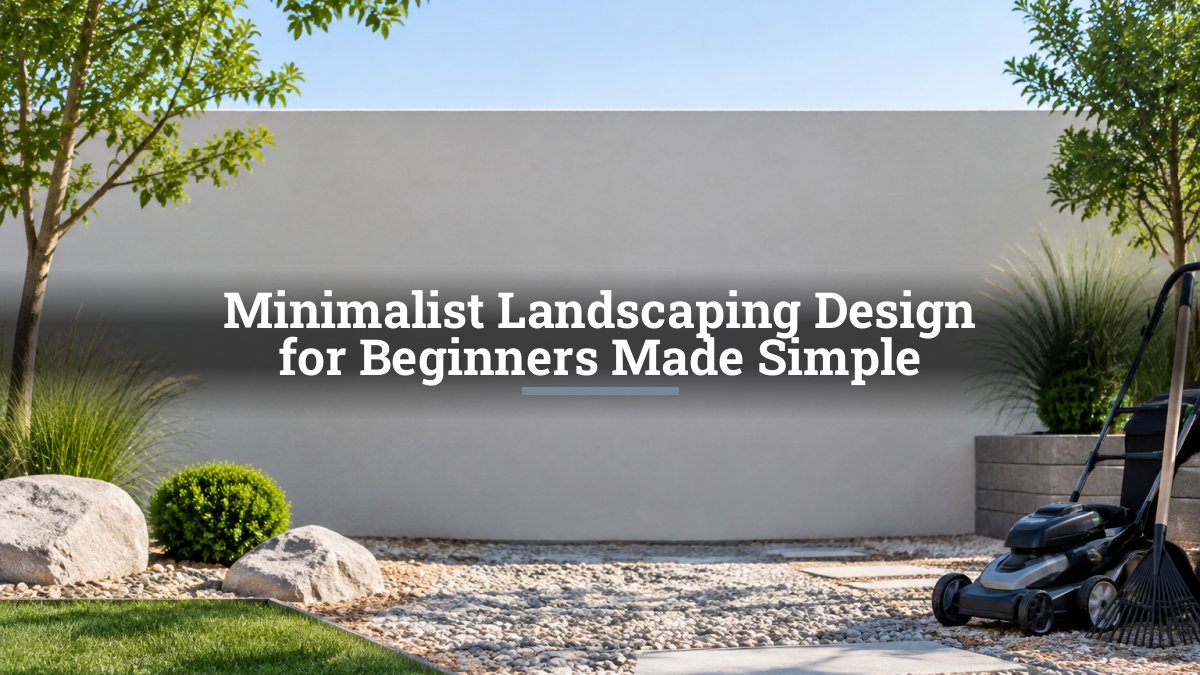
Minimalist Landscaping Design for Beginners Made Simple
Last Updated: November 18, 2026
Quick Summary
Minimalist landscaping for beginners starts with a site assessment: map sun, drainage, and soil before drawing any design. Fix soil and grading first, sketch a simple bubble diagram, then plan irrigation and access. Restraint carries the style, so limit your palette and repeat a few plant types.
- Track shade at morning, noon, and late afternoon, and mark where water pools after rain.
- Work 2 to 4 inches of compost into the top 6 to 8 inches of soil before planting.
- Keep pathways at least three feet wide and gates at least 36 inches wide for mowers.
- Build the backbone from three to five structural plants, then fill with one ground cover.
- Add two to three inches of mulch and refresh it each spring as it breaks down.
Table of Contents
- Start With a Site Assessment Before You Design Anything
- The Design Principles That Make Minimalist Landscaping Work
- Simple Landscape Design for Small Spaces
- Minimalist Landscape Design Front Yard Curb Appeal
- Minimalist Landscaping Design for Beginners on a Budget
- Minimalist Landscaping Design for Beginners Low Maintenance
- Book a Walkthrough With Lover's Lawn Services
- Frequently Asked Questions
Start With a Site Assessment Before You Design Anything
Minimalist landscaping design for beginners starts with reading the yard before drawing a single line. The clean, Scandinavian-inspired look you admire in photos is built on site conditions, not on plant lists. Skip the assessment and you will fight your own yard for years.
Step 1: Map Sun, Drainage, and Soil
Spend one sunny day tracking where shade falls at morning, noon, and late afternoon. Mark the low corner where water pools after rain, because that spot decides which plants survive. Push a trowel into the soil in three or four places; if it crumbles easily, drainage is reasonable, and if it holds water like clay, plan a raised bed or a drainage fix first.
A simple percolation check tells you more than a soil test kit: dig a hole roughly 12 inches deep and 12 inches wide, fill it with water, let it drain, then refill and time how long the second fill takes to drop. If water stands for more than a few hours, you have a drainage problem that no plant palette will fix.
Step 2: Fix Soil and Grading Before Anything Else
Minimalist designs use fewer plants, so each one carries more visual weight, which means each one needs good ground. Most landscape soils benefit from 2 to 4 inches of compost worked into the top 6 to 8 inches, which improves both drainage in clay and water retention in sand. If your yard slopes toward the house, correct it with soil before you design a single bed.
Step 3: Sketch a Bubble Diagram of Your Layout
A bubble diagram is a rough sketch of circles and ovals that shows how each area of the yard connects before you commit to shapes. Draw the house, the doors you actually use, and the views from your main windows. Then block in circles for lawn, planting beds, paths, and any seating. No ruler, no detail. This is site planning at its simplest, and it prevents the most common beginner mistake: buying plants before deciding where they go.
Step 4: Plan Irrigation and Access
Before planting, decide how water reaches the beds. A simple drip line on a timer is the lowest-effort option for a minimalist layout and keeps foliage dry, which reduces disease. Run the line along the bed edges and stub out a connection at each planting zone. Also confirm that paths and maintenance access are wide enough, a wheelbarrow needs about 3 feet, and a mower needs a gate at least 36 inches wide. These constraints are cheap to plan now and expensive to retrofit later.
The Design Principles That Make Minimalist Landscaping Work
Minimalist landscaping works because of restraint, not decoration. A handful of rules carry the whole style, and every one of them is easier to follow than it sounds.
- One focal point per view. Pick a single tree, boulder, or specimen plant and let everything else support it.
- Clean lines over curves everywhere. Choose either straight geometry or gentle arcs, then repeat it.
- Negative space is a material. Empty lawn and clear paving are part of the design, not gaps to fill.
- Limit the palette. Two or three foliage colors plus one accent reads calmer than ten.
- Repetition beats variety. The same ornamental grass repeated in three beds looks intentional; three different plants look accidental.
- Layer in threes. Tall, medium, and ground cover in every bed gives visual structure without clutter.
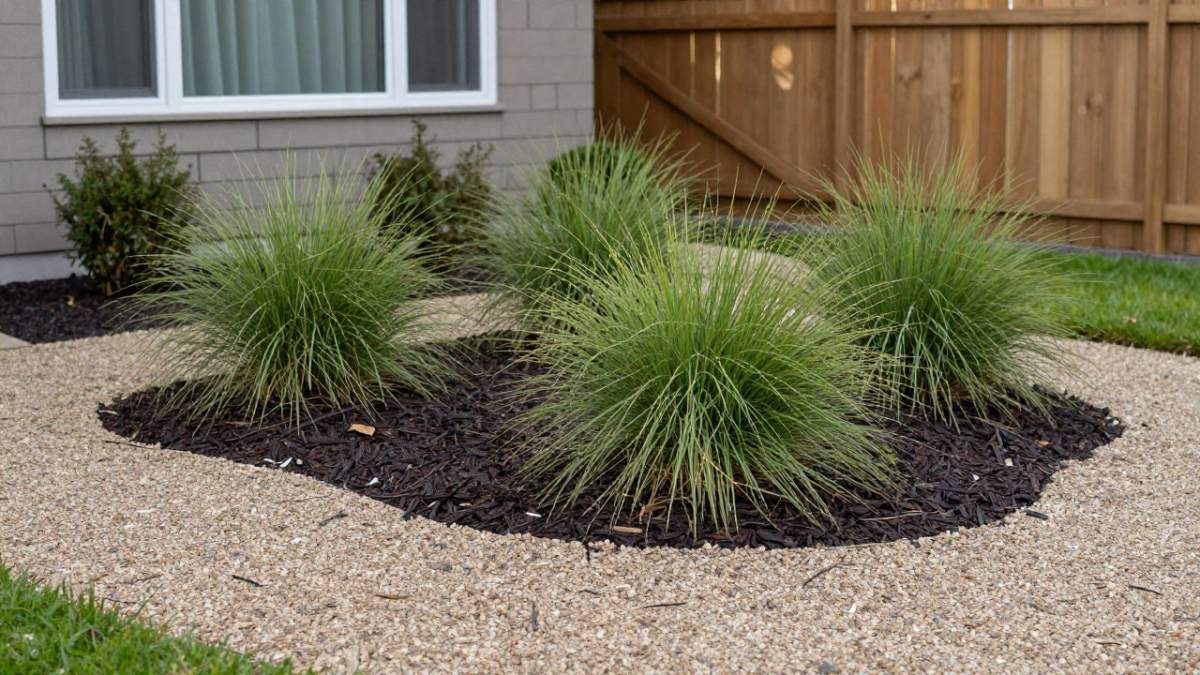
The design principles above also explain why this style suits busy households. Fewer plant types mean simpler care, and clear lines mean less edging work. That is the trade minimalist gardens offer: more thought up front, less maintenance later.
Simple Landscape Design for Small Spaces
Simple landscape design for small spaces follows one rule above all: fewer, larger moves. A small yard with one well-placed tree, a single path, and one generous bed looks more finished than a crowded one. Keep pathways at least three feet wide so the space feels open, and let planting run to the fence line to borrow depth. If your property is compact, our guide to sustainable landscaping for small properties goes deeper on compact layouts and plant choices.
Small yards also benefit from vertical interest. A wooden fence, a tall ornamental grass, or a slim tree pulls the eye upward and makes the footprint feel larger. Resist filling every corner; the empty space is doing work.
Minimalist Landscape Design Front Yard Curb Appeal
Minimalist landscape design front yard curb appeal comes down to symmetry, a clear path to the door, and one strong anchor plant. Buyers and neighbors read a front yard in seconds, so the goal is a clean silhouette rather than a busy border.
Start at the street and walk to your door. Anything that interrupts that line, from overgrown shrubs to a crooked edging strip, is what to fix first. Match the hardscape to the house: straight walkways suit rectangular facades, while gentle arcs soften brick colonials. Keep foundation plantings low enough to see the windows. For more on keeping that look with less upkeep, read how to keep curb appeal up with minimal effort.
Minimalist Landscaping Design for Beginners on a Budget
Minimalist landscaping can keep costs down, because the look rewards fewer plants and simple materials. Spend where it shows: soil prep, mulch, and one healthy specimen tree. Save on the rest.
- Buy younger, smaller trees and shrubs; they establish faster and cost far less.
- Use one mulch type throughout instead of several bagged varieties.
- Choose gravel, crushed stone, or concrete pavers over cut stone.
- Divide perennials from neighbors instead of buying full flats.
- Phase the work: beds this season, path next season.
A realistic phased plan beats a single expensive install. Start with drainage and soil, then hardscape, then plants. Watch out: skipping soil preparation to save money is the one shortcut that reliably costs more later, because plants in poor ground fail and get replaced.
Minimalist Landscaping Design for Beginners Low Maintenance
Minimalist landscaping design for beginners low maintenance depends on plant selection more than on any tool. Choose plants that suit your sunlight and soil, group them by water needs, and the yard largely takes care of itself. A minimalist design can quietly become crowded or labor-intensive as plants mature, so the choices you make at planting time decide your workload years later.
Select Plants by Sun, Water, and Climate
Match every plant to the light it will actually get, not the light you wish it had. Full sun means six or more hours of direct light; part sun is roughly three to six; shade is under three. Group plants by water need so one irrigation zone serves one kind of plant, mixing thirsty and drought-tolerant species in the same bed forces you to overwater one to keep the other alive. Favor ornamental grasses, ground cover, and compact evergreens over high-input annuals. In colder zones, look for plants rated to your USDA Plant Hardiness Zone (the map runs from Zone 2 in the coldest pockets to Zone 13 in the warmest); in hot, dry regions, choose water-wise natives and Mediterranean-type plants that tolerate reflected heat.
Space for Mature Size, Not Nursery Size
Read the mature spread on every tag and plant to that number, not to the size in the pot. A shrub that reaches 4 feet wide needs 4 feet of center-to-center spacing if you want it to read as a single specimen; plant two of them 2 feet apart and you have created a hedge you did not plan for. This is where minimalist yards fail: tight spacing looks full in year one and turns into a pruning job by year three. Watch out: the most common beginner error is filling gaps with extra plants "for now", in a minimalist design, those extras become the clutter you spend weekends cutting back.
Build a Realistic Maintenance Calendar
Add two to three inches of mulch to suppress weeds and hold moisture, and refresh it each spring as it breaks down. Set a simple irrigation schedule rather than hand-watering at random; new plants need deep, infrequent watering in their first season to push roots down. For a step-by-step routine, our guide on maintaining a minimalist lawn aesthetic walks through the seasonal checklist.
| Task | When | Time Needed |
|---|---|---|
| Refresh mulch | Spring | 2-3 hours |
| Cut back ornamental grasses | Late winter | 1 hour |
| Edge beds and paths | Monthly | 30 minutes |
| Deep-water new plants | First season | 20 minutes weekly |
| Prune shrubs for shape | Twice a year | 1-2 hours |
| Divide overgrown perennials | Every 2-3 years | 2-3 hours |
Low maintenance is largely a design decision made before planting. Get the plant selection and spacing right and the calendar above stays short; get them wrong and the same calendar doubles.
Book a Walkthrough With Lover's Lawn Services
The gap between a plan on paper and a yard that actually looks calm is usually execution: grading, soil, and the discipline to keep the design simple. That is where we come in. If you would rather hand off the upkeep, you can review professional lawn mowing and see what ongoing care looks like. For Northern Virginia conditions specifically, our minimalist garden design guide for Northern Virginia covers sun, soil, and drainage in more detail.
Your yard does not need more plants. It needs a plan, and someone reliable to keep it on track. Get started with Lover's Lawn Services LLC and turn your landscape into a clean, balanced space you no longer have to think about.
Frequently Asked Questions
What is the 3-5-7 rule in landscaping?
The 3-5-7 rule is a planting guideline that groups plants in odd numbers, usually three, five, or seven of the same species, to create a natural look. Odd groupings read as less formal than even pairs and draw the eye along a bed. In minimalist landscaping, use it with one repeated plant type so the repetition stays calm rather than busy. Space each group by its mature width, not its nursery-pot size, so the bed still looks intentional after two or three seasons.
What plants work well in a low-maintenance minimalist garden?
Ornamental grasses, sedges, lavender, boxwood, and low ground covers such as creeping thyme handle a minimalist palette well because they keep their shape with little pruning. Choose plants suited to your sunlight and soil first, then repeat two or three species across the yard. In Northern Virginia, native grasses and evergreens hold structure through winter, which matters when the design relies on form rather than flowers. Group each type in odd numbers and mulch beds to cut weeding.
How can I create a minimalist landscape on a budget?
Phase the work instead of buying everything at once. Start with site prep and hardscape, since grading, edging, and a pathway cost less to do correctly the first time than to redo. Buy smaller plants in larger quantities of one or two species, which usually costs less than a mixed selection. Keep the lawn simple and invest in consistent maintenance, because a clean cut and crisp bed edges do more for a minimalist look than extra plant varieties.
How do you make a landscape look minimalist?
Limit the palette to two or three plant types, repeat them in odd-numbered groups, and let negative space do the work. Use clean lines for bed edges and pathways, one focal point per view, and a neutral base of gravel, mulch, or stone. Remove clutter such as lawn ornaments and mixed bed shapes. Consistent maintenance is what holds the look together, since overgrowth erases the clean lines that define minimalist landscaping.