 How-to
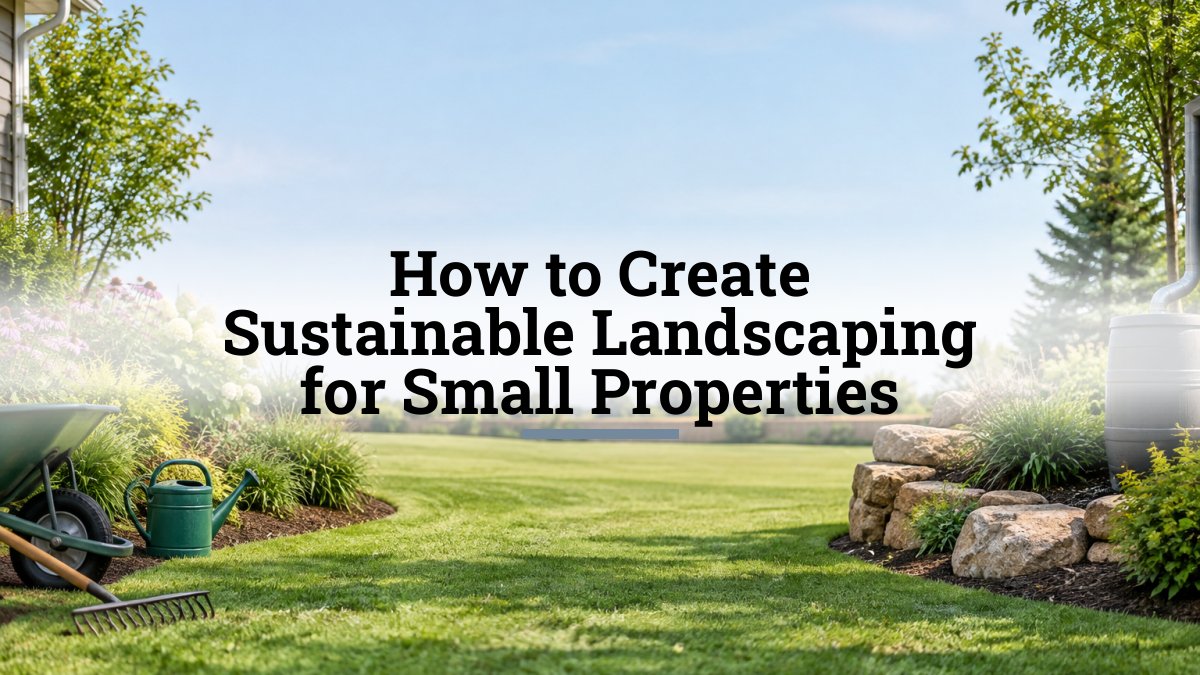
How to Create Sustainable Landscaping for Small Properties
Last Updated: November 4, 2026
Quick Summary
Sustainable landscaping for small properties means designing and caring for outdoor spaces to conserve resources and support local ecological balance. Map sun, shade, drainage, and paths first, then choose site-matched plants, targeted watering, and practical features that reduce upkeep without crowding the yard.
- Check each plant’s mature size and group plants with similar water needs.
- Replace turf in one manageable section and keep lawn where it serves a purpose.
- Use drip irrigation to direct water near plant roots.
- Focus compost and mulch on planting beds, keeping mulch away from stems and trunks.
Table of Contents
- 1. Start Sustainable Landscaping for Small Properties With a Simple Plan
- 2. Choose Low Maintenance Sustainable Landscaping for Small Properties
- 3. Replace Some Turf With Eco-Friendly Lawn Alternatives
- 4. Use Xeriscaping and Water-Smart Irrigation in a Small Yard
- 5. Improve Soil Naturally With Compost and Mulch
- 6. Add Vertical Planting, Reclaimed Materials, and Efficient Lighting
- 7. Book a Sustainable Yard Assessment With Lover’s Lawn Services
- Frequently Asked Questions
1. Start Sustainable Landscaping for Small Properties With a Simple Plan
Sustainable landscaping for small properties works best when each feature has a clear job: support plants, manage water, or reduce upkeep. We favor clean, balanced outdoor spaces. Sustainable landscaping is the design and care of an outdoor space in ways that conserve resources and support local ecological balance.
Start by mapping sun, shade, drainage, and the routes people use. Mark problem areas, such as standing water or thin turf, before choosing plants or materials. A common mistake is buying plants first, then discovering the site cannot meet their light or moisture needs.
Use this short planning checklist:
- Identify sunny and shaded areas.
- Note where water collects or runs off.
- Keep clear paths to doors and seating.
- Choose one priority, such as less watering or easier upkeep.
For a broader introduction, read our beginner guide to eco-friendly yard care. The USDA Plant Hardiness Zone Map can help narrow plant choices by local winter conditions (2023 USDA Plant Hardiness Zone Map).
2. Choose Low Maintenance Sustainable Landscaping for Small Properties
Low maintenance sustainable landscaping for small properties comes from matching plants to the site, not filling every open space. Choose native plants and climate-resilient perennials suited to the yard’s sun and soil; established, well-matched plants generally need less intervention than poorly placed ones.
Check a plant’s mature size before planting. In a compact bed, a plant that spreads beyond its space can crowd paths and require frequent trimming. Leave room for airflow, and group plants with similar water needs so irrigation stays targeted.
The National Wildlife Federation’s native plant finder can help identify native species by ZIP code. For another view of sustainable care choices, see our eco-friendly and chemical lawn care comparison. In practice, the simplest planting plan is often the one you can maintain consistently.
3. Replace Some Turf With Eco-Friendly Lawn Alternatives
Eco-friendly lawn alternatives can reduce the area that needs mowing and watering, while keeping useful open space where you need it. Replace turf in narrow side yards, awkward corners, or places where grass struggles, rather than removing the whole lawn at once.
Options include low-growing ground cover, a compact perennial bed, or a small seating area. Choose based on foot traffic and light: a planted bed suits a low-traffic edge, while a path or patio works better where people regularly walk.
A common mistake is using one alternative across the entire yard without checking its growing conditions. Start with one manageable section, observe how it performs, then repeat what works. Keep lawn where it serves a purpose, such as play or access.
4. Use Xeriscaping and Water-Smart Irrigation in a Small Yard
Xeriscaping is a landscape approach that reduces the need for supplemental watering through suitable plant selection, soil care, and efficient irrigation. In a small yard, combine drought-tolerant plants with targeted watering rather than treating every bed and lawn area alike.
Drip irrigation directs water near plant roots, while rain barrels can collect roof runoff for later garden use where local rules allow. Check the soil before watering; a fixed schedule can waste water after rain or keep already-moist beds too wet.
The EPA’s WaterSense outdoor water-use guidance offers practical advice on efficient irrigation. The real difference between a water-smart yard and a thirsty one often comes down to placement: group plants by water needs and avoid spraying paths or hard surfaces.
These water-smart methods help match watering to the needs of each part of a small yard.
| Method | Best for | Key difference |
|---|---|---|
| Drought-tolerant plants | Beds needing less supplemental water | Plant selection reduces watering needs |
| Drip irrigation | Targeted watering | Directs water near plant roots |
| Rain barrels | Reusing roof runoff | Collect water for later garden use |
| Grouping plants by water needs | Efficient irrigation | Keeps watering targeted |
5. Improve Soil Naturally With Compost and Mulch
Natural soil improvement starts with protecting the soil surface and adding organic matter where beds need it. Compost can act as a soil amendment, while mulch helps limit moisture loss and suppress weeds around plants.
Keep mulch away from plant stems and tree trunks, and avoid piling it against siding. A common mistake is adding more material before checking drainage; a persistently soggy bed needs a drainage assessment, not another layer.
For a small property, focus compost and mulch on planting beds rather than spreading them everywhere. Lover’s Lawn Services LLC offers mulching service information for readers planning to refresh garden beds. This targeted approach keeps materials where they do the most useful work.
6. Add Vertical Planting, Reclaimed Materials, and Efficient Lighting
Vertical planting makes use of walls and fences when ground space is limited, while reclaimed materials can define beds without adding unnecessary new surfaces. Choose a stable planter suited to its location, and use reclaimed edging only when it is clean and in good condition.
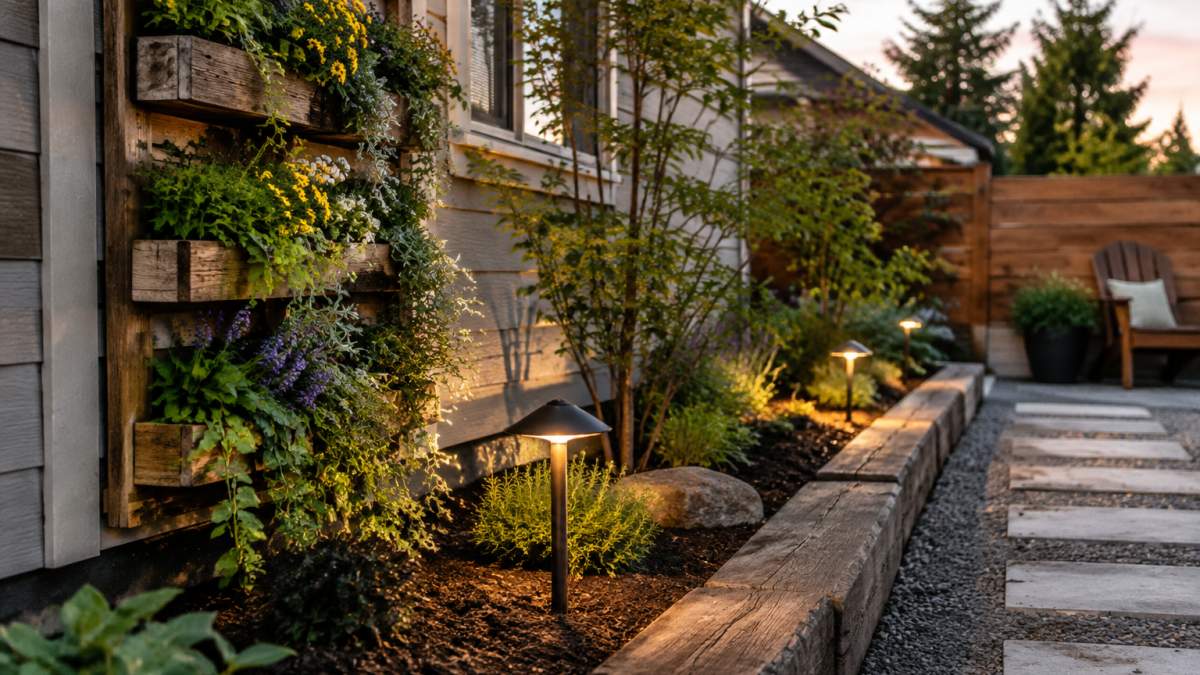
For lighting, use a small number of low-voltage fixtures aimed at steps or paths, not broad areas that do not need illumination. That keeps the design calm and avoids unnecessary energy use. Where a patio or path is needed, permeable hardscaping can help water soak into the ground instead of increasing stormwater runoff.
Try this small-space sequence: add one vertical planter, reuse sound edging, then place lighting only where safe nighttime access requires it. Avoid buying several features at once; a crowded yard is harder to care for and less restful.
7. Book a Sustainable Yard Assessment With Lover’s Lawn Services
Lover’s Lawn Services LLC offers landscaping with a Scandinavian-inspired approach, eco-friendly practices, and an emphasis on clean, balanced outdoor environments.
Explore our landscaping services.
Frequently Asked Questions
What are some examples of sustainable landscaping for a small property?
Examples include planting native species suited to the local hardiness zone, replacing a little-used patch of turf with ground cover or perennial beds, and using mulch to reduce evaporation. A rain barrel, drip irrigation, composting, and permeable surfaces can also fit a compact yard. Vertical planters make use of walls or fences, while reclaimed materials can define beds without adding unnecessary new hardscape.
How can I make a small yard more sustainable and low maintenance?
Group plants with similar water needs, choose climate-resilient native plants, and mulch exposed soil to limit watering and weeds. Keep lawn only where it serves a clear purpose, such as a play area or walkway. Drip irrigation can deliver water to plant roots, and compost can improve soil over time. These choices support low maintenance sustainable landscaping for small properties without requiring every part of the yard to be redesigned at once.
What are eco-friendly lawn alternatives for a small yard?
Options include native ground covers, perennial planting beds, and a smaller lawn bordered by pollinator-friendly plants. Choose species based on the site’s light, soil, and hardiness zone rather than appearance alone. A small property can also use containers or vertical planting to add greenery without taking up more ground space. Keep a lawn area if it has a practical use, and replace only the sections that are difficult to maintain or rarely used.
What is xeriscaping, and can it work in a small yard?
Xeriscaping is a landscape approach that reduces the need for supplemental irrigation through suitable plant choices, soil preparation, mulch, and efficient watering. It can work in a small yard by grouping drought-tolerant plants together and using drip irrigation where watering is needed. Xeriscaping does not mean a yard must be bare or filled with gravel. Select plants that suit the local climate and site conditions, then arrange them in compact beds or containers.