 how-to
Organic Weed Control for Residential Lawns: A How-To Guide
Table of Contents
- Understanding Organic Weed Control and Why It Matters
- Identifying Weeds Before Choosing a Control Method
- How to Prevent Weeds in a Lawn Before They Start
- Natural Weed Killer for Grass: Contact and Post-Emergent Treatments
- Manual Weed Removal Tools and Hand-Pulling Techniques
- Smothering Weeds with Mulch, Fabric, and Boiling Water
- Lawn Aeration and Overseeding for Weed Suppression
- Safety Considerations: Protecting Pets, Children, and Pollinators
- Frequently Asked Questions
Last Updated: October 14, 2026
Understanding Organic Weed Control and Why It Matters
Organic weed control is the practice of removing and preventing weeds without synthetic pesticides or herbicides. At Lover's Lawn Services LLC, we focus on methods that protect your lawn's health.
Most homeowners assume they need chemical herbicides to win the weed battle. That's not true. The real advantage of organic weed control comes from combining prevention with targeted removal.
This matters because your lawn is an ecosystem. When you kill weeds with chemicals, you're also damaging the beneficial microbes, earthworms, and fungi that make soil healthy. Organic approaches work with your lawn's natural defenses instead of against them.
Identifying Weeds Before Choosing a Control Method
You can't treat a weed effectively until you know what you're dealing with. Different weeds respond to different strategies. Pulling a dandelion works. Pulling crabgrass usually doesn't, because the root snaps off underground.
Annual vs. Perennial Weeds
Annual weeds complete their entire life cycle in one year. They germinate in spring, grow, flower, drop seeds, and die by fall. Examples include crabgrass, chickweed, and purslane.
Perennial weeds come back year after year from the same root system. Dandelions, plantain, and clover are perennials. They're tougher to eliminate because the root can survive winter and regrow in spring.
Why this matters: Annual weeds are easiest to prevent with pre-emergent control before germination. Perennials need root removal or repeated treatments to exhaust the plant's energy reserves.
Broadleaf Weeds vs. Grassy Weeds
Broadleaf weeds have wide, flat leaves and visible veins. Dandelions, clover, and plantain are broadleaf weeds. They stand out against your turf and respond well to manual removal and contact herbicides.
Grassy weeds look like grass because they are grass. Crabgrass and foxtail are grassy weeds. They're harder to spot until they're established, and they blend in with your lawn. Manual removal is tedious because you have to dig deep to get the whole plant.
The key difference: Broadleaf weeds are easier to spot and pull. Grassy weeds need prevention before they germinate because removal is labor-intensive once they're growing.
How to Prevent Weeds in a Lawn Before They Start
Prevention is the most effective and least labor-intensive approach to organic weed control. Stop weeds before they germinate, and you'll spend far less time removing them later.
Using Corn Gluten Meal as a Pre-Emergent
Corn gluten meal is a natural byproduct of corn processing that prevents weed seeds from germinating.
How it works: Corn gluten meal releases a compound that inhibits root development in germinating seeds. It stops the seed from sprouting without harming established plants.
Application timing is critical. Apply corn gluten meal in early spring, 4-6 weeks before your area's average last frost date.
Coverage matters. You need about 20 pounds per 1,000 square feet for effective weed suppression. Spread it evenly across your lawn and water it in lightly.
One limitation: Corn gluten meal won't stop weeds already growing. It only prevents new seeds from sprouting.
Dense Turf and Regular Mowing
The simplest prevention strategy is making your lawn so thick that weeds can't take hold. A dense turf crowds out weed seedlings before they establish.
Build density through:
- Mowing at the right height. Keep your grass 2.5-3.5 inches tall. Taller grass shades the soil and prevents weed seeds from germinating. Shorter mowing weakens your grass and opens space for weeds.
- Regular mowing. Mow weekly during the growing season. Consistent mowing prevents weeds from flowering and dropping seeds.
- Overseeding bare patches. Bare soil is an invitation for weeds. Overseed thin areas in spring and fall to fill gaps with desirable grass.
This approach takes time but requires no chemicals or special tools. It's the foundation of healthy lawn maintenance.
Natural Weed Killer for Grass: Contact and Post-Emergent Treatments
Once weeds are growing, prevention won't help. You need to kill them. Contact herbicides and botanical solutions work on actively growing weeds.
Vinegar and Acetic Acid Solutions
Vinegar is a contact herbicide that kills the above-ground parts of weeds on contact. The acetic acid in vinegar dries out plant tissue.
Household vinegar (5% acetic acid) works on young, tender weeds (Vinegar: An Alternative to Glyphosate?).
For better results, use horticultural vinegar (20% acetic acid). It kills larger weeds more reliably.
Important: Vinegar kills everything it touches, including desirable grass. Spray carefully on weeds only, or use a brush to apply it directly to broadleaf weeds.
Vinegar won't kill roots. Perennial weeds will regrow after a few weeks. Repeat applications every 2-3 weeks exhaust the plant's energy reserves and eventually kill it.
Herbicidal Soaps and Plant-Oil Products
Herbicidal soaps are made from potassium salts of fatty acids. They break down the waxy coating on weed leaves, causing the plant to dry out.
Plant-oil products use clove oil, garlic oil, or citrus oil as the active ingredient. These botanical options work similarly to soaps but come from plant sources.
Both work best on young, actively growing weeds. Mature weeds with thick, waxy leaves are harder to kill. Apply in warm weather when weeds are growing vigorously.
Like vinegar, these are contact herbicides. They kill what they touch but don't affect roots. Plan on repeat applications for perennial weeds.
Clove Oil, Garlic Oil, and Other Botanical Options
Clove oil and garlic oil are natural plant extracts that kill weeds on contact. They're less common than vinegar or herbicidal soaps but work on similar principles.
These oils are often mixed with soap to help them stick to leaves. Apply on calm days so the spray doesn't drift onto desirable plants.
Botanical options appeal to gardeners seeking the most "natural" approach. They work, but they're not more effective than vinegar or soaps. Cost and availability are usually higher.
Manual Weed Removal Tools and Hand-Pulling Techniques
Sometimes the simplest tool is the best. Manual removal works on any weed, at any stage of growth, and requires no chemicals.
Choosing the Right Tool for Your Weeds
Hand pulling works for weeds with shallow roots (clover, chickweed). Grab the base of the plant and pull steadily. The entire root should come out.
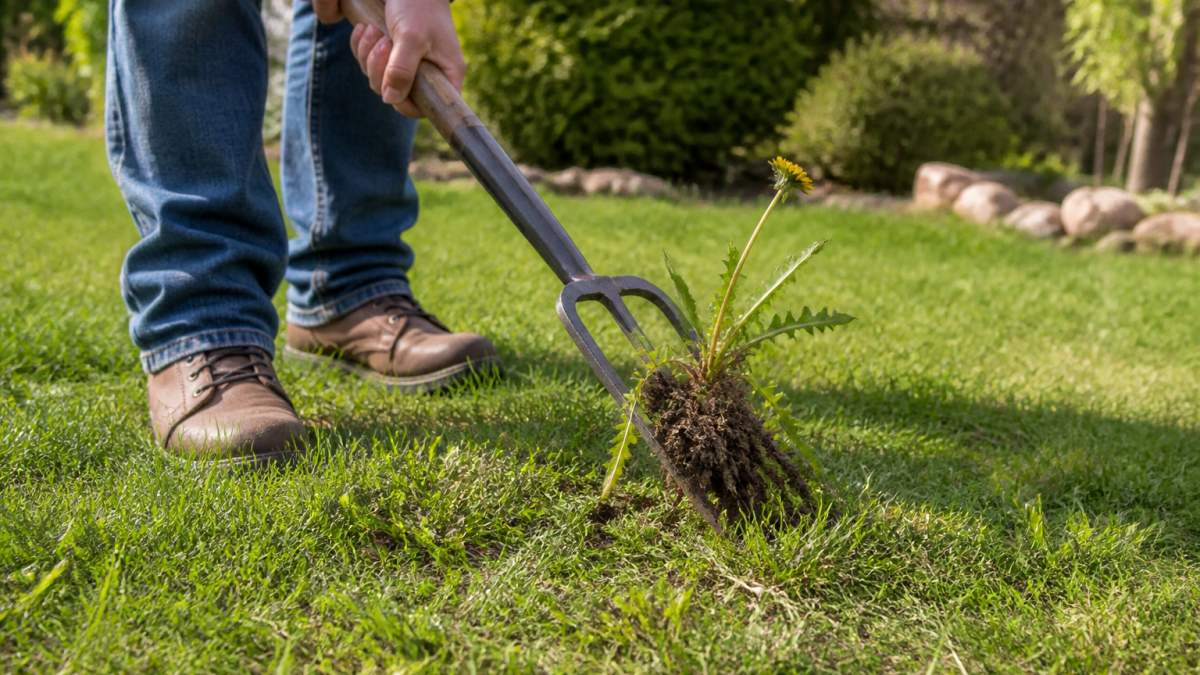
Weeding forks (also called diggers or dandelion tools) have a long handle and two or three prongs.
Hoes and cultivators work for small weeds in garden beds. They slice weeds off just below the soil surface. This works for annual weeds but won't kill perennials because the root stays in the ground.
Flame weeders use propane to heat weeds until they wilt. They work well on driveways and patios where you don't mind scorching the soil. Avoid them in lawn areas where desirable grass is nearby.
Best Timing and Root Removal
Pull weeds after rain when soil is moist. Wet soil releases roots more easily than dry soil.
For perennial weeds, the goal is complete root removal. If you leave even a small piece of root in the ground, the weed will regrow. Use a weeding fork to dig deep and extract the entire taproot.
For annual weeds, timing matters less because they die at the end of the season anyway. But removing them before they flower prevents thousands of seeds from spreading.
The best time to pull is spring and early summer when weeds are young and roots are shallow. Fall removal works too, but mature weeds are tougher to extract.
Smothering Weeds with Mulch, Fabric, and Boiling Water
Physical barriers block sunlight and prevent weeds from growing. This approach works well in garden beds and problem areas.
Mulch and Weed Fabric for Long-Term Suppression
Mulch is organic material (wood chips, shredded bark, compost) spread over soil. A 2-3 inch layer blocks sunlight and prevents weed seeds from germinating.
Mulch also improves soil health as it breaks down. It retains moisture and moderates soil temperature. Over time, it becomes part of your soil.
Weed fabric (landscape fabric) is a permeable barrier that blocks weeds while allowing water and air through.
Fabric works well under mulch in beds. It prevents perennial weeds from pushing through.
In lawn areas, mulch isn't practical. But in planting beds and around trees, it's one of the most effective and low-maintenance weed suppression methods.
Boiling Water and Household Methods
Boiling water kills any plant it touches. Pour it directly on weeds in cracks, on driveways, or in areas where you want complete weed death without regrowth.
This method is fast and costs nothing. It works immediately. The downside is safety. Boiling water can splash and burn skin.
Salt is sometimes recommended as a weed killer. It works but damages soil and can harm desirable plants nearby. Avoid it on lawns.
Dish soap mixed with water doesn't kill weeds but can help other treatments stick to leaves. It's not a standalone solution.
Lawn Aeration and Overseeding for Weed Suppression
A healthy, dense lawn is the best long-term defense against weeds. Aeration and overseeding improve soil and turf density.
Aeration involves punching small holes in the soil to relieve compaction and improve drainage.
Overseeding means spreading grass seed over your existing lawn. The new grass fills thin spots and thickens your turf.
Together, these practices create a dense lawn that crowds out weeds naturally. They're not quick fixes.
Aerate in spring or fall when soil is moist. Overseed immediately after aeration so seed makes good contact with soil.
This integrated approach combines organic weed control with lawn health. You're not just killing weeds. You're building a lawn that prevents them.
Safety Considerations: Protecting Pets, Children, and Pollinators
Organic weed control methods are safer than synthetic herbicides, but they're not risk-free. Handle them responsibly.
Vinegar and botanical oils are low-toxicity but can irritate skin and eyes.
Corn gluten meal is safe for pets and children. It's non-toxic and won't harm pollinators.
Manual removal poses no chemical risk. The only hazard is physical strain from digging and pulling.
Boiling water is a burn hazard.
Weed fabric and mulch are safe. They don't introduce chemicals into your yard.
When using any treatment, follow label directions. Apply on calm days to minimize drift.
The goal of organic weed control is a healthy lawn without synthetic chemicals.
Weeds compete with your lawn for water, nutrients, and space. Ready to take control of your lawn without chemicals? Learn more about sustainable lawn care practices and get started with a free consultation from our team today.
Frequently Asked Questions
How do you control weeds organically in a lawn?
Organic weed control combines prevention and treatment. Start with pre-emergent control using corn gluten meal in spring to stop weed seeds from germinating. For existing weeds, use contact herbicides like vinegar-based solutions or herbicidal soaps, manual hand-pulling with proper tools to remove roots, or smothering with mulch and weed fabric. Regular mowing, dense turf maintenance, and soil health create conditions where weeds struggle to establish. Most effective results come from combining multiple methods rather than relying on one treatment alone.
What is the best natural weed killer for grass without harming turfgrass?
Vinegar solutions with 20% acetic acid work well for broadleaf weeds and young annual weeds, but require careful application to avoid damaging desirable grass. Herbicidal soaps and plant-oil products offer selective control when applied directly to weed foliage. For the safest option on established lawns, manual removal with hand-pulling or a weeding tool removes roots completely without any risk to turfgrass. Application timing matters: treat weeds when they're young and actively growing for best results. Always spot-treat rather than broadcast applications to protect your lawn.
How can I prevent weeds from growing in my lawn?
Prevention starts with a healthy, dense lawn that crowds out weeds. Apply corn gluten meal in early spring as a pre-emergent to stop weed seeds from germinating. Maintain regular mowing at the proper height for your grass type to suppress weed growth. Aerate your lawn annually and overseed thin areas with quality grass seed to fill gaps where weeds establish. Add 2-3 inches of mulch to garden beds and around trees. Ensure proper soil health through consistent lawn maintenance, which builds turfgrass density and natural weed suppression. These prevention steps reduce the need for treatments later.
Are organic lawn treatments safe for pets and children?
Safety depends on the product and application. Always follow product label instructions for safety intervals.