 Comparison
How to Decide If Professional Lawn Care Is Worth It
Last Updated: October 30, 2026
Quick Summary
Professional lawn care is worth it when the recurring services in the plan match your needs and the total cost, including your time, is lower than doing the work yourself. Its value depends on lawn size, visit frequency, service scope, and property complexity. Compare the full season cost of DIY, including equipment, supplies, and hours, against the annual service price.
- Monthly maintenance published range runs about $100 to $410, per LawnStarter's 2026 cost data.
- Crews price by square footage of turf, so beds and structures reduce the billable area.
- Weekly service during peak growth costs more per month but usually less per visit.
- Add up DIY equipment, fuel, blades, and supplies for one full season to get your baseline.
- Put a value on your hours, since a standard mow, trim, edge and blow often takes one to two hours.
Table of Contents
- The Cost of Professional Lawn Care Services
- Professional Lawn Care vs DIY: A Break-Even Comparison
- How Much Time and Effort DIY Really Takes
- How to Choose a Lawn Care Service
- How Often Should Lawn Care Be Done
- Booking Your First Lawn Visit With Lover's Lawn Services
- Frequently Asked Questions
Most homeowners who hire a lawn service expect someone to cut the grass. That is only part of the job. Professional lawn care is a set of recurring services, and the scope varies by provider and plan. The question "is professional lawn care worth it" depends heavily on what is actually included. Start there.
Professional lawn care is the practice of hiring a trained crew to maintain a lawn on a recurring schedule. Core services usually include mowing, edging, trimming, and blowing clippings from hard surfaces. Many plans also cover seasonal treatments such as fertilization, weed control, and aeration.
Scope is where many comparisons go wrong. A basic mowing contract and a full-program plan can cost very different amounts. Before you compare prices, confirm exactly which tasks are in the visit. Ask whether treatments are included or billed separately, and how often each service happens.
National Association of Landscape Professionals landscape industry statistics
The Cost of Professional Lawn Care Services
Professional lawn care is not a single price. It is a bundle of recurring services, and cost tracks the bundle: lawn size, visit frequency, and whether treatments or seasonal work are added. The published national range for routine maintenance is roughly $100 to $410 per month, according to LawnStarter's 2026 cost data, but that range hides the line items that actually drive your bill. For current rates, see book a site-specific quote or review current pricing and plan options.
A comprehensive pricing guide walks through how these components add up for a typical property.
What Drives the Monthly Price
Four variables explain most of the spread:
- Lawn size. A quarter-acre lot and a one-acre lot are different jobs. Crews price by square footage of turf, not by the lot line, so beds, driveways, and structures reduce the billable area.
- Visit frequency. Weekly service during peak growth costs more per month than biweekly service, but it usually costs less per visit because the lawn never gets out of hand.
- Service scope. Mowing, edging, trimming, and blowing are the base. Fertilization, weed control, aeration, overseeding, and leaf cleanup are typically add-ons or bundled into a tiered plan.
- Property complexity. Fenced yards, steep slopes, many beds, and tight gate access slow a crew down and raise the price.
Monthly Maintenance Pricing Ranges
Monthly maintenance is the most common way homeowners pay. The published range runs from about $100 to $410 per month, according to LawnStarter's 2026 cost data. A small, simple lawn with biweekly mowing sits near the bottom; a larger property on a weekly plan with fertilization and weed control sits near the top. Recurring service also tends to cost less over a full season than booking one-time visits each time the lawn gets out of hand.
Equipment, Fuel and Supplies If You Do It Yourself
Doing the work yourself shifts costs rather than removing them. A realistic first-season DIY budget includes:
- Mower. A walk-behind gas mower runs roughly $300 to $600; a riding mower for a large lawn runs into the thousands.
- Trimmer, edger, and blower. Another $200 to $500 combined for homeowner-grade equipment.
- Fuel and oil. Gas, two-cycle oil, and stabilizer add up over a season, especially on larger properties.
- Blades and maintenance. Sharpening, replacement blades, spark plugs, and air filters are recurring costs; a tune-up or repair can run $75 to $150 or more.
- Supplies. Fertilizer, weed control, and seed are separate purchases, and bagged products are priced per 1,000 square feet.
- Replacement. Homeowner equipment typically lasts several seasons, so the purchase price should be spread across its useful life rather than charged to one year.
These costs are easy to underestimate because they arrive in small increments. Add the hours you spend, and the comparison gets more complicated, which is why the next section walks through a break-even calculation.
The main cost drivers and typical figures are summarised below.
| Cost factor | Effect on price | Note |
|---|---|---|
| Lawn size | Larger turf area raises price | Priced by square footage of turf |
| Visit frequency | Weekly costs more per month | Usually less per visit |
| Service scope | Add-ons raise price | Fertilization, weed control, aeration extra |
| Property complexity | Slopes, fences, beds raise price | Slows crew down |
| Monthly maintenance | About $100 to $410 per month | Per LawnStarter's 2026 data |
Professional Lawn Care vs DIY: A Break-Even Comparison
The real comparison is not price alone. It is total cost against the value of your time and the results you get. Most cost articles stop at 'it depends.' This section shows the arithmetic so you can run your own numbers.
Step 1: Total Your DIY Season
Add up every DIY cost for one growing season, not just the mower:
- Equipment purchase, divided by the number of seasons you expect it to last (a $450 mower used for six seasons is about $75 per season).
- Fuel, oil, and stabilizer for the season.
- Sharpening, blades, plugs, filters, and any repairs.
- Fertilizer, weed control, and seed, priced per 1,000 square feet.
- Any one-time costs such as a trimmer, edger, or blower.
That total is your DIY baseline. It is usually smaller than people expect in year one and larger than they expect by year three, once maintenance and replacement are included.
Step 2: Put a Value on Your Hours
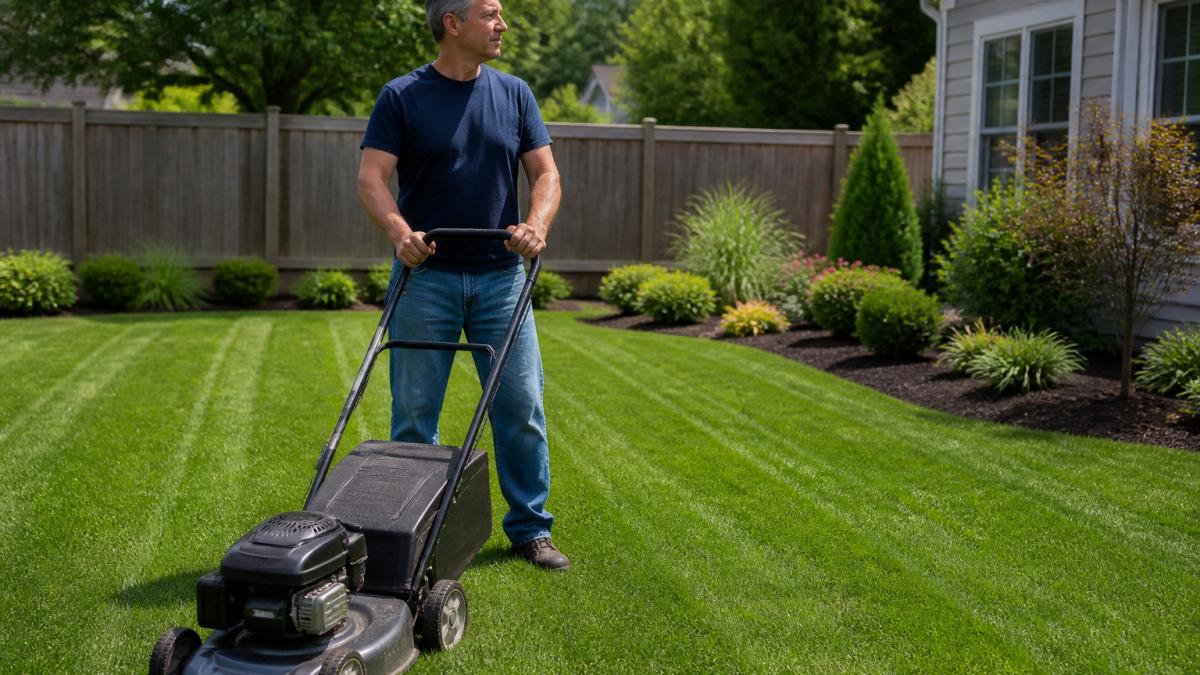
Track how long a full mow, trim, edge, and blow actually takes, for many standard lawns it is one to two hours, and longer in peak growth. Multiply by the number of cuts per season. Then multiply by what your hour is worth to you. A simple approach is to use your after-tax hourly pay, or the rate you would pay someone else for comparable weekend work.
Step 3: Compare the Two Numbers
If your DIY season total plus the value of your hours is greater than the professional annual cost, service wins on total cost. If it is lower, DIY wins, provided you actually want to do the work.
Scenario Guidance
- Small lawn, flexible schedule. DIY is often the lower total cost, especially if you already own the equipment.
- Large or complex lawn. Equipment cost, mowing time, and treatment complexity rise faster than service fees, so professional service frequently wins.
- Busy household. The value of reclaimed weekend hours usually exceeds the monthly fee.
- Older homeowners or limited mobility. Physical effort and safety risk weigh heavily; outsourcing is often the practical choice.
- Homeowners who enjoy yard work. DIY has non-financial value, and that is a legitimate part of the calculation.
Run your own numbers before you commit. The arithmetic is the whole point, and it is worth doing once a year as your lawn and schedule change.
How Much Time and Effort DIY Really Takes
Time is the cost most people forget. Mowing a standard lawn, trimming edges, clearing clippings, and handling treatments can take several hours a week during peak season. The work also depends on weather, so a missed week can turn into a much larger job.
Physical effort matters too. Pushing a mower and working around beds is demanding, especially for anyone with limited mobility. Hiring out the labor frees those hours for other priorities.
How to Choose a Lawn Care Service
Choosing a provider means reading past the headline price. Ask what each visit includes, how often crews come, and what happens if a visit is missed. Confirm the service area covers your property and that scheduling fits your routine.
Read the satisfaction terms carefully. Our Lawn Care Guarantee: What to Expect explains exactly what is covered and how refunds work. Our own policy includes a 100% satisfaction guarantee with a 3-day refund window. Recent customer feedback is also useful.
Watch for vague contracts. A clear scope, a stated schedule, and a written cancellation policy are signs of a provider that plans for the long term.
How Often Should Lawn Care Be Done
Most lawns need mowing every one to two weeks during the growing season, with the frequency rising in spring and fall. Treatments such as fertilization and weed control follow their own schedules, often a few times per year. The right cadence depends on grass type, weather, and your goals for appearance and health.
Recurring service keeps these timelines consistent. A regular schedule prevents the uneven growth and patchy results that come from irregular attention.
Booking Your First Lawn Visit With Lover's Lawn Services
If you are weighing professional care, the simplest next step is to see what it would cost for your property. Lover's Lawn Services LLC serves homeowners and property managers who want a clean, balanced, and effortlessly maintained yard. To get started, get a no-obligation quote and review our full range of professional services.
Frequently Asked Questions
How much does professional lawn care cost?
Costs depend on lawn size, the services included and how often visits are scheduled. Request a quote on the Lover's Lawn Services LLC website for current pricing tied to your property.
Is it cheaper to hire a lawn care service or do it yourself?
The answer depends on the equipment you already own and the value you place on your time. DIY avoids labor fees but requires a mower, fuel, maintenance, and supplies such as fertilizer and weed control products. Those costs add up over a season. Calculate your total yearly DIY spending and compare it with a recurring service quote before deciding.
How often should a professional lawn care service visit?
Most maintenance plans are scheduled on a recurring basis during the growing season, with mowing timed to grass growth rather than a fixed date. Visit frequency should match your lawn's condition, the services in your plan, and seasonal needs such as aeration or treatments. Ask your provider to explain the schedule and what each visit includes so you know what to expect.
What are some red flags when hiring a lawn care service?
Watch for providers who will not explain what their plan includes, who avoid written service terms, or who cannot show proof of insurance. Be cautious if quotes are vague or pressure you into long contracts before you see results. Look for clear scope details, a stated satisfaction policy, and a provider that answers questions directly before work begins.
Lover's Lawn Services LLC: professional, eco-friendly lawn care built around a calm, reliable schedule.