 Comparison
9 Eco-Friendly Alternatives to Andy's Lawn in Northern Virginia
Quick Summary
The best eco friendly alternatives to Andy's Lawn for Northern Virginia yards are clover lawns, native plant and wildflower beds, ground covers, low-mow grasses, and artificial turf. Each trades off foot traffic tolerance, mowing, water use, and weed pressure differently, so the right choice depends on how you use your yard.
- Clover fixes nitrogen in the soil, which can reduce the need for synthetic fertilizer.
- Native plants and wildflower meadows offer the strongest pollinator support and wildlife habitat.
- Artificial turf has no mowing or watering needs but can get hot in sun, so check before pets or kids play.
- Low-mow grasses cut mowing to every 3-4 weeks or less while keeping a turf-like look.
- Soil testing for $10-$30 before converting helps prevent failed plantings.
Table of Contents
- What Andy's Lawn Offers and Why Homeowners Look for Alternatives
- How Eco-Friendly Lawn Alternatives Compare at a Glance
- Clover Lawns: Low-Input Cover With Real Maintenance Needs
- Native Plants and Wildflower Meadows for Biodiversity
- Ground Covers, Creeping Thyme and Low-Mow Grasses
- Installation, Maintenance Costs and Establishment Timelines
- Booking Your Lawn Conversion With Lover's Lawn Services LLC
- Frequently Asked Questions
What Andy's Lawn Offers and Why Homeowners Look for Alternatives
Last Updated: October 30, 2026
Northern Virginia homeowners who want a greener yard often start by asking how eco friendly alternatives to Andy's Lawn compare with the traditional service they already know.
Andy's Lawn is a well-known name in the area, and the company's competitors in Northern Virginia all run conventional lawn programs built around turf grass.
Turf grass covers a large share of the landscape.
Homeowners typically look for alternatives for three reasons:
- Less mowing. A lawn that needs weekly cuts during peak season takes time and fuel.
- Lower chemical use. Fertilizers and herbicides raise questions for families with children and pets.
- Water savings. Traditional turf can need significant irrigation during dry summers.
A common mistake is replacing a lawn with a plant that suits a different climate or soil. A native groundcover that thrives in the Piedmont may struggle in a shaded, compacted side yard in Tysons.
How Eco-Friendly Lawn Alternatives Compare at a Glance
Eco-friendly alternatives fall into a few broad groups, and each trades off maintenance, appearance, and foot traffic tolerance differently. For a deeper look at the benefits of eco-friendly yard maintenance, the table below compares the options directly. The table below goes further than most comparisons by scoring the trade-offs that decide whether a replacement actually works for your household, not just whether it is greener.
| Alternative | Foot Traffic | Mowing Needs | Water Needs | Seasonal Appearance | Weed Pressure | Pet/Child Friendly | Best For |
|---|---|---|---|---|---|---|---|
| Clover lawn | Moderate | Occasional | Low once established | Green most of the season; blooms draw bees | Moderate, clover can crowd weeds but also spread | Good, except barefoot play during bloom | Low-input lawns, nitrogen fixing |
| Native plants and wildflowers | Low | Minimal (annual cut-back) | Low | Striking in bloom, dormant and brown in winter | High in year one, low after establishment | Good, no chemical inputs | Pollinator habitat, sunny beds |
| Ground covers (creeping thyme, sedum) | Low to moderate | Minimal | Low | Evergreen to semi-evergreen depending on species | Low once dense | Good along paths, not for running play | Shaded, sloped, or narrow areas |
| Low-mow / no-mow grasses | Moderate | Reduced (every 3-4 weeks or less) | Low to moderate | Turf-like, stays green longer | Moderate | Good, closest to a conventional lawn | Yards that still need a play surface |
| Artificial turf | High | None | None | Uniform year-round | None | Caution, surface can get hot in sun | Heavy use, pet runs, shaded patios |
How to read the trade-offs
- Foot traffic. Only artificial turf and low-mow grass hold up to daily play. Clover handles occasional foot traffic; native beds and most ground covers should sit off the main path.
- Seasonal appearance. Meadows look intentional in bloom and untidy in dormancy. If year-round tidiness matters, low-mow grass or a defined native bed with edging is the safer choice.
- Weed pressure. The first year is the hardest for every seeded option. Budget time for hand-weeding, or plan a mulch layer to suppress weeds while plants fill in.
- Pets and children. Clover blooms attract bees, which matters for barefoot play. Artificial turf eliminates chemicals but can reach high surface temperatures on sunny days, check it before letting pets or kids out.
- Water. All living alternatives need irrigation during establishment. After roots set, clover, native plants, and ground covers generally need far less supplemental water than conventional turf.
For a broader comparison of approaches, see our [page:2] guide to the benefits of eco-friendly yard maintenance, and for a side-by-side look at chemical versus low-input programs, read [page:3].
Clover Lawns: Low-Input Cover With Real Maintenance Needs
Clover is one of the most common lawn alternatives. White clover fixes nitrogen in the soil, which can reduce the need for synthetic fertilizer (Growing Dutch White Clover on residential property.). Many homeowners pair clover with a grass blend, so the lawn stays usable while using fewer inputs.
Clover is not maintenance-free. It needs enough sun, and it can be crowded out by weeds if the soil is poorly prepared. Expect to overseed in the first season and to monitor for bare patches.
If you want a low-input cover that still handles light foot traffic, clover is worth a trial strip before you convert the whole yard.
Native Plants and Wildflower Meadows for Biodiversity
Native plants and wildflower meadows are the strongest eco friendly alternatives for pollinator support and wildlife habitat. For practical layout ideas, see minimalist garden design for Northern Virginia.
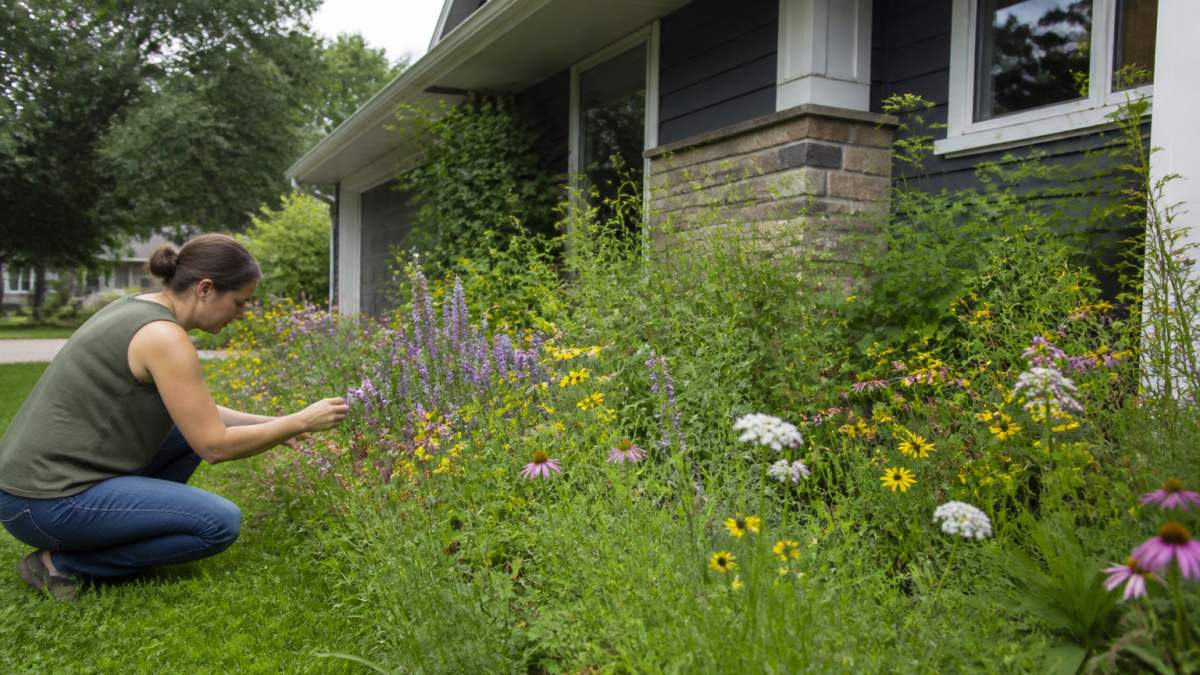
Establishing a meadow takes more patience than planting a lawn. Native seed mixes often need a full growing season before they fill in, and weeds can dominate the first year. Plan for weed control during establishment, and choose species matched to your sun exposure and drainage.
In a typical residential setting, a native bed is best placed in a sunny area away from high-traffic paths. Keep it defined with edging so it reads as intentional rather than neglected.
Ground Covers, Creeping Thyme and Low-Mow Grasses
Ground covers suit shaded or sloped areas where turf struggles. Creeping thyme, for example, stays low, tolerates light foot traffic, and needs little water once rooted. It does not replace a play lawn, but it works well along walkways and between stepping stones.
Low-mow and no-mow grasses reduce cutting frequency significantly. They are a good middle path for households that want to keep a traditional lawn look while cutting back on maintenance.
Not every area benefits from a ground cover. Dense groundcovers can trap moisture under shrubs or near foundations, so keep them a safe distance from building walls.
Installation, Maintenance Costs and Establishment Timelines
Most guides on lawn alternatives stop at environmental benefits. This section does the part homeowners actually budget for: what each option costs to install, what it costs to keep up, and how long it takes before the yard looks finished. None of the top-ranking comparisons publish side-by-side cost ranges, so treat the figures below as planning bands rather than quotes, your soil, slope, access, and square footage will move them.
Installation cost bands by option
| Alternative | Typical installed cost per 1,000 sq ft | DIY material cost per 1,000 sq ft | Time to establish |
|---|---|---|---|
| Clover overseed into existing turf | $150-$400 | $40-$120 (seed) | 1 season |
| Clover lawn from bare soil | $600-$1,500 | $150-$400 | 1-2 seasons |
| Native plant beds | $1,500-$5,000 | $400-$1,200 (plugs/seed) | 2-3 seasons |
| Wildflower meadow from seed | $800-$2,500 | $200-$600 | 2-3 seasons |
| Ground covers (creeping thyme, sedum) | $1,200-$4,000 | $300-$900 (plugs) | 1-2 seasons |
| Low-mow / no-mow grass | $700-$2,000 | $150-$450 | 1 season |
| Artificial turf | $6,000-$15,000 | Not recommended DIY | Immediate |
These bands reflect common residential pricing patterns for site prep, soil amendment, plant material, and initial watering. Artificial turf sits far above the rest on upfront cost; its case rests on eliminating mowing, watering, and replacement over a long horizon, and on heavy-use areas where living plants fail.
Ongoing maintenance budgets
Annual upkeep is where the alternatives separate from a conventional turf program:
- Clover: roughly $100-$300 per 1,000 sq ft per year for occasional overseeding, spot weeding, and one or two low-input feedings. Mowing drops to every two to three weeks in peak season, or can be skipped in some blends.
- Native beds and meadows: $50-$250 per year once established, mostly for first-year weed control, an annual cut-back in late winter or early spring, and spot replanting. The first two years cost more because weed pressure is highest.
- Ground covers: $50-$200 per year for weeding until the cover knits together, then minimal input.
- Low-mow grass: $150-$400 per year, with fewer cuts and lighter fertilization than conventional turf.
- Artificial turf: near-zero annual maintenance, but plan for infill top-ups, brushing, and eventual replacement.
A conventional turf program in this region commonly runs several hundred dollars per 1,000 sq ft per year once mowing, fertilization, and weed control are combined. The alternatives generally beat that on annual spend, but the gap narrows when you account for the labor of hand-weeding during establishment.
Establishment timeline in practice
- Site assessment and soil test (2-4 weeks). A soil test through your state extension office typically costs $10-$30 and tells you pH, phosphorus, and potassium before you spend on plants.
- Turf removal and soil preparation (1-2 weeks). Options include solarization, sheet mulching, and mechanical stripping. Sheet mulching with cardboard and mulch is the lowest-cost route but takes a full season to smother turf.
- Planting or seeding (1-3 days for most residential areas).
- First-season care. Water newly seeded areas until roots hold; expect bare patches and fill them.
- Maturity. Clover and low-mow grass look intentional within one season. Meadows and native beds need two to three growing seasons before they read as designed plantings rather than weeds.
For current pricing on conversion work from Lover's Lawn Services LLC, visit our [page:5] page or request a quote directly.
Booking Your Lawn Conversion With Lover's Lawn Services LLC
Converting a lawn is easier when you have a clear plan and a team that handles the details. At Lover's Lawn Services LLC, our calm, intentional approach focuses on greener, healthier yards that stay balanced through the seasons. We use state-of-the-art equipment and eco-friendly practices, and our 100% satisfaction guarantee comes with a 3-day refund policy.
Customers in Northern Virginia often find that starting with a single trial area lets them see how an alternative performs before committing the whole property. One customer shared that the team was professional and that their lawn looks perfect now.
Ready to compare options for your yard? Book with Lover's Lawn Services LLC today.
Frequently Asked Questions
What are eco-friendly alternatives to traditional lawn care?
The main options are clover lawns, native plant beds, wildflower meadows, ground covers such as creeping thyme, and low-mow or no-mow grass varieties. Each reduces mowing, watering and chemical inputs to different degrees. Clover and low-mow grasses are closest to a traditional lawn in use, while meadows and native beds need the most planning up front. The right choice depends on sun exposure, foot traffic and how much of the yard you plan to convert.
How can I find a lawn care company that uses sustainable practices?
Ask the company which products it applies, how often, and whether it offers reduced-chemical or organic programs. Request a written description of its equipment and maintenance schedule, and check whether it can support native plantings or clover rather than only conventional turf. Reviews and references from local Northern Virginia customers are useful for confirming follow-through. Lover's Lawn Services LLC offers eco-friendly practices and can outline its approach during a consultation.
Are native plants a good alternative to a grass lawn?
Native plants can be an excellent alternative for pollinator habitat and reduced irrigation once established, but they usually need one to several seasons of watering and weeding before they settle in. They also require a site assessment for soil drainage, sun and shade. Mixing natives with ground covers often gives a yard that stays green and walkable while supporting local wildlife.
How can I reduce water use while keeping a healthy lawn?
Reduce watering frequency and water deeply but less often so roots grow downward. Raise the mowing height so the grass shades the soil, and leave clippings on the lawn to hold moisture. Plant drought-tolerant ground covers or low-mow grasses in areas that get the most sun and foot traffic. Water-efficient landscaping combined with a consistent maintenance schedule typically keeps a yard healthier than frequent light watering.
Is organic lawn care effective?
Organic lawn care can produce a healthy, attractive yard when soil health is built over time with compost, proper mowing height and aeration. It usually acts more slowly than synthetic fertilizers, so results can take a full growing season to appear. Expect some weeds to persist during the transition and plan for periodic overseeding to maintain density.