 comparison
NuLeaf Lawn Care Alternatives: 2026 Comparison
Table of Contents
- Why Homeowners Switch From NuLeaf Lawn Care
- Eco-Friendly Lawn Care Services That Compete With NuLeaf
- Organic Lawn Care Alternatives to Chemical Treatments
- Lawn Care Service Pricing: What You'll Actually Pay
- Front Yard Alternatives to Grass and Turf
- How to Choose the Right Alternative for Your Yard
- Frequently Asked Questions
Last Updated: October 21, 2026
Why Homeowners Switch From NuLeaf Lawn Care
Homeowners explore NuLeaf Lawn Care alternatives for three reasons: cost, service reliability, or environmental concerns, inconsistent visits, a preference for organic treatments over chemical applications, or a provider that better fits their lawn's needs.
The market has shifted: homeowners now expect transparency about what's applied to their yards, especially with children and pets outdoors, and a provider who delivers on promises.
Lover's Lawn Services LLC has helped hundreds of Northern Virginia homeowners make this transition, and we see the same patterns: frustration with inconsistent service, concern about chemical buildup in soil, or wanting a partner who communicates clearly.
Strong alternatives exist, whether you're seeking eco-friendly lawn care services, a more reliable partner, or a different approach to yard management.
Eco-Friendly Lawn Care Services That Compete With NuLeaf
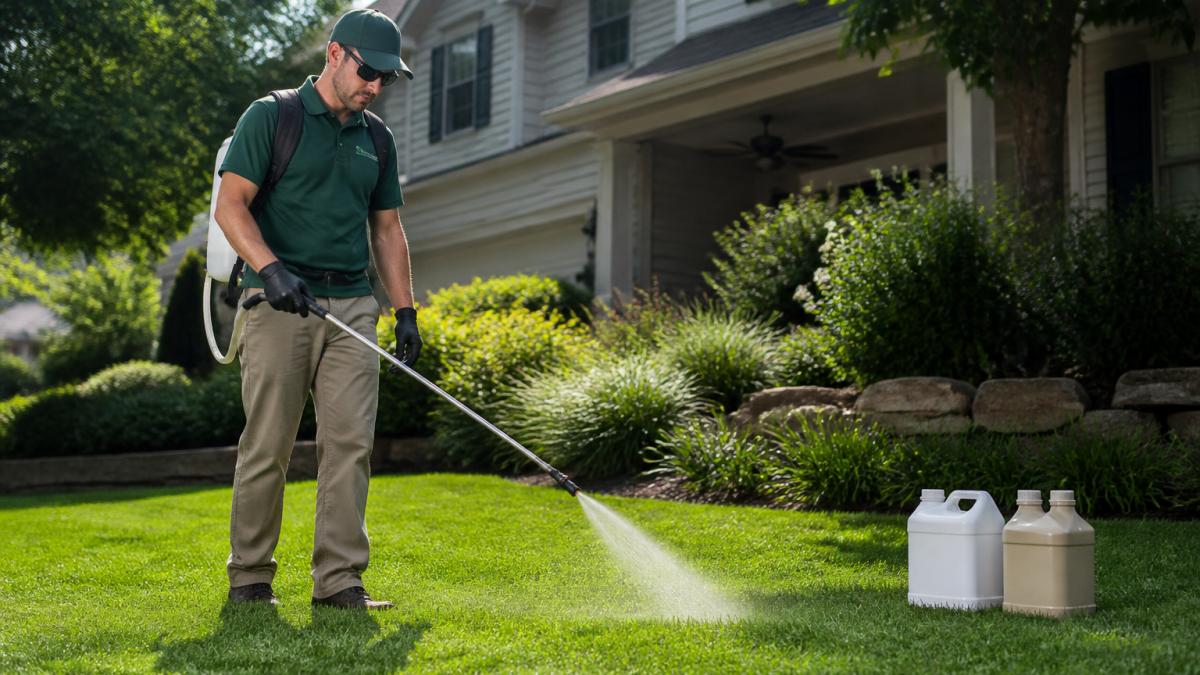
If reducing chemical exposure is your priority, several professional services now offer organic and reduced-synthetic lawn care. The useful question isn't just who offers it, it's how they deliver it, since models differ in cost, time, and results.
The comparison criteria that matter
Before weighing any provider, evaluate them on these six points:
- Treatment ingredients. Ask for the active ingredients in each application. Organic programs lean on corn gluten meal (a pre-emergent that stops weed seeds germinating), iron-based sprays (which burn broadleaf weeds without synthetic herbicide), and compost or kelp fertilizers. Conventional programs use synthetic nitrogen and herbicides such as 2,4-D or prodiamine. Many providers blend the two, know which you're getting.
- Application frequency and timing. Organic products often need more precise timing (corn gluten must go down before weed seeds sprout) and sometimes more visits. Ask how many applications a year the plan includes and when they fall.
- Guarantees and refund terms. Look for a written satisfaction guarantee and a defined callback or refund window if a treatment underperforms.
- Licensing and credentials. Lawn care applicators are regulated at the state level; ask whether the company and its technicians hold the required pesticide applicator licenses for your state, even if they primarily use organic products.
- Service area. National brands cover more territory, but local providers often serve a tighter radius with more consistent technicians.
- Communication and customization. Ask who your point of contact is, whether you get a service report after each visit, and whether the plan can be adjusted for pets, children, or a specific weed problem.
How the main alternatives stack up
TruGreen is the largest national full-service provider, offering plans that blend conventional and organic approaches. Strength: broad service area and a structured program. What to verify: the specific ingredients in the plan you're quoted, since the organic option is one tier within a larger menu.
Sunday Lawn Care ships customized seasonal products to your door for you to apply. Strength: you control exactly what goes on your lawn, and the cost is typically lower than full service because you supply the labor.
Lawn Love emphasizes a consultative, customizable model where you define priorities around chemicals, frequency, and budget. Strength: flexibility and tech-enabled scheduling. What to verify: which products the local provider assigned to your area actually uses, since service is delivered through a network.
Weed Man specializes in targeted weed control. Strength: focused expertise if your main problem is broadleaf weeds or crabgrass rather than overall lawn health. What to verify: whether the program includes fertilization and soil improvement, or weed control only.
Local and regional providers, including Lover's Lawn Services LLC, combine organic options with a defined service area, consistent technicians, and direct communication.
Questions to ask before you switch
The provider that answers all six clearly, in writing, is the one worth switching to.
Organic Lawn Care Alternatives to Chemical Treatments
Organic lawn care alternatives suppress weeds through soil health, proper mowing, and targeted organic products rather than synthetic herbicides.
Corn gluten meal prevents weed seeds from germinating without harming established plants. Applied in early spring, it's particularly effective for preventing crabgrass and other annual weeds. The limitation: it must be applied before seeds sprout, so timing matters significantly.
Iron-based sprays target broadleaf weeds like dandelions and clover without synthetic toxicity concerns. They work best on young weeds, may require multiple applications, and are safe for children and pets once dried.
Overseeding and proper lawn repair strengthens grass so it naturally outcompetes weeds. A dense, healthy lawn leaves less space for unwanted plants, slower than chemical treatment but more resilient.
Moss and ground-cover management recognizes that not every lawn needs to be pure grass.
The trade-off with organic alternatives is patience. Chemical treatments often work faster and more completely, while organic approaches require consistent application over multiple seasons and acceptance that some weeds will persist.
Lawn Care Service Pricing: What You'll Actually Pay
Most lawn care companies hide pricing behind a quote form, making it hard to know whether an alternative to NuLeaf Lawn Care fits your budget. No single price applies, but understanding the cost drivers below can help you ask better questions.
Typical price ranges for professional service
Full-service lawn care, fertilization, weed control, and seasonal applications by a technician, varies in cost depending on the size of your lot and the specific services included. Aeration and overseeding are usually priced separately.
These are planning ranges, not quotes. A provider's site visit, which most reputable companies offer free, is what converts a range into a real number.
What actually moves your quote
- Square footage of treatable turf. This is the single biggest driver. Driveways, beds, and structures don't get treated, so the measured lawn area matters more than total lot size.
- Number of applications per year. A basic weed-and-feed program of four to six visits costs less than a comprehensive program with grub control, disease prevention, and winterizer.
- Weed and pest pressure. A lawn with heavy crabgrass, nutsedge, or grub damage may need extra targeted visits or a different product mix.
- Grass type and climate. Cool-season grasses common in mid-Atlantic lawns (tall fescue, Kentucky bluegrass) follow a different application calendar than warm-season grasses, which affects how many visits a program includes.
- Add-on services. Aeration, overseeding, lime application, grub control, and mosquito or tick treatments are typically priced per service, not bundled into the base fee.
- Contract length and payment structure. Annual prepay sometimes earns a discount; month-to-month plans cost more per visit but carry less commitment.
How the main service models compare on cost
Full-service providers charge for labor plus product. You pay more per treatment but don't buy equipment, store chemicals, or spend weekends applying them.
DIY-assisted subscription services, customized products shipped to your door for you to apply, typically cost less per season than full service because you supply the labor. Budget for the subscription plus your own spreader or sprayer, and be realistic about time: a full application on a quarter-acre lot takes most homeowners 30 to 60 minutes, several times a year.
Lawn replacement (clover, ground covers, or low-maintenance landscaping) front-loads cost. Converting turf to a clover lawn or planted beds usually runs into the thousands of dollars for design, removal, and installation, but ongoing maintenance drops sharply afterward. It's a capital decision, not a subscription one.
The costs that don't show up on the invoice
Price per visit is only part of the math. A cheaper provider that skips visits, applies the wrong product for your grass type, or requires repeated callbacks costs more in wasted fees and a lawn that never improves. Weigh reliability and results alongside the number.
Lover's Lawn Services LLC publishes transparent pricing and offers free consultations so you can see the number before you commit. Our 100% satisfaction guarantee with a 3-day refund policy means a quote that doesn't deliver isn't a cost you're stuck with.
Front Yard Alternatives to Grass and Turf
Some homeowners questioning their lawn care provider are actually questioning whether they want a traditional grass lawn at all. Front yard alternatives offer different aesthetics and maintenance requirements.
Clover and white clover lawns need less mowing and fertilization than conventional grass. Clover naturally fixes nitrogen in soil, tolerates shade better than many grasses, and handles foot traffic reasonably well.
Wildflower meadows and ornamental grasses create visual interest while supporting pollinators and native ecosystems. They need less frequent mowing and no chemical treatments, and work well in larger yards where a naturalistic aesthetic fits.
Low-maintenance landscaping replaces turf with mulch, ground covers, shrubs, and trees, eliminating mowing and chemical treatments. Installation costs more, but long-term maintenance is simpler, and it's especially effective in shaded areas where grass struggles.
Food gardens convert lawn space to vegetable beds, herb gardens, or fruit trees, transforming your yard from a maintenance obligation into a resource.
Replacing turf is separate from choosing a provider, but worth considering if you're already questioning your approach. Some homeowners find eliminating the lawn entirely solves their frustration more completely than switching services.
How to Choose the Right Alternative for Your Yard
Selecting a lawn care alternative requires honest assessment of what you actually want from your outdoor space. Different solutions fit different priorities.
Start with your primary frustration. Cost, service reliability, chemical concerns, or aesthetics? If reliability is the issue, focus on providers with strong local reputations and clear communication. If chemicals concern you, prioritize organic options.
Assess your time availability. Full-service providers require less attention but cost more; DIY-assisted services save money but demand involvement; replacement landscaping requires upfront effort but minimal ongoing work.
Consider your lawn's current condition. A severely damaged lawn may need intensive rehabilitation before organic approaches work. A healthy lawn with minor weeds may thrive on minimal intervention.
Evaluate local availability. Not every service operates everywhere. Sunday Lawn Care and national chains like TruGreen have broader coverage, but local providers often offer more personalized service.
Test before committing. Most quality providers offer consultations or trial periods. Use them to assess communication style, expertise, and reliability.
| Selection Criteria | Full-Service Provider | DIY-Assisted Service | Lawn Replacement |
|---|---|---|---|
| Time Investment | Minimal | Moderate | High upfront, low ongoing |
| Cost Level | Medium-High | Low-Medium | High upfront, low ongoing |
| Chemical Use | Variable | You control | Minimal-None |
| Results Timeline | 4-8 weeks | 8-12 weeks | Immediate |
| Best For | Busy professionals | Engaged homeowners | Those wanting change |
Lover's Lawn Services LLC serves customers across all these profiles. Whether you want hands-off professional care or eco-friendly treatment options, we approach each situation with the same intentional, reliable process.
Choosing a lawn care alternative shouldn't feel like guessing. Our Scandinavian-inspired approach prioritizes a clean, balanced yard that thrives year-round with minimal fuss. Learn more about sustainable lawn care practices to understand how professional providers can reduce environmental impact.
Frequently Asked Questions
What should I compare when choosing a lawn care alternative?
Focus on service type (full-service vs. DIY), treatment approach (organic vs. chemical), availability in your area, pricing transparency, and guarantees. Check whether they offer customization, how they handle problem areas like weeds and moss, and whether their methods align with your environmental priorities. Ask about their equipment, staff training, and response time for issues.
Are eco-friendly lawn care services actually effective?
Eco-friendly lawn care alternatives work well for most yards when applied consistently. Organic methods like corn gluten meal for weed suppression, iron-based sprays for moss control, and overseeding for lawn repair address common problems without synthetic chemicals. Results take longer than chemical treatments, typically 4-6 weeks, but provide lasting soil health and safer conditions for children and pets.
How much does professional lawn care service pricing typically run?
Lawn care service pricing depends on yard size, treatment frequency, and service scope. Most professional services offer monthly plans, seasonal packages, or one-time treatments. Contact providers directly for quotes based on your specific lawn condition and goals. Many offer free assessments to determine exact pricing for your property.
What are good front yard alternatives to grass?
Popular alternatives include clover lawns (low-maintenance, nitrogen-fixing), native ornamental grasses, wildflower meadows, moss ground covers, sedge, and creeping perennials. You can also combine grass with food gardens, trees, or hardscaping. Each option reduces maintenance, improves water use efficiency, and supports environmental goals while maintaining curb appeal.