 ultimate-guide
Benefits of Scandinavian-Inspired Landscaping
Table of Contents
- What Scandinavian-Inspired Landscaping Actually Means
- Core Principles of Scandinavian Garden Design
- Practical Benefits You'll Actually See
- Low-Maintenance Garden Ideas for Busy Homeowners
- Scandinavian Landscaping Ideas for Different Climates
- Sustainable Landscaping Ideas That Work
- Getting Started: Design and Implementation
- Frequently Asked Questions
Last Updated: October 16, 2026
What Scandinavian-Inspired Landscaping Actually Means
Scandinavian inspired landscaping is a Nordic-rooted design philosophy prioritizing clean lines, functional beauty, and harmony with nature.
The core of scandinavian inspired landscaping lies in balance.
What makes this style distinct isn't just aesthetics. It's a practical framework that works across climates, budgets, and skill levels. The philosophy, simplicity, functionality, connection to nature, stays constant.
Core Principles of Scandinavian Garden Design
Minimalism and Clean Lines
Minimalism in scandinavian garden design means restraint, not emptiness: fewer elements, each chosen deliberately, reducing visual clutter and creating restful spaces.
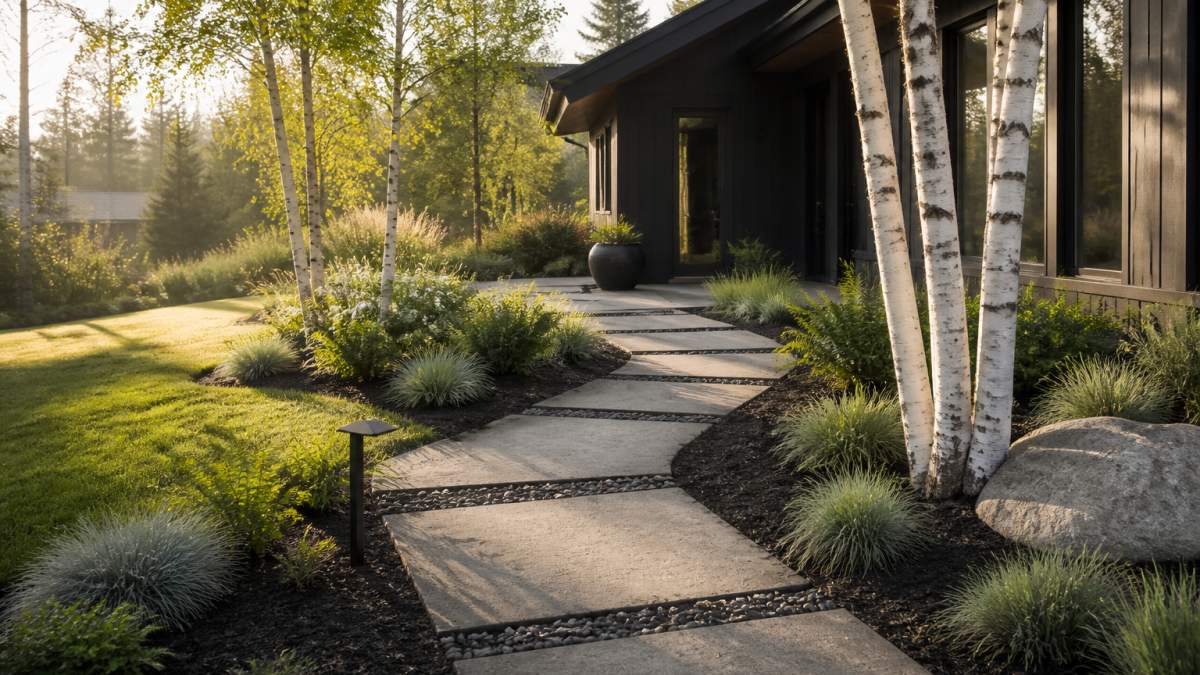
Clean lines manifest through straight pathways, geometric beds, and uncluttered sight lines, making your yard feel organized and intentional. A direct stone walkway communicates purpose and invites movement.
The practical benefit: fewer ornamental elements mean less to maintain and replace, leaving a framework that supports your outdoor life rather than demanding constant attention.
Natural Materials and Raw Textures
Scandinavian landscaping favors materials that age naturally and connect visually to their surroundings: natural stone, untreated wood, gravel, and raw metals rather than painted or synthetic finishes.
These raw textures create an honest aesthetic: a weathered birch, a moss-covered stone path, or gravel underfoot all improve with age rather than deteriorate.
Practically, natural materials often outlast synthetics. Stone paths last decades, untreated wood weathers predictably, and gravel settles into a stable surface, no replacing plastic edging or repainting composites.
Balance Between Beauty and Function
This principle distinguishes Scandinavian design from pure minimalism. A minimalist yard might be sparse and uninteresting.
A birch provides winter structure, seasonal interest, and filtered shade. A stone bench offers seating and a focal point. Native plantings attract pollinators while adding seasonal color.
This balance makes the style livable: you're not sacrificing comfort for aesthetics, and your outdoor space functions as a visually coherent extension of your home.
Practical Benefits You'll Actually See
Most articles on this style stop at how it looks. The more useful question is what it does for your time, water bill, and usable outdoor space. Here are the practical benefits and trade-offs.
Easier Maintenance Year-Round
The maintenance savings come from three structural choices:
- Fewer plants, chosen well. A minimalist layout uses fewer specimens, and native or climate-adapted plants generally need less watering, fertilizing, and pest intervention once established than exotic ornamentals.
- Hardscaping replaces high-effort surfaces. Stone paths, gravel, and raised beds do not need mowing, edging, or seasonal replanting. Replacing a strip of turf along a walkway with stone eliminates a recurring chore permanently.
- Structure carries the winter. Evergreens, ornamental grasses, and bare branch architecture keep the yard looking cared-for when herbaceous plants die back, so you are not scrambling to fill gaps every season.
A realistic expectation: the first year or two still involves watering and weeding while plants establish; savings compound after that.
The trade-off: fewer elements means each one is more visible. A struggling plant or a cracked paver stands out in a minimalist design in a way it would not in a crowded border. You trade maintenance volume for maintenance precision.
Improved Curb Appeal and Home Value
Curb appeal is about intentionality, and intentionality reads as care. A clean, organized front yard signals a maintained property, which is what buyers and appraisers respond to.
Scandinavian design delivers this through:
- Clear sight lines from the street to the entry, which make a home feel welcoming rather than obscured.
- A coherent material palette, stone, gravel, untreated wood, that reads as designed rather than assembled.
- Low visual noise, which makes the architecture of the house itself the focal point.
Landscaping influences perceived value, though the exact return varies by market and execution. The safer claim is directional: a tidy, coherent, low-maintenance landscape tends to photograph well, show well, and reduce the sense that a property is a project.
Lower Environmental Impact
The environmental case rests on reducing inputs:
- Water. Native and climate-adapted plants, once established, typically need little to no supplemental irrigation. Mulch reduces evaporation, and permeable surfaces like gravel and stone let rainfall infiltrate instead of running off.
- Chemicals. Plants matched to your site resist local pests and diseases better than mismatched exotics, which reduces reliance on fertilizers and pesticides.
- Materials. Stone and untreated wood are long-lived and age gracefully, which means fewer replacements and less waste than short-cycle synthetic edging or composite products.
- Habitat. Native plantings support pollinators, birds, and beneficial insects that co-evolved with local species. Leaving a corner of native grasses or a small meadow area adds ecological value with almost no upkeep.
The trade-off: native and climate-adapted plantings can look sparse or slow in year one. That is normal. Beds fill in over two to three seasons, and the low-input payoff arrives once roots are established.
Low-Maintenance Garden Ideas for Busy Homeowners
Native Plant Selection
Native plants are the foundation of low-maintenance Scandinavian landscaping. Adapted to your regional climate, soil, and precipitation, they thrive with minimal intervention once established.
Choose plants that provide seasonal interest: spring bulbs, summer bloomers, fall color, and winter structure.
Group plants by water needs so you can water efficiently without over- or under-watering. Mulch around plantings to retain moisture and suppress weeds.
Structural Elements That Require Minimal Care
Hardscaping, stone pathways, benches, raised beds, borders, forms the skeleton of your landscape. These elements need no watering, fertilizing, or seasonal maintenance, providing structure and function year-round.
A simple stone pathway guides movement and eliminates muddy wear patterns. Raised beds define planting areas and reduce bending. A wooden pergola or arbor provides shade and vertical interest.
Choose materials that age gracefully: natural stone develops character, and untreated wood weathers to silver-gray, improving visually rather than deteriorating.
Scandinavian Landscaping Ideas for Different Climates
Most coverage of this style assumes a short, cool growing season and a damp, mild summer. That breaks down once you move the same design language into a different hardiness zone, rainfall pattern, or frost calendar. The principles travel; the plant list and hardscaping details do not.
Start With Your Zone, Not the Aesthetic
The USDA Plant Hardiness Zone Map is the fastest way to anchor plant choices. It runs from Zone 1 (coldest) to Zone 13 (warmest), and the rule is simple: a plant rated for your zone or one zone colder survives your typical winter low. A birch thriving in Zone 3 may struggle in Zone 8, where summer heat and soil biology differ entirely.
Beyond the zone number, three site factors decide whether a Scandinavian-style planting succeeds:
- Annual rainfall. A design built for steady, moderate moisture needs irrigation or a different plant palette in a dry-summer region.
- Frost dates. The gap between last spring frost and first fall frost sets your real growing season. A 90-day season supports a very different plant list than a 200-day season.
- Summer heat. Cool-climate plants often shut down or scorch above certain thresholds, even when winter cold is not a problem.
Adapting the Style by Region
Cold northern regions (roughly Zones 3-5). This is the style's home turf. Lean on birch, spruce, pine, and cold-hardy native shrubs.
Temperate regions (roughly Zones 6-7). The widest range of options.
Warm and hot regions (roughly Zones 8-10). Swap cold-hardy species for drought-tolerant natives and heat-adapted evergreens.
Dry and arid regions. The minimalist, gravel-forward aesthetic actually fits naturally here. Focus on xeric native plants, deep mulch, and permeable hardscaping that captures scarce rainfall.
Seasonal Color and Year-Round Interest
Scandinavian design maintains visual interest across all seasons through plant selection and structural elements: spring bulbs, summer perennials, fall foliage, and winter structure from evergreens, ornamental grasses, and bare branch architecture.
This layered approach means your landscape never looks neglected. Even in dormant seasons the design reads as intentional: evergreens provide visual weight, ornamental grasses add winter movement, and hardscaping stays beautiful year-round.
Sustainable Landscaping Ideas That Work
Eco-Friendly Materials and Water Conservation
Sustainable landscaping starts with materials. Natural stone, untreated wood, and gravel are long-lasting and need no replacement. Avoid plastic edging, synthetic mulches, and composites that degrade and require disposal.
Water conservation flows from native plant selection: once established, natives need minimal supplemental watering.
Install rain gardens or bioswales to capture runoff and filter it into soil rather than overwhelming storm drains, supporting groundwater recharge while managing water naturally.
Supporting Local Ecosystems
Native plant selection is the most direct way to support local ecosystems. Natives feed and shelter insects, birds, and wildlife that evolved alongside them, turning a yard into a functioning ecosystem rather than a sterile ornamental display.
Avoid pesticides and herbicides, which harm beneficial insects and disrupt the food web. Natives adapted to your climate resist local pests naturally, and problems are usually manageable through cultural practices rather than chemicals (Landscaping with Native Plants | Great Lakes).
Leave some areas wild. A corner of native grasses or a small meadow garden supports more wildlife than a manicured lawn and is beautiful, low-maintenance, and ecologically valuable.
Getting Started: Design and Implementation
Planning Your Layout
Begin with a clear view of your space. Sketch your yard to scale, noting existing trees, structures, sun exposure, and views.
Research native plants suited to your climate and your yard's specific conditions, full sun versus shade, moist versus dry, and match plants to conditions rather than fighting your site.
Sketch a simple layout using the principle of balance. Include hardscaping pathways, planting beds, and focal points like trees or seating areas. The design should feel intentional, not cluttered.
Choosing Materials and Plants
Select stone and wood that complement your home's aesthetic.
For plantings, prioritize native trees and shrubs that provide structure and seasonal interest. Add perennials and ornamental grasses for color and texture.
Scandinavian-inspired landscaping transforms outdoor spaces into beautiful, functional environments that require less maintenance and deliver greater environmental benefit.
At Lover's Lawn Services LLC, we specialize in designing and maintaining landscapes that embody these principles.
Frequently Asked Questions
What are the key benefits of Scandinavian-inspired landscaping?
Scandinavian-inspired landscaping delivers three major benefits: reduced maintenance through native plant selection and simple design, improved curb appeal with clean lines and natural materials, and lower environmental impact via sustainable practices. The minimalist approach means less time spent on upkeep while maintaining a visually striking outdoor space that works with your climate rather than against it.
Is Scandinavian-inspired landscaping actually low maintenance?
Yes. The low-maintenance garden ideas central to Scandinavian design focus on native plants suited to your climate, structural elements like stone and birch trees that need minimal care, and thoughtful layouts that reduce unnecessary features. This means fewer chemicals, less frequent watering, and simplified seasonal maintenance compared to ornamental-heavy traditional gardens.
Can I use Scandinavian landscaping ideas if I don't live in a cold climate?
Absolutely. While Scandinavian garden design originated in Nordic regions, the core principles of minimalism, natural materials, and functional beauty adapt well to warmer climates. You adjust plant selection to native species in your region, use similar design principles with different seasonal plantings, and maintain the clean aesthetic that defines the style. The philosophy works anywhere; only the specific plants change.
What sustainable landscaping ideas are part of Scandinavian design?
Sustainable landscaping ideas in the Scandinavian approach include using native plants that need less water and fertilizer, incorporating natural stone and reclaimed materials to reduce waste, installing permeable pathways for better drainage, and creating habitats for local wildlife. These practices reduce your yard's environmental footprint while supporting the minimalist aesthetic that defines Scandinavian-inspired design.