 listicle
Benefits of Eco-Friendly Yard Maintenance
Table of Contents
- Why Eco-Friendly Yard Maintenance Matters
- Water Conservation Through Efficient Watering and Drought-Tolerant Plants
- Sustainable Lawn Care Practices That Reduce Chemical Dependency
- Organic Lawn Care: Building Soil Health Without Synthetic Inputs
- Low-Maintenance Landscaping That Supports Native Biodiversity
- Water-Saving Landscaping and Long-Term Cost Benefits
- Environmental Impact: From Reduced Emissions to Healthier Soil
- Getting Started With Eco-Friendly Yard Maintenance
- Frequently Asked Questions
Last Updated: October 19, 2026
Why Eco-Friendly Yard Maintenance Matters
Eco-friendly yard maintenance means caring for your outdoor space in ways that minimize environmental impact while building long-term landscape health.
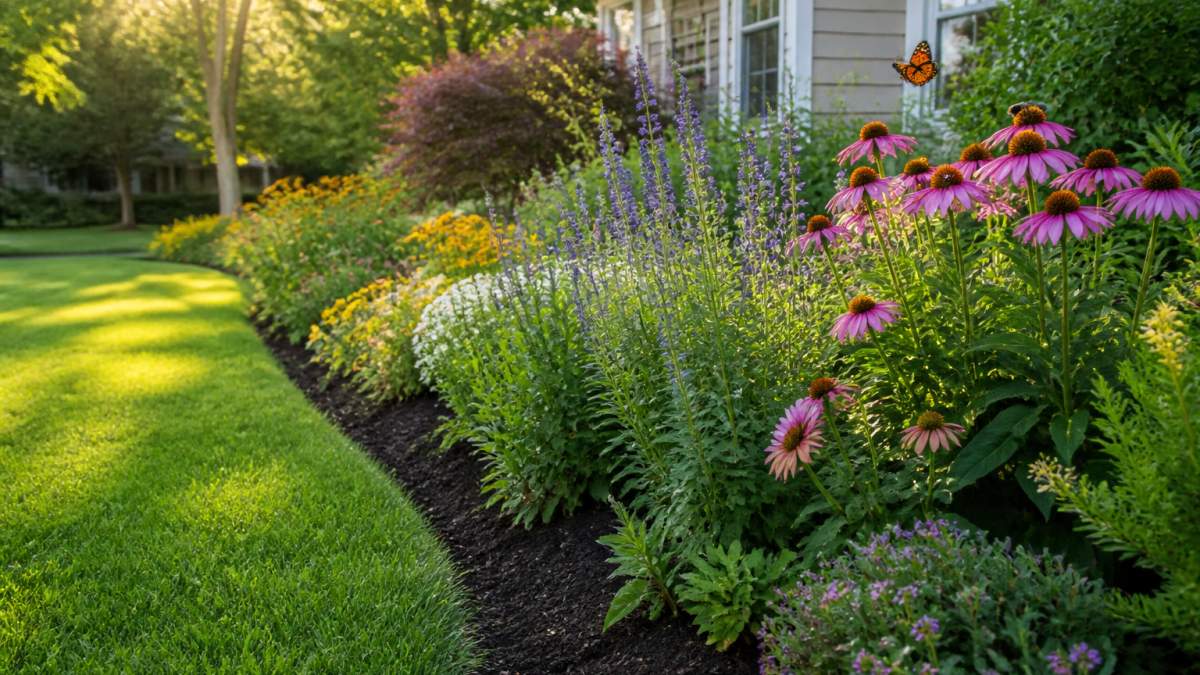
Most homeowners assume eco-friendly yard maintenance means sacrifice: less curb appeal, more work, an abandoned-looking yard.
The environmental case is equally clear: chemical runoff pollutes local waterways, gas-powered equipment adds emissions, monoculture lawns offer no pollinator habitat, and synthetic fertilizers degrade soil structure.
Water Conservation Through Efficient Watering and Drought-Tolerant Plants
The most immediate benefit of eco-friendly yard maintenance is reduced water consumption.
Drought-tolerant species, native grasses, sedums, locally suited ornamentals, and ground covers, develop deeper roots that reach water stored lower in the soil.
The impact can be substantial: many homeowners cut outdoor water use by shifting to drought-tolerant plants and efficient watering, and in dry seasons the difference can be even more pronounced.
Efficient watering also means smarter timing.
Sustainable Lawn Care Practices That Reduce Chemical Dependency
Chemical fertilizers and synthetic pesticides create a cycle of dependency: they kill beneficial soil microbes, eliminate insects that naturally control pests, and require repeated applications because they don't address root causes.
Organic approaches build soil health instead of bypassing it.
The water quality benefit is direct: chemical runoff from lawns enters stormwater systems and pollutes local waterways, so reducing synthetic pesticides and fertilizers protects water resources immediately.
Organic Lawn Care: Building Soil Health Without Synthetic Inputs
Soil health is the foundation of every eco-friendly yard maintenance strategy. Healthy soil holds water efficiently, resists compaction, supports deeper roots, and maintains beneficial microorganisms.
Organic lawn care rebuilds soil from the ground up: compost adds organic matter and beneficial microbes, mulching leaves in place returns nutrients, and reduced tilling and foot traffic prevent compaction.
The outcome is soil that functions better: infiltration improves, nutrient cycling becomes active, and stable structure reduces erosion. After consistent organic practices, soil biology can rebound noticeably.
Starting with a soil test can establish baseline conditions.
Low-Maintenance Landscaping That Supports Native Biodiversity
Low-maintenance landscaping and biodiversity support go hand in hand.
Native plantings create a complete ecosystem: flowering plants attract bees and butterflies, ground-nesting bees and beneficial wasps find habitat in undisturbed soil and plant debris, and predatory insects keep pest populations balanced.
The maintenance reduction is substantial: instead of fighting plant nature, you work with local conditions, so watering needs drop, disease pressure decreases, and pruning shrinks.
Start by identifying 3-5 native plants suited to your region and light conditions, then replace one or two non-native ornamentals annually.
Water-Saving Landscaping and Long-Term Cost Benefits
"It saves money over time" is true but useless until you break it into setup costs, ongoing expenses, and the factors that determine whether you come out ahead.
The three cost buckets
Treat these three buckets separately and the math becomes clear.
1. One-time setup costs. Plant purchases, soil amendments, irrigation hardware, and hired labor:
- Drought-tolerant or native plants: priced per plant; small plugs and quart containers are cheapest, larger nursery stock costs more but establishes faster.
- Compost and organic amendments: sold by the cubic yard or bagged; bulk delivery is almost always cheaper per unit.
- Drip irrigation or soaker hose conversion: priced per foot of line plus timer, filter, and pressure regulator; a single-zone conversion is the lowest-cost entry point.
2. Ongoing expenses. Where the savings accumulate:
- Water bills: the biggest recurring line item in most yards, and the one most directly reduced by drought-tolerant plantings and smart irrigation.
- Fertilizer and pesticide purchases: drop sharply once soil biology is active and native plants are established.
- Replacement plant costs: fall as plants mature and the landscape stabilizes.
3. Avoided costs. These are real but easy to overlook: fewer emergency irrigation repairs, less plant replacement after drought stress, and less paid labor for watering and chemical applications.
A payback framework, not a promise
Rather than quoting a single payback period, use this four-step check:
- Estimate your current annual outdoor water spend. Multiply your summer water bill by the share attributable to irrigation (many utilities publish seasonal irrigation estimates; a separate irrigation meter makes this exact).
- Estimate your current annual chemical and fertilizer spend. Add up receipts for one full year.
- Estimate setup cost from the bucket list above, using local nursery and hardware prices.
- Divide setup cost by the sum of annual water and chemical savings. The result is your rough payback in years.
Yards with high irrigation demand and heavy chemical use pay back fastest; yards that already water lightly and fertilize rarely see longer paybacks. Payback depends on your starting point, not a universal number.
Factors that move payback up or down
- Water price. Where water is inexpensive, the dollar savings are smaller even if the gallon savings are large. Where tiered pricing penalizes heavy use, savings compound quickly.
- Climate. Arid and semi-arid regions see the largest irrigation reductions; humid regions see more modest ones.
- Existing irrigation. A yard already on a smart controller has less room to save than one on a fixed schedule.
The time dividend
The cost case is only half the story. A water-saving landscape also cuts the hours you spend watering, mowing, and managing problems; track your own hours for one season before and after a partial conversion, and most homeowners find the time savings as persuasive as the dollar savings.
What this section does not claim
It does not claim every yard saves money immediately or a fixed percentage reduction in water use. Those figures depend on your climate, water rates, current practices, and how much turf you replace; the framework above lets you estimate your own numbers.
Environmental Impact: From Reduced Emissions to Healthier Soil
The environmental case for eco-friendly yard maintenance is stronger when you can see where the numbers come from. The impact splits into four measurable categories, equipment emissions, chemical runoff, soil carbon, and biodiversity, each with a simple way to track it.
Equipment emissions: the comparison that matters
The most cited environmental claim in lawn care is that gas-powered equipment pollutes heavily. It's directionally correct, but the size of the effect depends on equipment class, run time, and engine type:
- Gas mower versus electric mower. A battery-electric mower produces zero tailpipe emissions during use; upstream emissions depend on your region's grid mix, so the true comparison is gas combustion versus grid mix. Cleaner grids widen the electric advantage.
- Two-stroke versus four-stroke engines. Small two-stroke engines (common in string trimmers and leaf blowers) emit a higher share of unburned fuel and particulates per hour than four-stroke engines, so switching the trimmer and blower often delivers a bigger air-quality improvement per dollar than switching the mower.
- Run time matters more than engine size. A large mower run for 30 minutes may emit less than a small trimmer run for two hours. Track actual hours per tool before deciding what to replace first.
To quantify your own impact, log engine hours per tool for one month and compare against the manufacturer's published fuel consumption, a defensible local estimate instead of a borrowed national average.
Chemical runoff: from pounds applied to water quality
The runoff story is often told in general terms. A more useful framing connects application rate to risk:
- Nitrogen and phosphorus are the nutrients most associated with algal blooms and oxygen depletion in lakes and streams. Risk rises with application rate, timing before rain, and proximity to impervious surfaces and waterways.
- Pesticide residues can persist in sediment and affect aquatic insects and fish, depending on the active ingredient, application method, and whether the product reaches storm drains.
- Storm drains in most municipalities discharge directly to local waterways without treatment, which is why lawn chemicals applied near driveways and sidewalks have an outsized effect.
A simple risk-reduction checklist: apply only what a soil test calls for, avoid application before forecast rain, keep a buffer strip of unfertilized vegetation along waterways and pavement, and sweep granules back onto the lawn rather than into the street. These steps reduce runoff without a full conversion.
Soil carbon: real but slow
Healthy soil with active biology and stable organic matter stores carbon. The climate benefit is real but accumulates over years, not weeks. Two points keep the claim honest:
- Direction matters more than magnitude. Practices that build organic matter (compost additions, mulched leaves, reduced tillage) move soil carbon the right way; practices that degrade soil structure move it the wrong way.
- Measurement is accessible. A basic soil test reporting organic matter percentage gives you a baseline. Retest every two to three years to see whether your practices are building or depleting soil carbon.
Biodiversity: track what you can see
Biodiversity benefits are the hardest to quantify and the easiest to observe. Use simple indicators rather than vague claims:
- Pollinator visits. Count bee and butterfly visits to a marked planting bed for ten minutes at the same time each week during bloom season.
- Beneficial insect presence. Note lady beetles, ground beetles, and parasitic wasps during routine yard walks.
- Bird and amphibian activity. A weekly log of species seen is enough to show a trend over a season.
These observations don't replace formal surveys, but they give you local evidence that your practices are working.
Measuring your own environmental results
You don't need a laboratory to see progress. Track five indicators season to season:
- Irrigation gallons from your water bill or irrigation meter.
- Mowing hours per month.
- Chemical inputs in pounds or ounces applied per year.
- Soil organic matter percentage from periodic soil tests.
- Wildlife observations from a simple weekly log.
A year-over-year comparison of these five numbers is a more credible environmental report than any generic percentage, because it reflects your yard, your climate, and your practices.
Where conventional lawn still makes sense
An honest environmental section acknowledges trade-offs. Turf remains useful for play, pet exercise, and erosion control on slopes, and a well-managed conventional lawn isn't automatically an environmental negative. The goal isn't to eliminate turf but to right-size it: keep turf where it serves a function, convert the rest to lower-input plantings, and manage both with the measurement habits above.
Getting Started With Eco-Friendly Yard Maintenance
Starting your transition to eco-friendly yard maintenance doesn't require overhauling your entire landscape immediately.
Step 2: Start with soil. Get a soil test.
Step 5: Transition to organic practices. Stop using synthetic pesticides and fertilizers.
Lover's Lawn Services LLC helps homeowners and property managers navigate this transition with a calm, intentional approach.
The transition to eco-friendly yard maintenance is practical, measurable, and achievable. You're not sacrificing results.
At Lover's Lawn Services LLC, we believe that sustainable yard care isn't a compromise, it's the superior approach. Our 100% satisfaction guarantee with a 3-day refund policy means you can start your eco-friendly transformation with confidence. Learn more about sustainable landscaping practices from the EPA and discover how professional eco-friendly yard maintenance can transform your outdoor space.
Frequently Asked Questions
What are the main benefits of eco-friendly yard maintenance?
Eco-friendly yard maintenance can reduce water consumption through efficient irrigation and drought-tolerant plants, eliminates harmful chemical runoff that damages water quality, improves soil structure and microbial health, supports pollinators and beneficial wildlife, lowers maintenance labor and equipment costs over time, and reduces carbon emissions from gas-powered equipment. These practices create a resilient lawn that requires less intervention while strengthening the local ecosystem.
How does sustainable lawn care practice save money long-term?
Sustainable lawn care practices reduce costs through lower water bills, decreased need for synthetic fertilizers and pesticides, less frequent mowing (native plants and low-maintenance ground covers need less cutting), and reduced equipment wear and fuel expenses. While upfront conversion costs exist, many homeowners can see payback as maintenance demands drop and soil health improves, requiring fewer interventions to maintain a healthy lawn.
Can organic lawn care actually fix persistent lawn problems like brown patches?
Organic lawn care addresses root causes of problems like brown patches by improving soil structure, increasing beneficial microorganisms, and correcting nutrient imbalances naturally. This approach can create lasting resilience. Success depends on identifying the underlying issue (compacted soil, poor drainage, disease, or nutrient deficiency) and applying targeted organic solutions.
Is eco-friendly yard maintenance safe for children and pets?
Yes. Eco-friendly practices eliminate synthetic pesticides and fertilizers that pose toxicity risks to children and pets. Organic amendments, native plants, and mechanical maintenance methods create a safe outdoor environment. Avoid any remaining chemical products during transition, allow treated areas to dry completely before pet access, and use pet-safe ground covers and plants. This approach removes the primary health concerns associated with conventional lawn care chemicals.