 listicle
Best Lawn Care for Busy Homeowners: 7 Time-Saving Tips
Table of Contents
- 1. Mow on a Consistent Schedule with the Right Cutting Height
- 2. Water Deeply and Less Often
- 3. Adopt a Seasonal Lawn Care Schedule for Homeowners
- 4. Tackle Weed Prevention Before Weeds Take Over
- 5. Invest in Lawn Care Tools That Save Time
- 6. Choose Low-Maintenance Lawn Ideas to Reduce Upkeep
- 7. How to Choose a Lawn Care Service When Time Runs Out
- Frequently Asked Questions
Last Updated: October 19, 2026
1. Mow on a Consistent Schedule with the Right Cutting Height
The foundation of best lawn care for busy homeowners is consistent mowing. A predictable routine yields healthier growth and fewer problems, missing one week won't destroy your yard, but skipping three will.
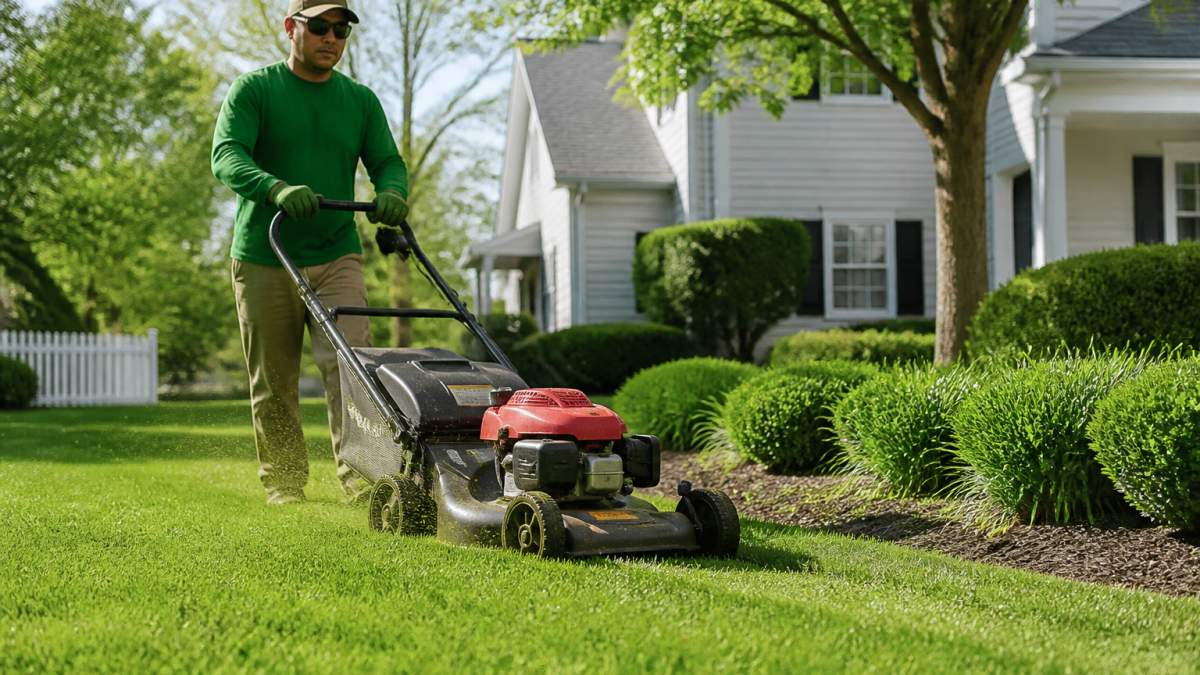
Finding Your Mowing Frequency
Most homeowners should mow weekly during the growing season; every 10 days is your absolute maximum, anything longer and you're fighting an uphill battle.
Frequency depends on growth rate, which varies by season and grass type. Spring and early summer demand weekly attention; late summer and fall slow slightly, but don't skip weeks.
Why Cutting Height Matters
Cutting height directly affects root depth, drought tolerance, and weed invasion. Cut too short and your lawn becomes stressed and shallow-rooted; cut too high and you're fighting perpetual overgrowth.
The ideal cutting height for most cool-season grasses is 2.5 to 3.5 inches; warm-season varieties sit at 1.5 to 2.5 inches.
Adjustable-height mowers let you set the right level once and eliminate a decision from every session.
2. Water Deeply and Less Often
Shallow, frequent watering trains grass to develop weak, surface-level roots that can't survive heat or drought. Deep watering, done less often, builds resilience and saves time.
Deep Watering vs. Frequent Shallow Watering
Shallow watering keeps roots near the surface, making your lawn dependent on constant irrigation. Deep watering pushes roots down 6 to 8 inches, creating a strong root system that accesses moisture deeper in the soil.
Most established lawns need about 1 to 1.5 inches of water per week, including rainfall.
Best Time to Water
Water early in the morning, ideally between 5 and 9 a.m., so blades dry quickly and disease risk drops. Evening watering leaves moisture overnight, creating conditions fungi love; midday watering wastes water to evaporation.
If you have an irrigation system, set it to run on a timer in early morning, the ultimate time-saver for busy homeowners. Drip irrigation or soaker hoses deliver water directly to the soil, reducing evaporation compared to overhead sprinklers.
3. Adopt a Seasonal Lawn Care Schedule for Homeowners
A seasonal approach prevents scattered, reactive maintenance by addressing predictable needs at the right moment.
Spring Tasks
Spring is when your lawn wakes up. Start with a cleanup: rake out dead leaves and debris accumulated over winter to prevent fungal issues and improve air circulation.
Apply a spring fertilizer or balanced, slow-release formula as grass enters peak growing season.
Aeration in spring is optional but valuable if your soil is compacted: it improves drainage and encourages deep root growth.
Summer Maintenance
Summer is maintenance mode: mow weekly, water deeply and less often, and stay alert for stress signs. If you see brown patches or thinning areas, wait for cooler early-fall temperatures to overseed.
Watch for pest activity: grubs and chinch bugs become active in summer. If you notice irregular brown patches or spongy soil, investigate before the problem spreads. Professional lawn care services can diagnose and treat pest issues quickly.
Fall and Winter Prep
Fall is your second major maintenance window: overseed thin or damaged areas, since cool-season grasses germinate best in fall temperatures.
Apply a fall fertilizer rich in potassium to harden grass for winter. This strengthens cell walls and improves cold tolerance.
Winter requires minimal active maintenance. Avoid walking on frozen or snow-covered grass when possible, foot traffic damages dormant plants. Clear leaves and debris to prevent matting and fungal issues in spring.
4. Tackle Weed Prevention Before Weeds Take Over
Preventive weed control saves busy homeowners the most time. Once weeds establish, you're in a reactive cycle of pulling, spraying, and replanting.
Preventive Weed Control Strategies
A dense, healthy lawn is your best weed defense, weeds thrive in thin, weak grass. Consistent mowing, proper watering, and seasonal fertilization are your first line of prevention.
Pre-emergent herbicides prevent weed seeds from germinating. Apply in early spring before crabgrass season and again in early fall for winter annuals.
Mulch around landscape beds and trees. A 2 to 3-inch layer suppresses weeds in planting areas and reduces overall weed pressure on your property.
When to Use Curative Treatments
Once weeds establish, you need curative treatment. Post-emergent herbicides kill existing weeds. Selective herbicides target broadleaf weeds while sparing your grass.
Hand-pulling works for isolated weeds, but it's time-consuming for busy homeowners. If you have significant weed pressure, professional treatment is often worth the cost. A lawn care service can apply targeted herbicides more efficiently than most homeowners manage.
5. Invest in Lawn Care Tools That Save Time
The right equipment transforms lawn maintenance from a time sink into a manageable routine. Prioritize tools that reduce physical labor or automate tasks.
Equipment That Reduces Manual Work
A quality mower is non-negotiable.
An irrigation timer automates watering. Set it and forget it, your lawn gets watered on schedule whether you're home or traveling.
A string trimmer for edging and detail work is essential. A cordless electric model is quieter and requires less maintenance than gas.
A leaf blower saves hours during fall cleanup. Cordless electric models are powerful enough for most residential yards and eliminate the hassle of gas and maintenance.
DIY vs. Professional Equipment
Professional-grade equipment costs more upfront but lasts longer and performs better, a commercial-grade mower will outlast two or three consumer models.
However, not every busy homeowner needs professional equipment. A mid-range self-propelled mower and basic tools handle most residential yards efficiently.
For specialized tasks like aeration, power raking, or large-scale fertilization, rental equipment or professional service often makes sense. Renting an aerator costs far less than buying one you'll use once a year.
6. Choose Low-Maintenance Lawn Ideas to Reduce Upkeep
Not every yard needs to be a manicured monoculture. Low-maintenance alternatives reduce the time commitment while creating beautiful outdoor spaces, sometimes the best lawn care for busy homeowners means rethinking what a lawn needs to be.
Grass Types Designed for Less Work
Certain grass varieties demand less frequent mowing, watering, and fertilization. Tall fescue is drought-tolerant and deep-rooted, thriving in heat and handling neglect better than fine fescues.
Shade-tolerant grasses like fine fescues need less fertilization and handle dry shade better than sun-loving varieties.
Native warm-season grasses like buffalo grass or blue grama require minimal fertilization and water once established. They're not suitable for all regions, but where they thrive, they're maintenance superstars.
Scandinavian-Inspired Minimalist Approach
The Scandinavian design philosophy embraces simplicity, clean lines, and intentional spaces. A minimalist yard actually demands less maintenance than a complex landscape.
Consider reducing lawn area by introducing hardscaping, gravel paths, stone patios, or decking. These define your outdoor space without the mowing and watering.
The minimalist approach isn't about a bare yard, it's about being intentional with every element.
7. How to Choose a Lawn Care Service When Time Runs Out
Sometimes the best lawn care for busy homeowners is recognizing when to outsource. Professional lawn care services handle routine maintenance, freeing your time for what matters. The key is choosing a service that delivers reliability and quality.
What to Look for in a Professional Service
Reliability is non-negotiable. Check reviews for consistency: Do they show up on schedule? Do they communicate when weather delays service?
Look for services that use state-of-the-art equipment and eco-friendly practices. Modern equipment handles the job efficiently.
Ask about their approach to your specific lawn challenges. Do they offer soil testing to diagnose nutrient deficiencies?
Satisfaction guarantees matter. Lover's Lawn Services LLC backs its work with a 100% satisfaction guarantee and a 3-day refund policy.
DIY vs. Professional: Cost and Time Trade-Offs
The math is straightforward: if lawn care takes 5 to 8 hours per month and you value your time, a professional service can be a worthwhile investment.
The trade-off isn't purely financial. Some homeowners genuinely enjoy lawn work and find the routine therapeutic.
For genuinely busy professionals, the calculus shifts. Your time is valuable.
| Approach | Time Commitment | Cost Range | Best For |
|---|---|---|---|
| DIY | 5-8 hours/month | Equipment + supplies | Homeowners who enjoy lawn work |
| Hybrid (DIY + occasional service) | 2-4 hours/month | $50-150/month | Busy homeowners wanting some control |
| Professional service | 0 hours/month | $150-400+/month | Professionals with limited time |
The reality of best lawn care for busy homeowners is this: consistency beats perfection.
At Lover's Lawn Services LLC, we understand that time is your scarcest resource. Our 100% satisfaction guarantee and 3-day refund policy mean you can trust the process. Learn more about professional lawn care services and discover how outsourcing lawn maintenance can simplify your life while creating the beautiful, balanced outdoor environment you deserve.
Frequently Asked Questions
How often should a busy homeowner mow the lawn?
Most lawns need mowing once per week during the active growing season, typically spring through early fall. The exact frequency depends on grass type, rainfall, and how fast your grass grows. During peak season, you may need to mow twice weekly if conditions are ideal. Cutting no more than one-third of the blade length at a time keeps your lawn healthy and reduces stress on the grass, which can actually slow regrowth and reduce your mowing burden over time.
What is the best lawn care schedule for homeowners to follow year-round?
Spring focuses on cleanup, soil testing, and overseeding bare spots. Summer requires consistent mowing and deep watering. Fall is ideal for aeration, fertilization, and seeding to strengthen roots before winter. Winter typically involves minimal maintenance but occasional cleanup. Following this seasonal rhythm prevents emergency repairs and keeps your lawn healthy with less reactive work. A structured schedule also makes it easier to delegate tasks to a professional service if you choose that route.
Is it worth hiring a lawn care service, or should I do it myself?
Hiring a professional service can save significant time on mowing, watering, and maintenance. The trade-off is cost versus time. If your hourly value exceeds the service cost, hiring makes financial sense. Many busy professionals find that outsourcing lawn care frees up weekend time for family and reduces stress. Professional services also bring expertise in soil care, pest control, and weed prevention that can prevent costly problems. A 100% satisfaction guarantee and refund policy, like the one offered by quality providers, removes the risk of switching.
What lawn care tools save the most time for busy homeowners?
A quality mower with mulching capability, an irrigation timer, and a string trimmer for edging are the core time-savers. Mulching mowers recycle clippings and reduce bagging time. Irrigation timers allow deep watering on a schedule without manual effort. Cordless equipment reduces setup and maintenance time compared to gas-powered alternatives. For those with larger yards, robotic mowers can handle routine cutting while you focus on other tasks. Investing in reliable, well-maintained equipment reduces downtime and frustration.
How can I make my lawn lower maintenance without sacrificing curb appeal?
Choose grass species suited to your climate and soil type, as they require less water and fertilizer. A Scandinavian-inspired minimalist approach, clean lines, strategic plantings, and defined edges, reduces the visual clutter that high-maintenance lawns create. Deep watering less frequently strengthens roots and reduces disease. Preventive weed control through proper soil preparation and mulching beats reactive treatments. Aeration every 1-2 years improves soil drainage and reduces compaction problems. These strategies work together to create a balanced, lower-maintenance landscape that still looks intentional and well-cared-for.