 Listicle
Seasonal Commercial Lawn Maintenance: Key Benefits
Last Updated: November 11, 2026
Quick Summary
Seasonal commercial lawn maintenance is a planned program of mowing, cleanup and preparation timed to each part of the year, rather than reacting to how the grass looks this week. It keeps commercial properties looking managed, protects turf health, and gives property managers a predictable budget line. Lover's Lawn Services LLC pairs consistent scheduling with eco-friendly practices for businesses across Northern Virginia.
- Commercial and industrial customers account for 53.68% of U.S. lawn care applications in 2026.
- A seasonal calendar groups the year into spring, summer, fall and winter, each tied to a specific protection goal.
- Mowing frequency should follow turf growth rather than a fixed calendar date.
- Define scope, frequency and completion standards in the contract before comparing prices.
- Track completed visits, complaints, turf condition and emergency response time to measure service quality.
Table of Contents
- Why Seasonal Commercial Lawn Maintenance Matters for Property Owners
- Curb Appeal, Brand Image and Tenant Satisfaction
- Commercial Lawn Maintenance Schedule by Season
- Seasonal Lawn Care Checklist for Commercial Properties
- How Often Commercial Lawns Need Mowing Through the Growing Season
- Sustainable Commercial Landscaping Practices That Protect Long-Term Value
- Budgeting, Contracts and Service Expectations for Property Managers
- Booking Your Seasonal Maintenance Plan With Lover's Lawn Services
- Frequently Asked Questions
Why Seasonal Commercial Lawn Maintenance Matters for Property Owners
Seasonal commercial lawn maintenance is a planned program of mowing, cleanup and preparation timed to each part of the year, rather than reacting to whatever the grass looks like this week. For commercial properties, that planning is the difference between a site that looks managed and one that looks neglected. Lover's Lawn Services LLC built its approach around this idea, pairing consistent scheduling with eco-friendly practices for businesses across Northern Virginia.
Commercial and industrial customers form the largest segment of the U.S. lawn care market, accounting for 53.68% of applications in 2026 according to Mordor Intelligence U.S. lawn care market report. That scale reflects how much property owners rely on outside maintenance to keep sites presentable and functional.
A seasonal plan does three things well. It fixes the schedule before problems appear, it matches work to what the grass actually needs in each season, and it gives property managers a predictable line item to budget for. Without it, maintenance tends to become a series of emergency calls.
Curb Appeal, Brand Image and Tenant Satisfaction
For a business, the lawn is often the first thing a visitor sees. A trimmed, even lawn with clean edges signals that the property is looked after, and that impression carries over to the building, the tenants and the brand.
Tenants and customers notice upkeep. Overgrown edges, leaf litter on walkways and patchy turf can make a site feel less cared for, even when the interior is well kept. Consistent mowing and cleanup keep those signals positive throughout the year.
Commercial Lawn Maintenance Schedule by Season
A property manager needs a calendar that shows what to schedule, when, and why. The full seasonal lawn care guide walks through what each season involves. The table below groups the year into four phases and ties each phase to the outcome it protects.
| Season | Typical timing (varies by region) | Core services | What it protects |
|---|---|---|---|
| Spring | Late winter to early summer, as growth resumes | Restart mowing, inspect for winter damage, overseed or repair bare patches, begin edging and bed work | Turf density and first impressions at the start of the leasing or visitor season |
| Summer | Mid-summer, when heat slows growth | Shift to a steady mowing rhythm, raise cutting height, monitor irrigation and stressed zones | Turf survival through heat and drought stress |
| Fall | Early fall through leaf drop | Scheduled leaf removal, aeration and overseeding where appropriate, debris clearing from beds and drains | Root recovery, turf health going into winter, and reduced slip and drainage hazards |
| Winter | Late fall through the coldest weeks | Keep walkways and entrances clear, inspect hardscape and trees, plan contracts and scope for the coming year | Safe access, asset protection, and a clean budget baseline |
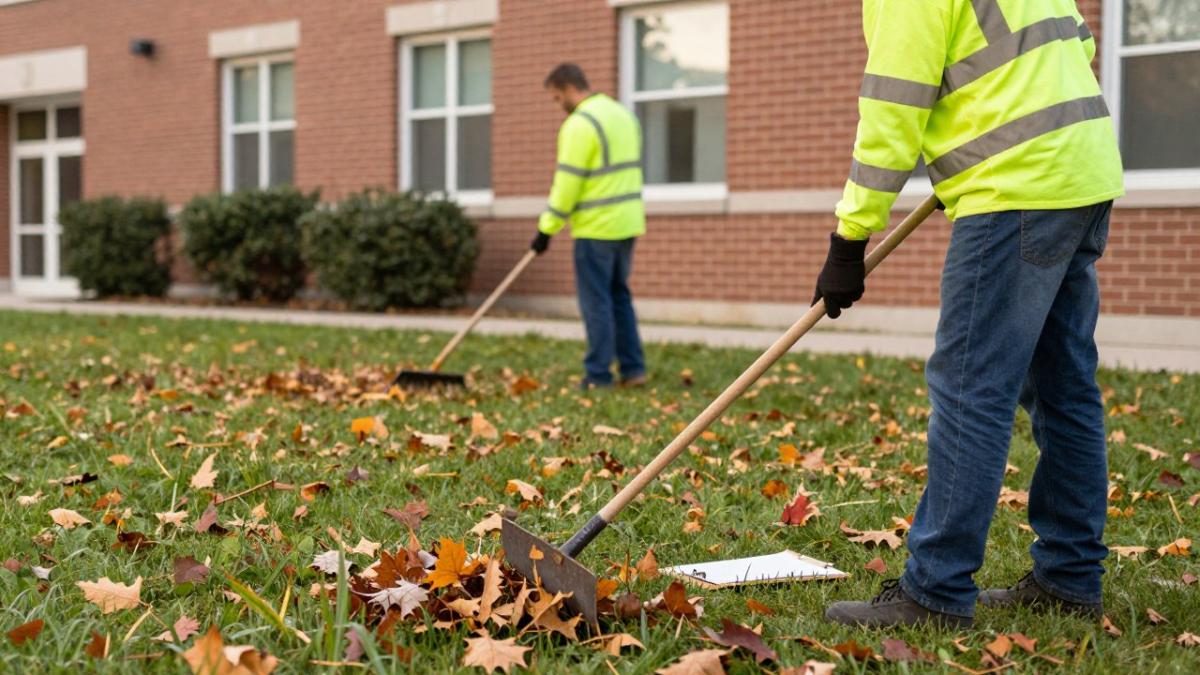
Timing is the part most calendars get wrong. Turf growth slows in both heat and cold, so mowing frequency should follow growth rather than the date on the calendar. Leaf cover left too long can smother grass and create slip hazards on walkways, which is why fall cleanup is usually scheduled in several passes rather than one large cleanup. The gutter and fall cleanup details show what that work covers.
A practical way to use this calendar is to build it into the contract. List each seasonal service, its frequency window, and the trigger that adjusts it, such as a growth threshold for mowing or a leaf-drop observation for cleanup. That structure gives both the property manager and the provider a shared, checkable schedule instead of a series of reactive requests.
Watch out: a calendar that is fixed to dates without a weather or growth trigger will either waste visits in slow periods or miss the window for critical work in a late spring or early fall.
Seasonal Lawn Care Checklist for Commercial Properties
Use this checklist to review each season's work with your provider:
- Confirm the mowing frequency for the current growth period
- Check edges, beds and hardscape lines after each cut
- Clear leaves and debris from lawns, walkways and gutters
- Inspect for bare or stressed areas and note them for follow-up
- Review irrigation coverage and any dry spots
- Walk the property for winter hazards such as ice on paths
- Record completed work so the next season starts from a clear baseline
How Often Commercial Lawns Need Mowing Through the Growing Season
Mowing frequency depends on grass type, weather and how fast the turf is growing. Mowing frequency should follow how quickly the turf is growing. Growth slows in the heat of mid-summer and again in late fall, so the interval can stretch.
The common mistake is cutting on a fixed calendar rather than on growth. A lawn that has not grown much since the last cut does not need a full service visit just because the date has arrived. A good provider adjusts the schedule to what the grass is doing.
Sustainable Commercial Landscaping Practices That Protect Long-Term Value
Eco-friendly practice is not just a branding choice. Good turf management protects soil, reduces waste and lowers the chance of costly replacement. Practices such as keeping mower blades sharp, leaving clippings where appropriate and timing cleanup to protect soil health all support a healthier lawn over time.
Lover's Lawn Services LLC describes its approach as eco-friendly and precise, using state-of-the-art equipment.
Budgeting, Contracts and Service Expectations for Property Managers
A seasonal program is only as useful as the contract behind it. Property managers who compare bids on a single hourly or per-visit number often find that the cheapest quote excludes leaf removal, edging, or post-storm cleanup, and the difference shows up later as change orders.
Define the scope before comparing prices. A usable scope of work lists each service, its frequency, the area it covers, and what counts as complete. Separate recurring services, such as mowing and edging, from seasonal ones, such as fall cleanup, aeration, and winter walkway clearing. Include any hardscape, planting beds, and drainage areas by name so the boundaries are clear.
Structure the budget by season. Rather than one annual figure, many commercial buyers split the budget into four seasonal blocks plus a contingency line for storm damage, irrigation repairs, and unplanned visits. This makes it easier to see where spending falls and to adjust scope mid-year without renegotiating the whole contract. Ask the provider to quote each seasonal block separately so the cost of each service is visible.
Set service-level expectations you can measure. Decision-makers get the most value from a few concrete indicators rather than general promises. Useful measures include:
- Completed visits compared with scheduled visits each month
- Number of grounds-related complaints or work orders logged per quarter
- Turf condition noted on a simple scale during monthly walkthroughs
- Response time for emergency requests such as fallen limbs or ice on walkways
- Maintenance cost per acre or per visit, tracked over time to show trends
Writing these into the contract gives both sides a basis for review. For practical drafting help, see commercial lawn maintenance contract tips for property managers. It also turns a complaint into a measurable gap instead of a disagreement.
Address missed visits and weather delays directly. Specify how make-up visits are scheduled, whether weather delays are credited, and how quality concerns are reported and resolved. Clear terms here protect both parties and keep the budget predictable.
Watch out: a low bid that does not define scope, frequency, and response expectations usually costs more in change orders and rework than a clearly scoped quote from the start.
The current price for any site depends on its size, service frequency, and included work, so request a written quote for your specific property and compare line items rather than general averages.
Booking Your Seasonal Maintenance Plan With Lover's Lawn Services
Commercial properties benefit most from a plan that covers the full year, not a single visit. Lover's Lawn Services LLC offers professional, Scandinavian-inspired lawn care, backed by a 100% satisfaction guarantee with a 3-day refund policy.
Start by reviewing your property's current condition, then request a seasonal plan tailored to your site. Get started with Lover's Lawn Services LLC and build a maintenance schedule that keeps your grounds looking managed all year.
Frequently Asked Questions
What are the benefits of seasonal commercial lawn maintenance?
Seasonal commercial lawn maintenance keeps turf healthy through each part of the year, which supports curb appeal and a consistent first impression for visitors, tenants and customers. Planned visits for spring readiness, growing-season mowing, leaf cleanup and winter preparation prevent small problems from becoming costly turf damage. Property managers also gain predictable service levels and easier budgeting, since work is scheduled by season instead of reacted to after the lawn declines.
How often should commercial property lawns be mowed?
Commercial lawns are usually mowed weekly during the active growing season and less often during slower periods, with frequency adjusted to grass type, weather and site traffic. Mowing height and blade condition matter as much as frequency, since sharp blades and correct cutting height reduce stress on turf. A provider should set a documented frequency in the service agreement so expectations are clear from the start.
What should a commercial lawn maintenance schedule include?
A useful schedule lists recurring tasks by season: spring cleanup and lawn readiness, growing-season mowing and edging, summer watering and turf checks, fall leaf removal and aeration, and winter preparation. It should also name the visit frequency, the responsible provider and any seasonal add-ons such as debris cleanup or pressure washing. Reviewing the schedule with the property manager each quarter helps keep the site looking consistent.
How can businesses choose a commercial lawn care service?
Look for a provider that offers a written service-level agreement, a clear seasonal calendar, documented satisfaction terms and references from similar properties. Ask how they handle missed visits and how quickly they respond to concerns. Lover's Lawn Services LLC offers a 100% satisfaction guarantee with a 3-day refund policy; current pricing and service options are available on the company's website or through a quote.