 Listicle
Curb Appeal on a Budget: 7 Ways to Improve Your Business
Last Updated: November 14, 2026
Quick Summary
Curb appeal on a budget means improving your commercial exterior with low-cost, high-impact changes like paint and hardware refreshes, LED path lighting, pressure washing, container plants, and updated signage. Start with the front entrance and wayfinding, then plan seasonal maintenance on a calendar to avoid paying twice for the same problem.
- A full door-and-trim paint refresh typically costs $35 to $150 and takes a weekend.
- Battery-powered LED pathlights install without an electrician and can be scheduled by app.
- Re-skinning an existing sign cabinet can cost less than full replacement, but confirm permits first.
- Under the ADA, accessible routes, parking, and signage are legal requirements for many commercial properties.
- High-traffic entrances and walkways usually need pressure washing more than once a year.
Table of Contents
- Why Curb Appeal on a Budget Still Moves the Needle
- 1. Refresh the Front Entrance With Paint and Hardware
- 2. Upgrade Exterior Lighting With LED Fixtures
- 3. Pressure Wash Walkways, Parking Areas, and Facades
- 4. Add Container Plants and Greenery for Instant Visual Impact
- 5. Update Signage and Door Hardware for a Professional Appearance
- 6. Low-Maintenance Landscaping for Businesses That Want Less Upkeep
- 7. Plan Commercial Property Exterior Maintenance Around the Seasons
- Frequently Asked Questions
Why Curb Appeal on a Budget Still Moves the Needle
Curb appeal on a budget is the practice of improving a commercial property's exterior using low-cost, high-impact changes that shape how customers and tenants judge the business before they walk in. A clean, cared-for front entrance earns trust before a single word is spoken. First impressions form fast, and your facade, walkways, and landscaping are doing the talking.
Below, we cover seven budget-friendly tactics, each with a straight answer on DIY versus professional help. For current pricing on Lover's Lawn Services LLC's services, see the pricing page on the company website. Before you spend a dollar, though, read the page on keeping curb appeal up with minimal effort, it sets the right expectations for what a small budget can actually achieve.
| Tactic | Typical DIY Cost | Best For | DIY or Pro? |
|---|---|---|---|
| Paint and hardware refresh | $35-$150 | Doors, trim, entry | DIY |
| LED path lighting | $35-$200 | Walkways, safety | DIY |
| Pressure washing | $159+ for a washer | Concrete, siding | DIY or pro |
| Container plants | $50-$300 | Entrances, corners | DIY |
| Signage and door hardware | $25-$200 | Wayfinding, polish | DIY |
| Low-maintenance landscaping | Varies by bed size | Beds, borders | Pro for large beds |
| Seasonal maintenance plan | Varies | Year-round upkeep | Pro |
Typical DIY costs for budget curb appeal tactics
1. Refresh the Front Entrance With Paint and Hardware
The front entrance is the cheapest place to start. Quality exterior paint covers doors, trim, and frames with a finish that resists mildew and moisture. Pair it with new door hardware and the entry reads as intentional rather than tired.
A common mistake is painting a door without prepping it. Sand, clean, and prime first, or the new coat peels within a season. Expect a full door-and-trim refresh to take a weekend.
DIY vs. professional: Paint and swap hardware yourself. Call a pro only if the frame is rotted or the door no longer seals.
2. Upgrade Exterior Lighting With LED Fixtures
Lighting does double duty: it improves safety after dark and makes the property look cared for. Battery-powered LED pathlights install without an electrician. Motion activation and app scheduling mean you set them once and forget them.
Watch out: cheap solar fixtures fade fast in shady spots. Buy fewer, better units and place them where they actually get sun or have a battery you can change.
DIY vs. professional: Fixture swaps are DIY. Any new wiring or panel work needs a licensed electrician.
3. Pressure Wash Walkways, Parking Areas, and Facades
Nothing changes a before-and-after photo faster than pressure washing. Grime, mildew, and tire marks lift off concrete and siding in an afternoon. An electric washer like the Sun Joe SPX3000 is a practical option for a few seasons of use.
Keep the nozzle moving and test a small patch first. Too much pressure etches concrete and strips paint.
DIY vs. professional: Fine for sidewalks and low siding. Hire a pro for tall facades, delicate surfaces, or heavy mold.
4. Add Container Plants and Greenery for Instant Visual Impact
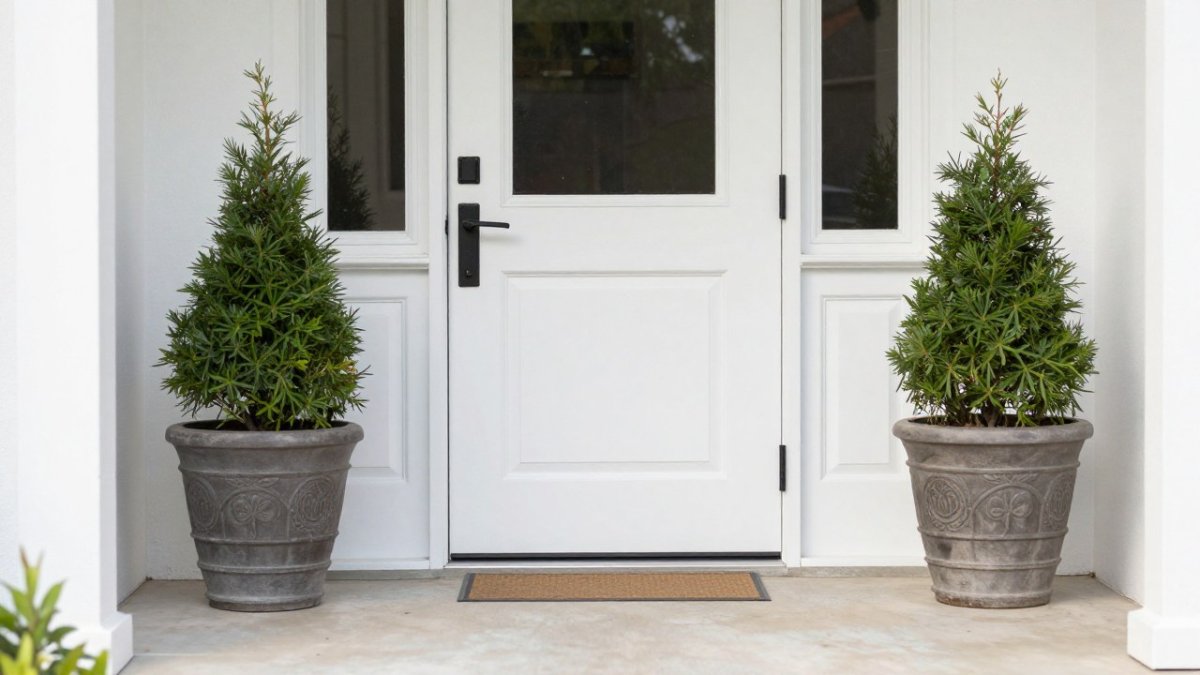
Container gardening gives you greenery without digging a single bed. Durable resin planters such as TerraCast hold up to weather and graffiti, and two large planters flanking an entrance create an immediate focal point. Pricing depends on pot size and plant selection; check Lover's Lawn Services LLC's website for current prices or a quote.
DIY vs. professional: DIY for a few pots. A pro handles seasonal replanting and irrigation for larger displays.
5. Update Signage and Door Hardware for a Professional Appearance
Signage is the one curb-appeal item that is genuinely commercial. A residential list stops at a new house number; a business has to answer three questions at the curb: Can a first-time customer find me, can they read me from the parking lot, and can they get in the door once they arrive. Budget work on all three is possible, but the order matters.
Start with wayfinding before decoration. Modern, high-visibility address numbers are often the most economical fix for customers who drive past because they cannot confirm the address. Match the finish to your door hardware, brushed nickel numbers against a brushed nickel lever reads as deliberate; mismatched finishes read as leftover. For the door itself, a commercial-grade lever or pull and a fresh kickplate do more for a dated entrance than a new sign, because customers touch the door before they read anything.
For the primary sign, the budget lever is usually the sign face, not the structure. Re-skinning an existing cabinet or monument sign with new panels can be a lower-cost alternative to full replacement, and it lets you fix faded colors and an outdated logo. Illuminated cabinet signs add a second budget item, lamp or LED retrofit, so price the face and the lighting together before committing.
Watch out: exterior signage is regulated at the local level, and sign permits, size limits, and setback rules vary by municipality. Confirm the permit path before you order panels, because a sign that fails inspection is a sunk cost, not a curb-appeal win.
Accessibility belongs in this section, not a footnote. Under the ADA, accessible routes, accessible parking, and signage identifying accessible features are legal requirements for many commercial properties, not upgrades. Confirm current requirements with the official ADA resources. A budget pass should confirm that the accessible route from the parking area to the entrance is clear, that the accessible parking space and its access aisle are marked and unobstructed, and that signage identifying accessible entrances is legible. None of that requires a designer; it requires a walk-through with a tape measure and a critical eye.
DIY vs. professional: DIY for numbers, hardware, and a compliance walk-through. Hire a sign shop for panels, illuminated cabinets, and anything that needs a permit, and confirm the permit requirement before you order.
6. Low-Maintenance Landscaping for Businesses That Want Less Upkeep
Low-maintenance landscaping for businesses means choosing plants and ground cover that look good with minimal watering and trimming. Fresh mulch suppresses weeds and gives beds a finished look in an afternoon.
If upkeep is the last thing you want to think about, professional landscaping services for businesses take the work off your plate. Facility managers who want a fuller plan can start with the guide to effortlessly maintained outdoor environments.
DIY vs. professional: DIY for mulch and small beds. Bring in a pro for design, large beds, and ongoing care.
7. Plan Commercial Property Exterior Maintenance Around the Seasons
Commercial property exterior maintenance works best on a calendar, not a whim. The reason is budget: a one-time cleanup is a cost, but a schedule is a way to stop paying for the same problem twice. Spending earlier, before small issues become line items, is a common way to manage exterior maintenance budgets.
A workable year-round calendar for a commercial exterior looks like this:
- Late winter (February-March): Walk the property and write a punch list. Check gutters, downspouts, sign lighting, and parking-lot striping while the landscape is dormant and problems are visible. Book spring work now, before crews fill up.
- Spring (April-May): Mulch beds, pressure wash walkways and entrances, service irrigation, and refresh container plantings. This is the highest-impact window because customers are outside again and the property is being judged after months of winter.
- Summer (June-August): Mow and edge on a fixed cadence, check irrigation for leaks and coverage, and touch up paint on doors and trim before heat and sun do the damage. Summer is also the right time to inspect parking-lot surfaces, because cracks are easiest to seal before fall rain.
- Fall (September-November): Leaf removal, gutter clearing, aeration and overseeding where turf is thin, and a final pressure wash of high-traffic walkways. Fall is when you lock in next spring's appearance.
- Winter (December-January): Plan and budget. Review what failed, price next year's projects, and handle equipment care. Snow and ice response, where applicable, belongs on a standing contract rather than a call-by-call basis.
Two tools make this easier: a commercial landscaping checklist to organize the work, and a look at the benefits of seasonal commercial lawn maintenance to justify the schedule to ownership. The budget argument is straightforward, a maintenance contract spreads cost across the year and prevents the emergency spend that comes from deferred work.
Watch out: the most common scheduling mistake is treating pressure washing and mulch as annual one-offs. High-traffic entrances and walkways usually need cleaning more than once a year, and beds lose mulch depth faster than owners expect.
DIY vs. professional: DIY a light seasonal list, punch-list walks, container watering, and touch-up paint. A maintenance contract handles mowing, irrigation, leaf removal, and snow response reliably, and it is usually the cheaper path once the property is large enough that missed weeks show.
Budget curb appeal comes down to consistency, not big spending. If seasonal upkeep keeps slipping down your list, that's the challenge worth solving now. Lover's Lawn Services LLC brings a Scandinavian-inspired approach, eco-friendly practices, and a 100% satisfaction guarantee with a 3-day refund policy to every property, so your exterior stays clean, balanced, and effortlessly maintained year-round. Get started with Lover's Lawn Services LLC and hand off the upkeep for good.
Frequently Asked Questions
What are some inexpensive ways to improve curb appeal?
Start with the changes that cost the least and show the most: repaint the front door and trim, replace worn door hardware, and pressure wash walkways and siding. Exterior paint, a pressure washer, container plants, and LED path lights can together produce a visible refresh for a modest budget. For current pricing on Lover's Lawn Services LLC's services, see the company website.
How can landscaping make a business look more professional?
Landscaping signals how carefully a business is run. Trimmed beds, fresh mulch, and clean walkways tell customers someone is paying attention. Mulch immediately tidies garden borders. For a hands-off approach, low-maintenance landscaping for businesses uses durable plants and resin planters that hold up to weather and foot traffic without weekly attention, keeping the property looking consistent year-round.
What is the 3-5-7 rule in landscaping?
The 3-5-7 rule is a planting guideline: group plants in odd numbers, typically three, five, or seven of a kind, at varying heights. Odd-numbered clusters look more natural than even pairs, and the height variation adds depth. For a commercial entrance, three tall planters with a mix of heights can follow the same principle without any planting beds at all, which keeps maintenance low.
How often should a business maintain its landscaping?
Commercial properties typically need regular attention during the growing season and less often in cooler months. A practical seasonal schedule covers pressure washing in spring, mulch refresh and planting in spring and fall, lighting checks before winter, and walkway and parking lot inspections after storms. Building commercial property exterior maintenance into a calendar prevents small issues, like cracked walkways or faded signage, from becoming expensive repairs.
How can I improve curb appeal without replacing the landscaping?
You can change how existing landscaping reads without ripping anything out. Edge the beds sharply, add a fresh layer of mulch, and pressure wash the hardscape around them. Swap outdated signage for modern house numbers, and add pathway lighting for evening visibility. These touches change the curb appeal before and after impression while leaving the plants and beds exactly where they are.