 How-to
What to Do When Lawn Grass Turns Grey After Heavy Rain
Last Updated: November 7, 2026
Quick Summary
When grass turns grey after heavy rain, the usual cause is oxygen loss in the root zone from saturated soil, so stop all watering and stay off the lawn until the soil dries. Most grey lawns recover on their own within 24 to 48 hours once the ground drains.
- Grey blades often spring back when lifted, while brown blades snap.
- Heavy clay soil can take three to four days to dry after rain stops.
- Keep off the lawn for at least 48 hours after the surface dries.
- Skip fertilizer until you see new green growth on the lawn.
- Aerate once the ground is firm, never while it is still soft.
Table of Contents
- Why Grass Turns Grey After Heavy Rain
- How to Assess Lawn and Soil Damage After a Downpour
- How Long for Grass to Dry After Rain
- How to Recover Overwatered Grass Without Making It Worse
- Gray Lawn Fungus After Rain: Identification and Safe Response
- Fixing Lawn Drainage Problems That Keep Coming Back
- Book a Post-Rain Lawn Assessment
- Frequently Asked Questions
Why Grass Turns Grey After Heavy Rain
If your grass turns grey after heavy rain, the usual cause is oxygen loss in the root zone. Saturated soil pushes air out of the pore spaces, and roots begin to suffocate within days. This is most often seen after a downpour that leaves water sitting for 24 hours or more.
The grey color is not the grass dying. It is the grass stressing.
A quick definition helps here. Grey grass is turf that has lost its green pigment and taken on a dull, silvery or ash-like cast, usually across whole patches rather than single blades. That is different from a dead lawn, which turns straw-brown and crunches underfoot.
Three things happen at once when heavy rain hits:
- Water fills the soil pores and forces out the oxygen roots need
- Soil compaction traps that water near the surface
- Roots slow down, so the blades stop taking up nutrients
The result is a lawn that looks washed out and flat. Most of the time it recovers on its own once the ground drains. The rest of this guide shows you how to tell which situation you have.
Grey Grass vs. Brown Spots vs. Yellowing
Grey grass is a stress signal, brown spots are usually dead tissue, and yellowing points to a nutrient or moisture imbalance. Telling them apart decides whether you wait, treat, or repair.
Here is how to read each one:
| Symptom | Likely Cause | What You'll See | First Move |
|---|---|---|---|
| Grey, silvery cast | Waterlogged roots, low oxygen | Even dull patches, soft ground | Stop watering, let it dry |
| Brown spots | Dead tissue, fungus, or dog spots | Crisp, straw-colored circles | Check soil moisture first |
| Yellowing | Nitrogen loss, overwatering, or drought | Pale blades, often uneven | Test moisture before feeding |
Grey blades often spring back when you lift them. Brown blades snap.
If the damage turns out to be brown patches instead, our guide on why your lawn has brown patches walks through the full diagnosis. Once you know it is patch damage, the step-by-step brown patch repair guide covers the fix.
Waterlogging, Compaction, and Root Oxygen Loss
Waterlogged soil is the root problem behind most grey lawns. When every pore is full of water, roots cannot breathe, and grass blades lose color before they lose life.
Compaction makes it worse. Heavy rain pounds the surface, and foot traffic on wet ground squeezes soil particles together. Water then sits on top instead of soaking down.
Watch for these signs:
- Standing water that lingers more than a day
- A squishy feeling underfoot
- Moss or weeds moving into thin areas
- Water pooling in the same low spots after every storm
The fix is rarely more water or more fertilizer. It is air and drainage.
How to Assess Lawn and Soil Damage After a Downpour
Wait until the rain stops and the surface is no longer squishy, then run three simple checks: a screwdriver test, a drainage test, and a blade test. Ten minutes tells you whether the lawn needs time or treatment.
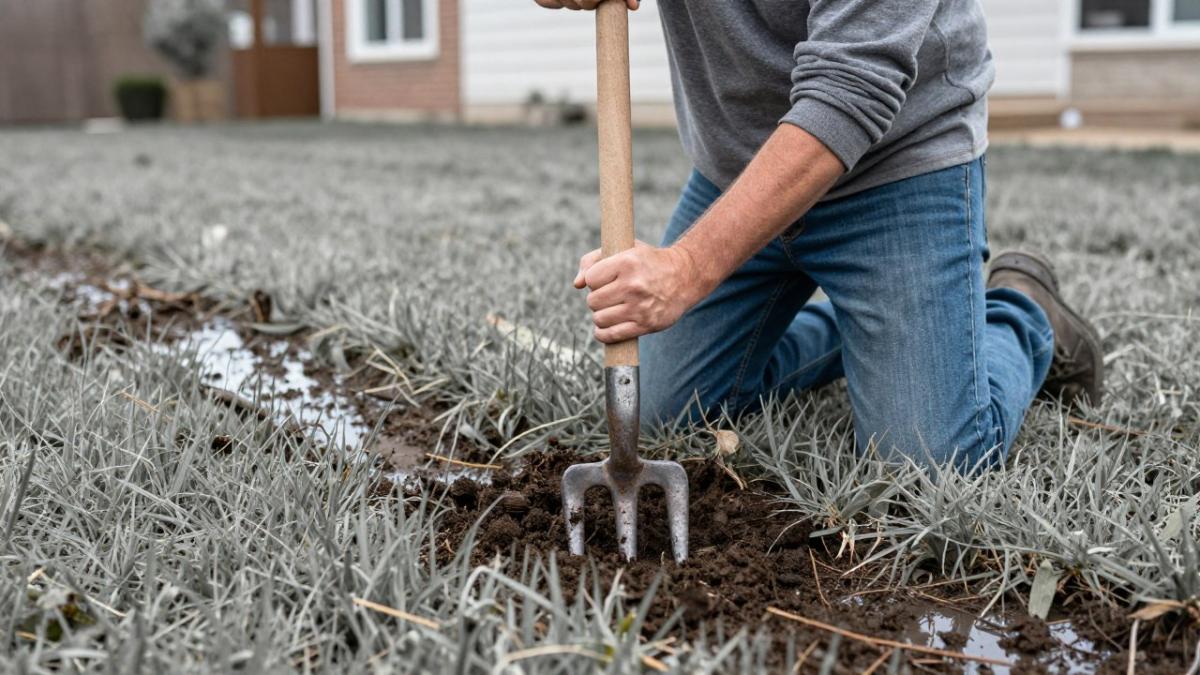
Try these in order:
- The screwdriver test. Push a long screwdriver into the soil. If it slides in easily, the soil is still soaked. If it stops hard, you have compaction.
- The drainage test. Dig a small hole about 6 inches deep and fill it with water. If it drains within a few hours, drainage is fine. If it holds overnight, you have a problem.
- The blade test. Grab a grey blade and tug it gently. If it pulls free with no resistance, the root has rotted. If it holds, the grass is stressed but alive.
Write down what you find. It makes the next decision much easier.
How Long for Grass to Dry After Rain
Most lawns dry within 24 to 48 hours after rain stops, depending on soil type and drainage. Heavy clay soil can take three to four days. Sandy soil dries much faster.
Weather matters too. Cool, cloudy, humid days slow drying. Sun and wind speed it up.
Use this rough guide:
- Sandy soil: 1 day or less
- Loam: 1 to 2 days
- Clay: 2 to 4 days
- Low spots with poor drainage: 4 days or more
Do not walk on the lawn while it is still soft. Foot traffic on saturated ground causes the compaction that creates next season's problems.
How to Recover Overwatered Grass Without Making It Worse
The safest way to recover overwatered grass is to stop watering, stay off it, and let the soil dry before you do anything else. Most grey lawns bounce back with patience alone.
Here is the sequence we recommend:
- Stop all irrigation until the soil passes the screwdriver test
- Keep off the lawn for at least 48 hours after the surface dries
- Mow only when the grass is dry, and set the blade high so you remove no more than a third of the blade
- Skip fertilizer until you see new green growth
- Aerate once the ground is firm, not before
If you would rather hand off the mowing while the lawn recovers, our professional lawn mowing service handles it without adding compaction.
Watch out: fertilizing a waterlogged lawn pushes nutrients past the root zone and into runoff, which wastes money and can harm local waterways.
Gray Lawn Fungus After Rain: Identification and Safe Response
Gray lawn fungus after rain is easy to confuse with the grey stress caused by saturated roots, so the first job is to tell them apart. Fungal growth sits on the blade surface; grey stress comes from inside the plant.
Use this comparison before you do anything:
| Sign | Grey stress from waterlogging | Fungal growth |
|---|---|---|
| Where the color sits | Whole blade looks dull and silvery | Powder or fuzz on the leaf surface |
| Texture | Blades feel normal, may spring back when lifted | Blades feel coated, sticky, or matted |
| Smell | Neutral, wet-earth smell | Musty or moldy odor in heavy cases |
| Patch shape | Even patches in low or flat spots | Rings or irregular patches spreading from shade |
| Blade tug test | Holds firm if alive, pulls free if rotted | Holds firm but shows surface growth |
The most common wet-weather fungus on home lawns is powdery mildew, which thrives in damp, still air and low light.
Look for these signs of active fungus:
- A dusting of grey-white powder on leaf surfaces
- Patches that spread outward from shade or low spots
- Blades that yellow and thin under the powder
- A musty smell in heavy cases
- Small tan spots with dark margins on individual blades
Act by improving airflow and light first, not by reaching for chemicals. Thin nearby shrubs, reduce shade where you can, avoid evening watering once the lawn dries out, and remove clippings from badly affected patches so the growth does not spread.
Watch out: applying a fungicide to a lawn that is still saturated may waste money while the real problem, poor drainage, keeps returning.
If the growth keeps returning after you improve airflow and drainage, or if patches expand despite your efforts, a diagnosis from your local cooperative extension service is the safer next step. Our fungus control service targets the underlying moisture problem rather than just the visible growth.
Fixing Lawn Drainage Problems That Keep Coming Back
Recurring lawn drainage problems need a permanent fix, not a seasonal patch. If the same low spot floods every storm, the water has nowhere to go. The trick is to match the fix to the symptom instead of trying every remedy at once.
Start by reading what the water is telling you:
- Water pools in the same low spot every storm: the surface is uneven. Fill and level the low area with a soil and sand mix.
- Water sheets across the lawn and runs off: the soil is compacted or the slope is wrong. Core aeration and a shallow surface channel can redirect it.
- Water stands for days across a wide area: the subsoil drains poorly. A French drain or a dry well may be needed.
- Water collects near the house or downspouts: the roof water is landing on the lawn. Redirect downspouts and extend them away from the foundation.
Aeration is the first move in most cases. Core aeration pulls small plugs of soil out and opens channels for air and water. Do it when the ground is moist but not soaked, and leave the cores to break down.
Then work through the structural fixes:
- Fill low spots with a soil and sand mix to level the surface
- Add a French drain or surface channel where water collects
- Redirect downspouts away from the lawn
- Overseed thin areas with a grass type suited to your soil
After aeration, overseeding fills bare patches before weeds move in. Water lightly and often for the first two weeks, then back off.
Watch out: do not aerate or overseed while the ground is still soft. Working saturated soil smears the structure and makes compaction worse, which is the opposite of what you want.
Book a Post-Rain Lawn Assessment
A post-rain assessment catches root damage while it is still fixable. If your lawn stays grey or the same spots keep flooding after storms, consider contacting a lawn care professional.
Lover's Lawn Services LLC offers professional, Scandinavian-inspired lawn care and landscaping, using eco-friendly practices and state-of-the-art equipment. The business is backed by a 100% satisfaction guarantee with a 3-day refund policy, and it reports serving 500+ local homes with a 4.9/5 Google review rating.
Ready to get started? Follow our 5 steps to get an instant lawn care quote and we will take it from there.
Grey grass after heavy rain is a warning, not a death sentence. Most lawns recover in a week or two with the right steps: stop watering, stay off the ground, aerate when it is firm, and fix the drainage that caused the problem.
Frequently Asked Questions
Will grass that goes grey come back?
In most cases, yes. Grey grass after heavy rain is usually a stress response from waterlogged soil and depleted oxygen in the root zone, not dead turf. Once the soil drains and roots regain oxygen, new growth typically resumes within one to three weeks. Check the crown of the plant: if it is firm and green at the base, the grass will recover. If the crown is mushy or pulls up easily, that patch may need reseeding.
How long does it take for grass to dry after heavy rain?
Most lawns need 24 to 72 hours of dry weather before the surface is firm enough to walk on, and saturated soil can take a week or more to drain fully. Clay-heavy soil holds water longer than sandy loam. Before mowing or aerating, push a garden fork into the soil. If it sinks easily and pulls up mud, wait another day. Working wet ground causes compaction that makes the next downpour worse.
Can heavy rain cause lawn fungus?
Yes. Prolonged moisture and warm temperatures create the conditions fungal diseases need. Gray lawn fungus after rain often shows as a powdery grey coating on blades, circular patches, or a musty smell near the soil line. Rake out matted clippings, improve airflow, and let the surface dry before applying any treatment. If patches spread despite drying, a professional assessment can identify the specific fungus and the right response.
Should you mow a lawn while it is wet?
No. Mowing wet grass tears rather than cuts the blades, and the mower's weight presses ruts into soft soil, adding compaction on top of the waterlogging. Wait until the surface is dry and the soil is firm. Set the mower one notch higher than usual for the first cut after heavy rain so you remove less of the stressed blade and give the turf more leaf area to recover.