 Ultimate guide
Scandinavian Style Landscaping: A Complete Guide
Last Updated: October 23, 2026
Quick Summary
Scandinavian style landscaping is a design approach rooted in Nordic principles of minimalism, functionality, and harmony with nature that prioritizes clean lines, restrained color palettes, and purposeful layouts. It reduces maintenance by up to 30% while increasing usability, creating serene outdoor spaces where every element serves both aesthetic and practical purposes.
- Minimalist design principles reduce maintenance by up to 30% while improving property value perception.
- Plant in groups of three or five of the same species to create visual coherence and simplify maintenance.
- Garden paths should be at least 3 feet wide to feel like intentional spaces rather than mere access routes.
- Spring maintenance involves cutting back dried grasses and perennials, the year's most labor-intensive task.
- Select 5-8 plant varieties maximum, using repetition to create rhythm and rhythm throughout the garden.
Table of Contents
- What Is Scandinavian Style Landscaping?
- Core Principles of Scandinavian Landscape Design
- Scandinavian Garden Plants for Your Yard
- Creating a Low-Maintenance Scandinavian Garden
- Scandinavian Backyard Ideas: Layout and Materials
- Planning and Implementing Your Scandinavian Landscape
- Maintaining Your Scandinavian Outdoor Space
- Frequently Asked Questions
What Is Scandinavian Style Landscaping?
Scandinavian style landscaping is a design approach rooted in Nordic principles of minimalism, functionality, and harmony with nature.
The style emerged from Scandinavian culture, where harsh winters and limited daylight shaped a preference for durable materials, hardy plants, and designs that weather the seasons with grace.
Unlike ornamental garden styles that demand constant maintenance, Scandinavian landscaping reduces upkeep while increasing usability. The American Society of Landscape Architects has documented how minimalist design principles reduce maintenance by up to 30% while improving property value perception.
The core appeal is straightforward: a Scandinavian landscape works with your climate rather than against it, uses materials that age beautifully, and creates outdoor rooms where you actually want to spend time. Learn more about Benefits of Scandinavian-Inspired Landscaping.
Core Principles of Scandinavian Landscape Design
Minimalism and Clean Lines
Minimalism in Scandinavian landscaping doesn't mean barren or cold. It means removing visual noise so essential elements, a well-placed tree, a gravel path, a wooden bench, become focal points rather than competing for attention.
Clean lines define the layout. Straight edges on garden beds, geometric paving patterns, and linear pathways create visual order, making even small yards feel intentional.
The minimalist approach extends to plant density. Instead of crowding beds with dozens of varieties, select a smaller palette and repeat it strategically.
Functionality Meets Beauty
Every element in a Scandinavian landscape serves a purpose. A stone patio isn't just decorative, it's a gathering space. Wooden decking provides a platform for outdoor living.
This principle separates Scandinavian design from purely ornamental styles. You're not adding elements because they look nice in isolation; you're building an outdoor environment that functions for how you live.
Furniture and fixtures follow the same logic. Outdoor seating is designed for comfort and durability, storage is integrated into hardscape elements, and lighting is functional but placed to create ambiance.
Natural Materials and Neutral Tones
Scandinavian landscaping favors materials that age gracefully: wood, stone, gravel, and steel. These weather beautifully, wood silvering over time, stone developing patina, gravel settling in, creating a sense of permanence and authenticity.
Color restraint is fundamental. Neutral tones, grays, blacks, whites, warm earth tones, dominate the hardscape, allowing plants and seasonal changes to become the primary visual interest.
The material choices reflect climate practicality. Stone and gravel drain well in wet seasons, wood is selected for durability in temperature fluctuations, and steel accents resist rust and age with character.
Scandinavian Garden Plants for Your Yard
Hardy Perennials and Grasses
Scandinavian planting emphasizes hardy perennials and ornamental grasses that thrive in cool climates and require minimal intervention once established, handling temperature swings, poor soil, and limited water without supplemental care.
Ornamental grasses form the backbone of Scandinavian plantings. Varieties like feathery reed grass and blue fescue create texture and movement while requiring only annual cutting.
Perennials selected for Scandinavian gardens typically have restrained colors and architectural forms: sedums with fleshy leaves, coneflowers with geometric seed heads, salvias with vertical structure.
Trees and Shrubs for Structure
Birch trees are iconic in Scandinavian design, their white trunks and delicate branching creating visual lightness.
The placement of these woody plants is deliberate. Rather than scattered randomly, they're positioned to create rooms, frame views, or screen undesirable elements. A single well-placed tree becomes a focal point.
Scandinavian gardens rely on a curated selection of hardy plants chosen for their resilience and year-round appeal.
| Plant Type | Examples | Key Characteristics |
|---|---|---|
| Ornamental grasses | Reed grass, blue fescue | Create texture, require only annual cutting |
| Perennials | Sedums, coneflowers, salvias | Restrained colors, minimal deadheading needed |
| Trees | Birch, spruce, pine | White trunks or year-round structure |
| Shrubs | Viburnum, hazel | Architectural form, interesting branching patterns |
Creating a Low-Maintenance Scandinavian Garden
A Scandinavian landscape is designed from the ground up to minimize maintenance, respecting your time while maintaining beauty year-round.
Start with soil preparation. Scandinavian plants thrive in well-draining soil, so amending heavy clay with compost and gravel pays dividends.
Planting density matters. Rather than densely planted beds that become overgrown and require constant pruning, Scandinavian gardens use wider spacing so plants reach mature size without crowding.
Seasonal care is simplified. Spring means removing the previous year's dried grasses and perennials, a one-time task. Summer requires minimal intervention beyond occasional weeding.
Scandinavian Backyard Ideas: Layout and Materials
Decking, Patios, and Garden Paths
Wooden decking is a signature element of Scandinavian backyard design. It creates a transitional space between your home and the garden, defines a gathering area, and brings warmth to the neutral palette.
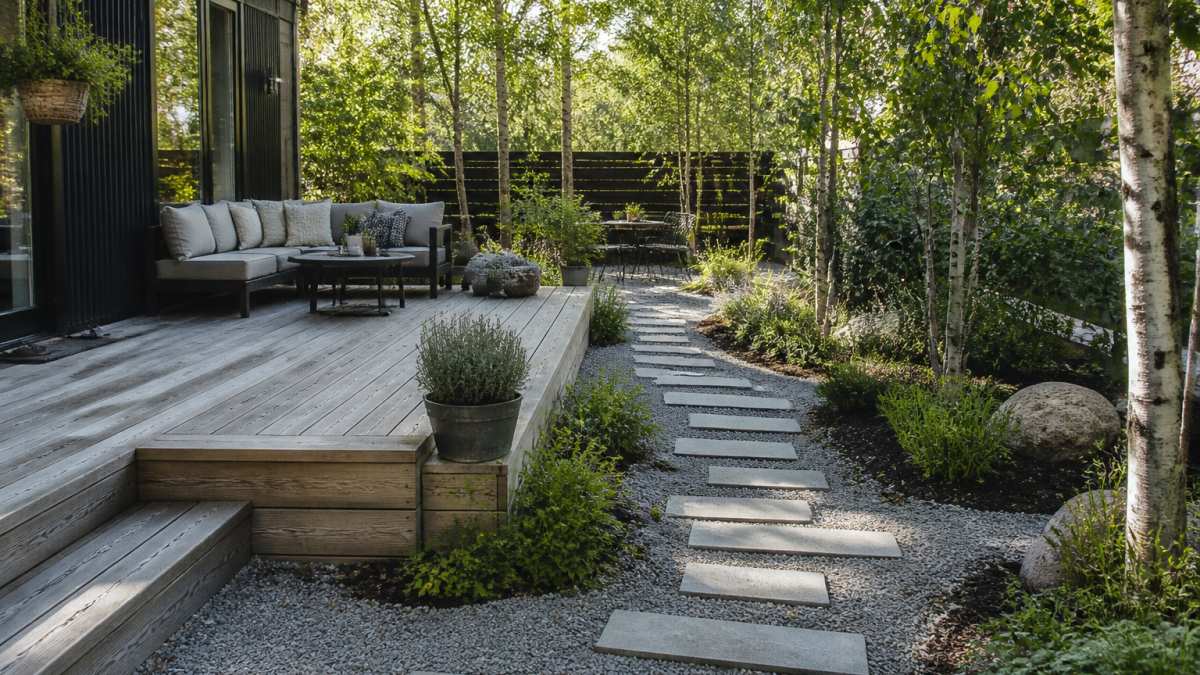
Patios in Scandinavian gardens use stone or porcelain paving in neutral tones.
Garden paths serve both practical and aesthetic functions. Gravel pathways are common in Scandinavian design, creating a soft, permeable surface that requires minimal maintenance.
Outdoor Seating and Functional Spaces
Seating areas anchor a Scandinavian backyard. Rather than scattered chairs, designate specific zones: a dining area near the home, a quiet corner for reading, a fire pit area for evening gathering.
Furniture is minimal but purposeful. A simple wooden bench, a few chairs with clean lines, a table for dining, these pieces are selected for durability and comfort, not quantity.
Functional elements like water features, fire pits, or storage are integrated into the landscape rather than added as afterthoughts.
Planning and Implementing Your Scandinavian Landscape
Step 1: Assess Your Space and Climate
Begin by understanding your site conditions. Observe sun patterns throughout the day and seasons, note drainage, and identify existing trees or structures that will remain, as these anchor your design.
Climate assessment is critical. Discover how to apply Scandinavian design to your specific regional climate Scandinavian design works best in cool climates with defined seasons, but the principles adapt: in warmer zones, select heat-tolerant versions of Scandinavian plants; in wet areas, emphasize drainage in hardscape design; in dry areas, choose drought-adapted grasses and perennials.
Document your site with measurements and photos, noting property lines, utility locations, and views to enhance or screen. This foundation prevents costly mistakes during implementation.
Step 2: Choose Your Materials and Color Palette
Select your hardscape materials first, as these form the foundation of your design. Decide which stone for paving, which wood for decking, which gravel for paths, and limit yourself to 2-3 primary materials plus one accent.
Establish your color palette. Choose 2-3 neutral tones for hardscape, perhaps warm gray stone, dark gravel, and silvered wood, that complement your home's exterior.
Consider how materials will age in your climate. Pressure-treated wood silvering, natural stone developing patina, gravel settling, these changes should feel intentional rather than neglected. Select materials that improve with age.
Step 3: Select Plants and Create Planting Plans
Choose your plant palette based on your climate zone and site conditions. Select 5-8 varieties maximum, using repetition to create rhythm: at least one tree for structure, 2-3 shrubs for form, and 3-4 perennials or grasses for seasonal interest.
Prioritize hardiness and low maintenance. Research each plant's water needs, mature size, and seasonal appearance. Nordic plants typically prefer well-draining soil and moderate water; avoid plants requiring constant irrigation or fussy care.
Sketch planting locations on a plan, showing mature sizes so you understand the garden's form in 3-5 years. Group plants with similar water needs for efficient irrigation, and use repetition: the same grass variety in three locations along a pathway, or a repeated shrub species across the garden's edge.
Step 4: Install Hardscape Elements
Hardscape installation typically comes before planting. Create your deck or patio, establish pathways, and define beds with edging. This framework guides plant placement and ensures proper drainage.
During installation, pay attention to grading for drainage. Scandinavian gardens rely on well-draining soil and surfaces, so slopes should direct water away from structures and toward planted areas.
Once hardscape is complete, amend soil in planting areas. Mix native soil with compost and gravel to improve drainage and structure, an essential step for plant success and long-term low maintenance.
Maintaining Your Scandinavian Outdoor Space
Maintenance rhythm follows the seasons. Spring involves cutting back last year's dried grasses and perennials to ground level, revealing fresh growth.
Summer maintenance is minimal. Water newly planted specimens until established, typically the first growing season. Weed occasionally, though dense plantings and gravel mulch suppress most weeds. Deadhead only if desired.
Fall is observation season. Watch how light changes as the sun's angle shifts and notice which plants provide winter structure.
Winter reveals your landscape's true structure. Without foliage, hardscape and plant forms become prominent.
Learn more about How to Maintain Minimalist Lawn Aesthetic: 7 Steps to develop a specific maintenance schedule that fits your lifestyle. If you're managing a busy household, Best Lawn Care for Busy Homeowners: 7 Time-Saving Tips provides strategies to keep your Scandinavian garden thriving with minimal time investment.
A Scandinavian landscape transforms your outdoor space into a calm, functional extension of your home, but only if the design and plants match your site and climate. At Lover's Lawn Services LLC, we specialize in creating and maintaining Scandinavian-inspired landscapes using eco-friendly practices and state-of-the-art equipment, ensuring your yard thrives year-round with minimal intervention. Book landscaping services to begin your transformation, or explore how our 100% satisfaction guarantee with a 3-day refund policy makes the transition risk-free.
Frequently Asked Questions
What is Scandinavian-style landscaping?
Scandinavian-style landscaping is a minimalist outdoor design approach that emphasizes simplicity, functionality, and natural materials. It combines clean lines, neutral color palettes, hardy plants, and practical outdoor spaces to create serene, low-maintenance gardens. The style reflects Nordic design principles, prioritizing both beauty and usability in outdoor environments.
What are the main principles of Scandinavian landscape design?
The core principles include minimalism with uncluttered layouts, functionality that serves everyday use, natural materials such as wood, stone, and granite, neutral tones like gray and white, hardy plant selection suited to cool climates, and clean lines throughout hardscape and planting areas. Each element should serve a purpose while maintaining visual harmony and balance.
What plants work well in a Scandinavian garden?
Hardy perennials, ornamental grasses, and cool-weather-adapted plants thrive in Scandinavian gardens. Suitable choices include sedums, grasses like feather reed grass, dwarf conifers, birch and pine trees, and shade-tolerant groundcovers. Select plants that require minimal intervention, tolerate variable moisture, and provide year-round texture and subtle color variation rather than bright blooms.
Is Scandinavian garden design low maintenance?
Yes, Scandinavian garden design is inherently low-maintenance when planned correctly. Hardy plant selections, minimal ornamentation, and functional layouts reduce the need for frequent intervention. Well-draining soil, mulching, and weather-resistant materials minimize upkeep. The minimalist approach eliminates unnecessary features that demand constant attention, making it ideal for busy homeowners seeking effortless outdoor spaces.
What materials are commonly used in Nordic landscape design?
Natural materials dominate Nordic landscapes: timber for decking and structures, granite and stone for patios and pathways, porcelain paving for durability, gravel for texture, and steel for modern accents in gates and edging. These weather-resistant materials develop natural patina over time, adding character while requiring minimal maintenance. Color choices remain neutral: grays, blacks, taupes, and whites.
How can I make a small garden look Scandinavian?
Focus on clean lines, minimal clutter, and purposeful placement in small spaces. Use a simple color palette of two to three neutral tones, select dwarf or compact plant varieties, create defined zones with low edging or subtle pathways, and choose one or two statement materials like wood or stone. Avoid overcrowding; empty space is a design feature in Scandinavian style.